
How Do Bed Bugs Survive Without Food
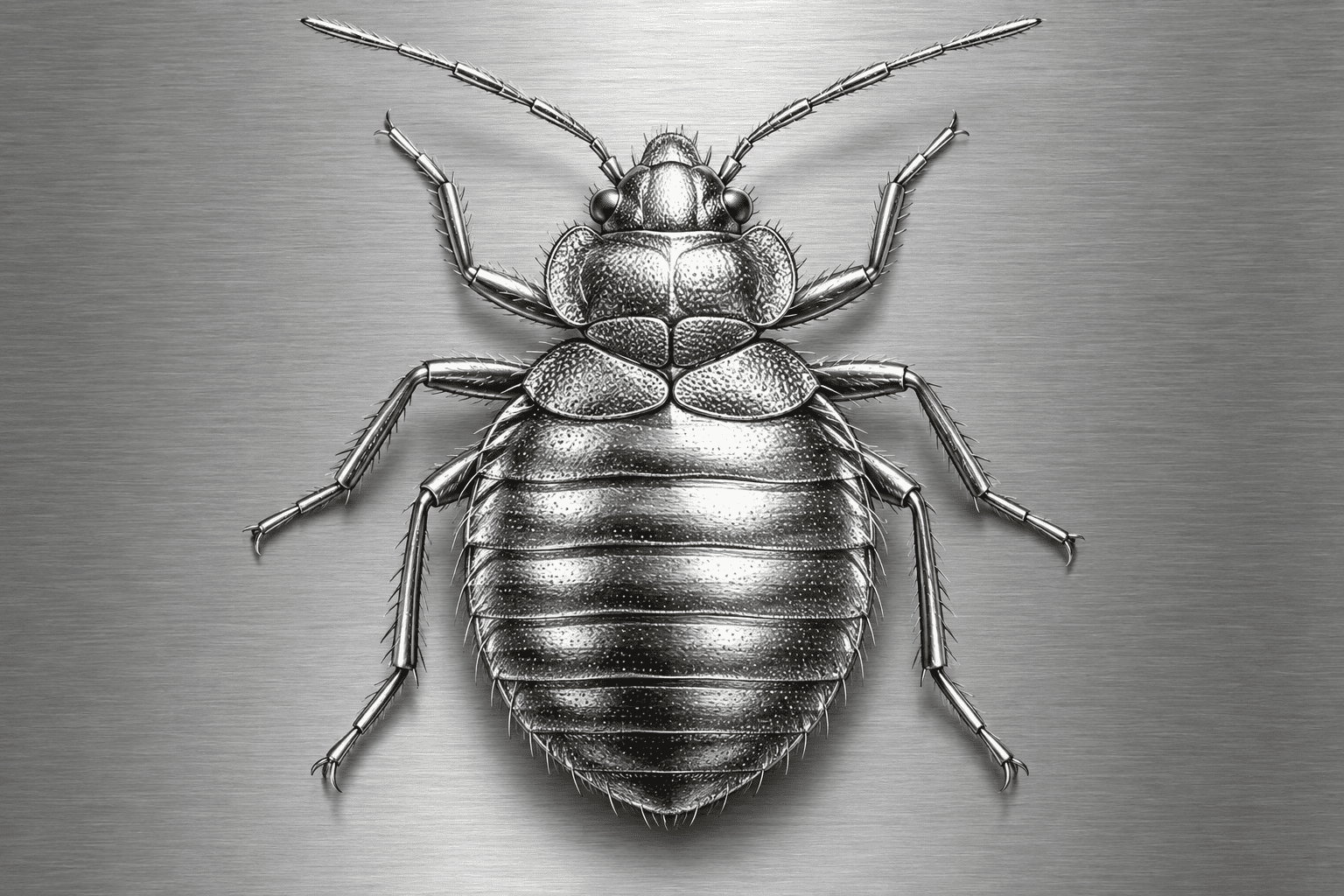
Bed bugs can survive surprisingly long periods without a blood meal, which is why leaving a bedroom empty, going on holiday or waiting between tenancies is not a reliable way to eliminate them.
But there isn't one scientifically correct answer to "How long can bed bugs live without feeding?"
Survival varies considerably according to temperature, humidity, life stage, previous feeding history and other conditions.
The practical message is much simpler: bed bugs can survive long enough without feeding to make starvation an unreliable control strategy.
🛏️ How Long Can Bed Bugs Live Without Food?
Under favourable conditions, unfed bed bugs can survive for weeks or months, and laboratory research under cooler conditions has recorded much longer survival in some circumstances.
That does not mean every bed bug in a normal heated UK bedroom will survive for a year without feeding.
Temperature and life stage make an enormous difference.
For household pest control, the important point is this: an empty room for a few weeks — or even considerably longer — should not be assumed to be bed-bug free.
What Do Bed Bugs Eat?
Bed bugs are blood-feeding insects.
Humans are their usual hosts in domestic infestations, although bed bugs can feed on other warm-blooded animals.
They don't survive by eating:
- food crumbs;
- skin flakes;
- wood;
- fabric;
- mattresses; or
- household waste.
The fact that they depend on blood might make starvation sound like an easy control method.
Unfortunately, bed bugs are adapted to cope with periods when a host isn't available.
Do Bed Bugs Need to Feed Every Night?
No.
A bed bug doesn't normally need a blood meal every night.
Feeding frequency varies with:
- life stage;
- temperature;
- host availability;
- reproductive status; and
- whether the insect has recently fed.
This is one reason a person shouldn't assume that a few nights without bites means an infestation has disappeared.
Bite reactions themselves are also unreliable evidence because some people show little or no visible reaction.
How Do Bed Bugs Survive Without Feeding?
When hosts are unavailable, bed bugs can remain concealed and reduce activity.
Rather than continually searching around a room and wasting energy, unfed bugs may remain within harbourages for extended periods.
Typical hiding places include:
- bed frames;
- headboards;
- mattress seams;
- bedside furniture;
- skirting gaps;
- cracks and joints; and
- other protected locations close to resting hosts.
Learn more in our guide to where bed bugs hide during the day .
Does a Bed Bug Go Dormant Without Food?
People often describe unfed bed bugs as "dormant", but that can be misleading.
They don't simply switch off and become invulnerable.
Their behaviour and metabolism are strongly influenced by environmental conditions, particularly temperature.
Under cooler conditions, development and activity can slow considerably. Under warmer conditions, metabolism generally increases.
What Determines How Long an Unfed Bed Bug Survives?
🌡️ Temperature
Temperature has a major effect on bed bug metabolism, development and starvation survival. Cooler conditions can substantially extend survival compared with warmer conditions.
🐞 Life Stage
Young nymphs and adults do not necessarily survive starvation for the same length of time. Nymphs also require blood meals to progress through their developmental stages.
💧 Humidity
Water balance matters. Environmental humidity can influence how quickly an unfed insect loses moisture.
🩸 Previous Feeding
A recently fed insect begins a period without food in a different physiological condition from one that has already been unfed for some time.
🏠 Harbourage Conditions
Protected hiding places can reduce disturbance and allow bugs to remain concealed while a room is vacant.
🔄 Developmental Conditions
Laboratory survival figures obtained under controlled conditions should not automatically be treated as a prediction for every occupied UK home.
Adults, Nymphs and Eggs: What's the Difference?
| Life Stage | Relationship With Feeding | Why It Matters |
|---|---|---|
| Egg | Does not take a blood meal | Starving the room does not directly "starve" an egg |
| Nymph | Requires blood meals as it develops through successive stages | Development can be interrupted when hosts are unavailable |
| Adult | Requires blood for ongoing survival and reproduction | Adults can tolerate substantial periods without feeding under suitable conditions |
Can Bed Bugs Live for a Year Without Feeding?
This claim needs context.
Long starvation-survival periods have been reported under particular experimental conditions, especially at cooler temperatures.
That is very different from saying:
"Every adult bed bug can live for a year without feeding."
They can't.
Survival varies dramatically with conditions, and modern heated indoor environments can produce very different results from cooler laboratory conditions.
So although the famous "bed bugs can live a year without food" statement shouldn't be used as a universal rule, it still illustrates why waiting for them to starve is poor pest-control strategy.
Will Leaving a Bedroom Empty Kill Bed Bugs?
Not reliably.
Closing the bedroom door and sleeping elsewhere can create additional problems.
If hosts are available elsewhere in the property, hungry bed bugs may search beyond their previous harbourage.
Moving where you sleep can therefore change the distribution of activity rather than solving the infestation.
⚠️ Don't Move to Another Bedroom Just to Starve Them
If you normally sleep in an infested bedroom, moving permanently to another room without a treatment plan may encourage the infestation to become established around the new sleeping area.
Get the infestation assessed rather than trying to outrun it around the house.
Will Going on Holiday Starve Bed Bugs?
No.
A one-week, two-week or ordinary-length holiday is nowhere near a reliable starvation treatment.
You may return without having seen any activity while you were away, but that doesn't establish that the bugs have died.
Once people return and normal host cues resume, surviving bed bugs can become active again.
What About an Empty Property Between Tenancies?
A vacant rental property can still contain bed bugs.
This matters for landlords because a quiet void period can create false reassurance.
No occupants means:
- no bites being reported;
- less disturbance;
- fewer opportunities to notice live bugs; and
- no guarantee that the infestation has died.
If bed bugs were known or suspected before the previous occupants left, the void period is a useful opportunity to inspect and treat — not simply wait.
Can Bed Bugs Detect When a Person Returns?
Bed bugs use several host-associated cues.
These include:
- carbon dioxide;
- heat;
- odours and other chemical cues; and
- environmental signals associated with a nearby host.
That helps explain why bed bug activity can become noticeable again when an occupied sleeping area returns to normal use.
Can Bed Bugs Survive on Pets?
Bed bugs prefer feeding on humans in typical domestic infestations, but they are capable of feeding on other warm-blooded hosts.
They are very different from fleas, however.
Bed bugs don't normally spend their lives living in an animal's coat.
If pets are present in an infested property, check:
- pet bedding;
- furniture used by the animal;
- nearby skirting and cracks; and
- sleeping areas close to human hosts.
Don't apply a flea treatment to an animal expecting it to eliminate a bed bug infestation in the property.
Can You Starve Bed Bugs by Sealing a Mattress?
A suitable bed-bug-proof mattress encasement can be useful as part of a wider management programme.
It can trap bugs already associated with the mattress and make future inspection easier.
But an encasement doesn't deal with bugs elsewhere in:
- the bed frame;
- headboard;
- furniture;
- skirting;
- cracks; or
- other harbourages.
It should therefore be viewed as a management tool rather than a complete treatment.
Why Does Starvation Matter When Choosing a Treatment?
Some control strategies depend on bed bugs moving across a treated surface or encountering a control measure.
Bed bugs' ability to remain hidden and tolerate periods without feeding is one reason treatment design and follow-up matter.
A successful programme needs to consider:
- where bugs are harbouring;
- which life stages are present;
- whether neighbouring rooms or areas are involved;
- treatment coverage;
- monitoring; and
- the possibility of reinfestation.
Do Bed Bug Sprays Work If the Bugs Stay Hidden?
Insecticides can be effective components of professional bed bug control, but performance depends on the product, active ingredient, formulation, resistance status, application and whether bugs encounter a lethal exposure.
Problems can occur when:
- harbourages are missed;
- application is incomplete;
- the product is inappropriate;
- resistance reduces susceptibility; or
- follow-up is inadequate.
That's very different from saying that insecticides simply "don't work".
For more detail, see: Bed Bug Spray – Does It Really Work? .
Why Heat Treatment Is Different From Starvation
Professional heat treatment doesn't depend on waiting for a bed bug to become hungry and emerge for a blood meal.
Instead, the objective is to create lethal thermal exposure throughout the areas being treated.
When sufficient temperatures reach bed bugs for sufficient exposure, heat can kill:
- eggs;
- nymphs; and
- adult bed bugs.
That's why professional heat treatment requires more than simply heating the room air.
🔥 How MothKill Heat Treatment Works
MothKill uses professional heating equipment to raise and manage temperatures within the treatment area.
Depending on the treatment setup, this includes:
- professional heating equipment;
- industrial air movement;
- multiple temperature sensors; and
- active monitoring during treatment.
Airflow matters because furniture and other contents can create cooler areas.
Temperature monitoring matters because the air near the heater can become hot long before more difficult locations have received sufficient thermal exposure.
The objective is therefore controlled heat distribution and adequate exposure, not simply achieving one impressive room-temperature reading.
Learn more about professional bed bug heat treatment .
What Temperature Kills Bed Bugs?
Bed bug mortality depends on both temperature and exposure time.
Higher temperatures can kill more quickly, while lower lethal temperatures require longer exposure.
This is why a single number such as "50°C kills bed bugs" doesn't tell the whole story.
The insect itself must receive the necessary thermal exposure.
Read our dedicated guide: What Temperature Kills Bed Bugs? .
Does Heat Kill Bed Bug Eggs?
Yes, sufficient thermal exposure can kill bed bug eggs.
But the important words are "sufficient thermal exposure".
An egg hidden in a cooler location must still receive the required combination of temperature and time.
This is one reason professional temperature monitoring and airflow management are important during whole-room heat treatment.
Does Heat Penetrate Walls?
It is better not to assume that room heat automatically makes every enclosed wall void lethal.
Building construction, insulation, airflow, furniture and other factors can create temperature differences.
Professional treatment therefore focuses on monitoring the actual treatment environment and identifying potential cold spots rather than assuming that every concealed void has reached the same temperature as the room air.
What Should You Do Instead of Trying to Starve Bed Bugs?
Confirm Bed Bug Activity
Look for physical evidence rather than relying on bites alone.
Inspect the Sleeping Area
Check the mattress, bed frame, headboard and nearby furniture.
Avoid Spreading Them
Don't casually move bedding, furniture or possessions into unaffected rooms.
Choose an Appropriate Treatment
The best approach depends on the infestation, property, harbourages and extent of activity.
Monitor Afterwards
Continue checking for physical evidence after treatment rather than relying only on whether anyone has been bitten.
Signs Bed Bugs May Still Be Present
Evidence can include:
- live bed bugs;
- fresh faecal spotting;
- cast skins;
- eggs;
- activity detected during inspection; and
- other confirmed physical evidence.
Bites alone cannot reliably confirm whether bed bugs are present or absent.
See: How Do I Know If Bed Bugs Are Gone After Treatment? .
Bed Bug Starvation FAQs
How long can bed bugs live without food?
There is no single survival period. Depending on life stage and environmental conditions, unfed bed bugs can survive for weeks or months, with considerably longer survival reported under some controlled cooler conditions.
Can bed bugs live a year without feeding?
Very long survival has been reported under particular experimental conditions, but this should not be interpreted as meaning every bed bug in a normal home can survive for a year without a blood meal.
Will leaving my house empty kill bed bugs?
It is not a reliable control method. Bed bugs can tolerate substantial periods without feeding, and an apparently quiet vacant property can still contain surviving bugs.
Will a two-week holiday starve bed bugs?
No. A normal holiday period is far too short to rely upon as a bed bug starvation treatment.
Do bed bugs die if nobody sleeps in the room?
Not necessarily. They can remain concealed without feeding, and if people sleep elsewhere in the property some bugs may eventually search for another host.
Can bed bugs feed on pets?
Bed bugs can feed on other warm-blooded animals, although humans are their usual hosts in domestic infestations. Unlike fleas, they don't normally live permanently on the animal.
Can bed bug eggs starve?
Eggs don't take blood meals, so starvation isn't the correct mechanism for controlling them. After hatching, nymphs require blood meals to continue development.
Does heat treatment work if bed bugs are not feeding?
Yes. Heat treatment does not depend on bed bugs emerging to take a blood meal. It relies on sufficient thermal exposure reaching the insects within the treatment area.
The Bottom Line
Trying to starve bed bugs is not a practical treatment strategy.
Bed bugs are capable of surviving substantial periods between blood meals, and their survival time changes dramatically according to environmental conditions.
So don't rely on:
- going on holiday;
- closing an infested bedroom;
- waiting between tenancies;
- turning the heating off; or
- simply hoping the infestation disappears.
If bed bugs are confirmed, the better approach is to identify the extent of the infestation and use a control method designed to eliminate the insects rather than waiting for them to die naturally.
Bed Bugs Surviving in an Empty Room?
If you've found bed bugs or an infestation has returned after a room or property was left vacant, MothKill can help with professional bed bug heat treatment.