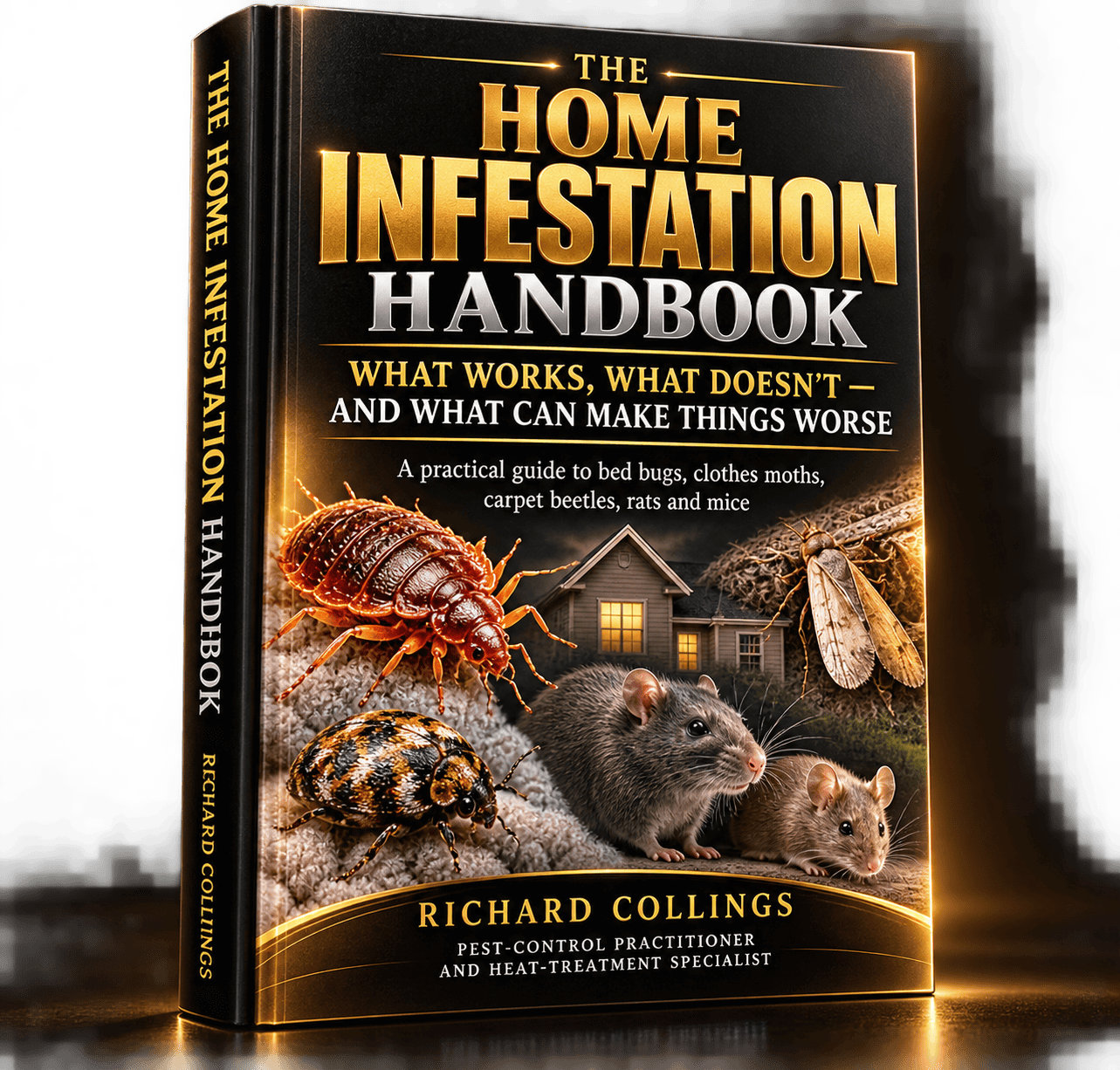
Where Do Clothes Moths Come From

Clothes moths don't suddenly appear because a wardrobe is dirty. An infestation begins when moths or their immature stages reach a property and find suitable material on which the larvae can feed.
The confusing part is that the original source may have arrived months before you notice anything.
Clothes moths can be introduced with infested textiles or furnishings, may already be established elsewhere in the property, or sometimes originate from less obvious sources such as natural-fibre carpets, upholstery or animal material.
This guide explains where clothes moths come from, what attracts them, where to search and how to deal with an established infestation.
The First Thing to Understand: The Larvae Cause the Damage
Seeing an adult clothes moth often gets the blame, but the adult moth isn't chewing holes in your jumper.
The larval stage causes the textile damage.
Clothes moth larvae can feed on keratin-containing animal materials including wool, cashmere, fur and feathers.
So when investigating where your moths came from, the most useful question is often:
“Where are the larvae feeding?”
Which Clothes Moths Are Common in UK Homes?
Two important clothes moth species encountered in the UK are the common or webbing clothes moth and the case-bearing clothes moth.
Both can be associated with damage to susceptible textiles and other animal-derived materials.
Because other small moth species can enter homes, correct identification is useful before starting treatment.
See our guide: How to Identify Clothes Moths .
So Where Do Clothes Moths Actually Come From?
There isn't one single route into every property.
Several possibilities should be considered.
🧥 Infested Textiles
Clothing, blankets, rugs and other susceptible textiles can potentially introduce eggs, larvae or other stages without the homeowner realising.
🪑 Furniture & Furnishings
Older or second-hand furniture containing susceptible natural materials can potentially carry an unnoticed infestation.
🏠 An Existing Hidden Infestation
The moths may have been present for some time before damage or adult activity finally became noticeable.
🪶 Hidden Natural Material
Feathers, animal hair, old nests and other animal-derived material can sometimes provide an overlooked larval food source.
1. Clothes Moths Can Arrive With Clothing
One possible introduction route is clothing that already contains eggs or larvae.
Particular care is sensible with:
- second-hand wool clothing;
- vintage garments;
- cashmere;
- stored coats;
- costumes;
- uniforms; and
- other natural-fibre textiles.
This doesn't mean second-hand clothing is inherently infested.
It simply makes inspection before adding susceptible items to your main wardrobe worthwhile.
2. Rugs, Blankets and Other Textiles Can Introduce Them
A clothes moth infestation doesn't have to arrive on clothing.
Potentially affected items include:
- wool rugs;
- blankets;
- throws;
- tapestries;
- stored fabrics; and
- other animal-fibre materials.
An item may appear perfectly normal on its exposed surface while activity is hidden in folds, edges or the underside.
3. Second-Hand Furniture Can Be a Source
Upholstered furniture deserves attention where it contains wool, feathers or other susceptible natural materials.
Potential hiding locations include:
- beneath cushions;
- seams;
- fabric folds;
- the underside of furniture;
- protected joints; and
- areas containing hair and lint.
Again, this doesn't mean every second-hand sofa carries clothes moths. It means susceptible furniture should be inspected before introduction where there is reason for concern.
4. They May Have Been in the Property for Months
Sometimes there is no recent introduction at all.
A small population may remain unnoticed while larvae feed in a protected location.
The infestation may only become obvious when:
- seasonal clothing is removed from storage;
- furniture is moved;
- a wardrobe is emptied;
- carpet damage is discovered;
- adult moth activity increases; or
- cleaning exposes larvae or cases.
The breeding source may have been present long before the first obvious adult moth or damaged garment was noticed.
5. Wool Carpets Can Support an Infestation
One reason clothes moth problems can be confusing is that the wardrobe may not be the source.
Larvae can feed on susceptible carpet fibres.
Pay particular attention to:
- carpet edges;
- under beds;
- beneath wardrobes;
- under sofas;
- around furniture feet; and
- quiet areas receiving little vacuuming or foot traffic.
You may therefore find adult moths around a bedroom even though the main larval activity is associated with the carpet.
6. Upholstery Can Be the Hidden Source
Furniture containing wool, feathers or other animal-derived materials can potentially support larvae.
This is especially easy to overlook because the food source may be inside or underneath the furniture rather than on its visible surface.
See: Can Clothes Moths Damage Furniture? .
7. Lofts Can Contain Unexpected Sources
If clothes moth activity persists despite dealing with obvious clothing and carpets, the source may be somewhere less obvious.
Lofts can contain:
- stored woollens;
- old blankets;
- natural-fibre rugs;
- feathers;
- animal hair;
- dead insects; and
- old bird nesting material.
Not every moth problem originates in a loft, but unexplained recurring activity can justify widening the inspection.
8. What About Moths Flying in Through Windows?
Many different moth species enter homes from outdoors.
So a small moth flying through a window isn't automatically evidence of a clothes moth infestation.
Correct identification matters.
If you repeatedly find confirmed clothes moths indoors, particularly alongside larval evidence or textile damage, search for a breeding source within the property rather than assuming every moth has simply flown in from outside.
What Attracts Clothes Moths?
“Attract” can be slightly misleading because the important issue is whether a property contains suitable conditions for eggs and larvae to develop.
Several factors can make an area favourable.
Natural Animal Fibres
Materials such as wool, cashmere, fur and feathers can provide larval food.
Soiled Textiles
Garments contaminated with perspiration, food residue, body oils or other organic material may be particularly attractive feeding material.
Low Disturbance
Clothes moth larvae often thrive in areas that remain undisturbed.
Examples include:
- the back of wardrobes;
- beneath furniture;
- carpet edges;
- storage boxes;
- spare rooms; and
- seasonal clothing storage.
Suitable Indoor Conditions
Indoor heating can allow clothes moth development to continue under favourable conditions rather than following a simple outdoor seasonal pattern.
You may still notice changes in adult activity at different times of year.
Read: The Clothes Moth Season in the UK .
Do Clothes Moths Mean Your House Is Dirty?
No.
A clean property can still develop clothes moths if susceptible materials and an introduction route are present.
However, housekeeping can make a significant difference.
Hair, lint, natural fibres and other debris accumulating in inaccessible areas can provide additional material and undisturbed harbourage.
Regular cleaning also makes signs of activity easier to detect.
Where Should You Look for the Source?
If you have confirmed clothes moths, inspect methodically rather than spraying every room at random.
Start With the Damage
If you've found holes or thinning fibres, inspect the affected item and the immediate area first.
Check Susceptible Materials
Look for wool, cashmere, fur, feathers and other animal-derived materials nearby.
Search Undisturbed Areas
Inspect wardrobe floors, drawers, carpet edges, beneath furniture and stored textiles.
Look for Larval Evidence
Search for larvae, cases, webbing, fresh damage and other evidence rather than relying solely on adult moths.
Widen the Search
If the obvious source cannot be found, consider furniture, other rooms, stored items and loft areas.
For a detailed inspection guide, see our article on the MothKill Knowledge Hub .
Signs That Clothes Moths Are Breeding in Your Home
Look for a combination of evidence.
| Sign | What It May Indicate |
|---|---|
| Irregular textile damage | Larval feeding on susceptible material |
| Larvae | Active immature clothes moth stage |
| Silken material | Can be associated with webbing clothes moth activity |
| Portable cases | Can indicate case-bearing clothes moth larvae |
| Repeated adult moths | May indicate a nearby breeding population |
| Damage beneath furniture | Can indicate a long-undisturbed larval feeding area |
How Do You Get Rid of Clothes Moths?
The right approach depends on how extensive the infestation is and where the source is located.
Control may involve several measures rather than relying on a single product.
1. Vacuum Thoroughly
Vacuuming is one of the most useful first steps.
Concentrate on:
- carpet edges;
- under furniture;
- wardrobe floors;
- skirting edges;
- drawers;
- cracks accessible to the vacuum; and
- areas containing hair, lint and fibres.
Dispose of vacuum contents appropriately after cleaning.
2. Treat Affected Clothing Appropriately
Depending on the textile and its care instructions, options can include:
- appropriate laundering;
- tumble drying where suitable;
- professional dry cleaning; or
- controlled freezing.
Always follow the item's care label.
There is little benefit in destroying an expensive wool garment through inappropriate washing while trying to save it from moths.
3. Can Freezing Kill Clothes Moths?
Controlled freezing can be useful for suitable items that cannot be washed at higher temperatures.
Effectiveness depends on the temperature achieved, the length of exposure and the item itself.
Bagging items can also help manage condensation during the process.
A quick spell in a mildly cold freezer should not automatically be assumed to have treated every life stage.
4. Do Clothes Moth Sprays Work?
Appropriately authorised insecticide products can form part of a clothes moth treatment programme.
They need to be used according to their label instructions and in suitable locations.
Spraying visible adult moths while leaving the larval source untouched is unlikely to solve an established infestation.
5. Do Pheromone Traps Work?
Pheromone traps can be very useful for detection and monitoring.
They can help:
- confirm activity;
- monitor changes over time; and
- provide additional information about where activity may be concentrated.
They should not normally be relied upon as the sole treatment for an established infestation.
Read: What Do Clothes Moth Pheromone Traps Do? .
6. Professional Clothes Moth Heat Treatment
For established or widespread infestations, professional heat treatment is another option.
Clothes moth eggs, larvae and adults are vulnerable when sufficient thermal conditions reach them for sufficient time.
MothKill uses professional indirect diesel heating equipment positioned outside the property.
Combustion gases remain outdoors while clean heated air is ducted into the treatment area.
Industrial fans help distribute the heated air and multiple temperature sensors are used to monitor conditions in different locations.
Furniture, carpets and other materials can heat at different rates, so airflow, exposure time and temperature monitoring are important.
Learn more about MothKill clothes moth heat treatment .
When Should You Consider Professional Treatment?
Professional treatment becomes worth considering when:
- moths continue appearing despite cleaning;
- larvae are found in several areas;
- carpet damage is spreading;
- multiple rooms are affected;
- the source cannot be located;
- valuable textiles are at risk; or
- the infestation repeatedly returns.
How to Reduce the Risk of Clothes Moths Returning
Once the active infestation has been dealt with, prevention should focus on reducing suitable breeding conditions and detecting new activity early.
- Clean susceptible clothing before long-term storage.
- Inspect second-hand natural-fibre textiles before introducing them.
- Use suitable sealed storage for vulnerable seasonal garments.
- Vacuum carpet edges and beneath furniture.
- Clean wardrobe floors and drawers.
- Inspect stored textiles periodically.
- Use pheromone traps appropriately for monitoring.
- Investigate fresh damage rather than treating only adult moths.
Where Do Clothes Moths Come From? FAQs
Where do clothes moths originally come from?
There is no single route into every home. Clothes moths can potentially be introduced with infested textiles or furnishings, may already be established in hidden areas of a property, or can be associated with other suitable animal-derived materials.
Can clothes moths come in through an open window?
Moths can enter buildings from outdoors, but many different moth species do this. A moth entering through a window is not automatically a clothes moth. Repeated confirmed clothes moth activity should prompt an inspection for an indoor breeding source.
Can second-hand clothes bring clothes moths into a house?
Potentially, yes. Eggs or larvae may be difficult to notice on affected textiles, which is why inspecting susceptible second-hand garments before adding them to a wardrobe is sensible.
Can clothes moths come from carpets?
Clothes moth larvae can feed on susceptible animal-derived carpet fibres such as wool. Activity is often easiest to overlook around carpet edges and underneath furniture.
Why do clothes moths keep coming back?
Recurring activity may mean that a breeding source remains untreated, some susceptible materials were overlooked, treatment did not reach all relevant areas or moths have subsequently been reintroduced.
Do clothes moths mean my house is dirty?
No. Even very clean homes can develop clothes moth infestations. Regular cleaning can nevertheless reduce debris, disturb potential harbourages and make activity easier to detect.
What causes clothes moths in a bedroom?
Possible sources include natural-fibre clothing, wool carpets, rugs, furniture, stored textiles or another suitable material nearby. Finding the larval source is more useful than concentrating only on adult moths.
Will clothes moths go away on their own?
An established infestation should not be expected to disappear simply because fewer adult moths are visible. Larvae may remain hidden and continue developing in suitable materials.
What is the quickest way to get rid of clothes moths?
The appropriate method depends on the extent and source of the infestation. Localised problems may be managed through inspection, cleaning and treatment of affected items, while widespread infestations can justify professional treatment.
The Bottom Line
Clothes moths don't appear spontaneously and they aren't necessarily a sign of poor housekeeping.
An infestation develops when clothes moths reach a property and their larvae find suitable material on which to feed.
That source may be obvious — such as a wool jumper — or surprisingly difficult to find, such as carpet beneath furniture, upholstery, stored textiles or material in a loft.
If you want to stop clothes moths coming back, finding and treating the larval source is more important than simply killing the adult moths you can see.
Can't Find Where Your Clothes Moths Are Coming From?
MothKill specialises in clothes moth investigation and treatment, including professional monitored heat treatment for established infestations.