
Bed Bug Heat Treatment Preparation Checklist
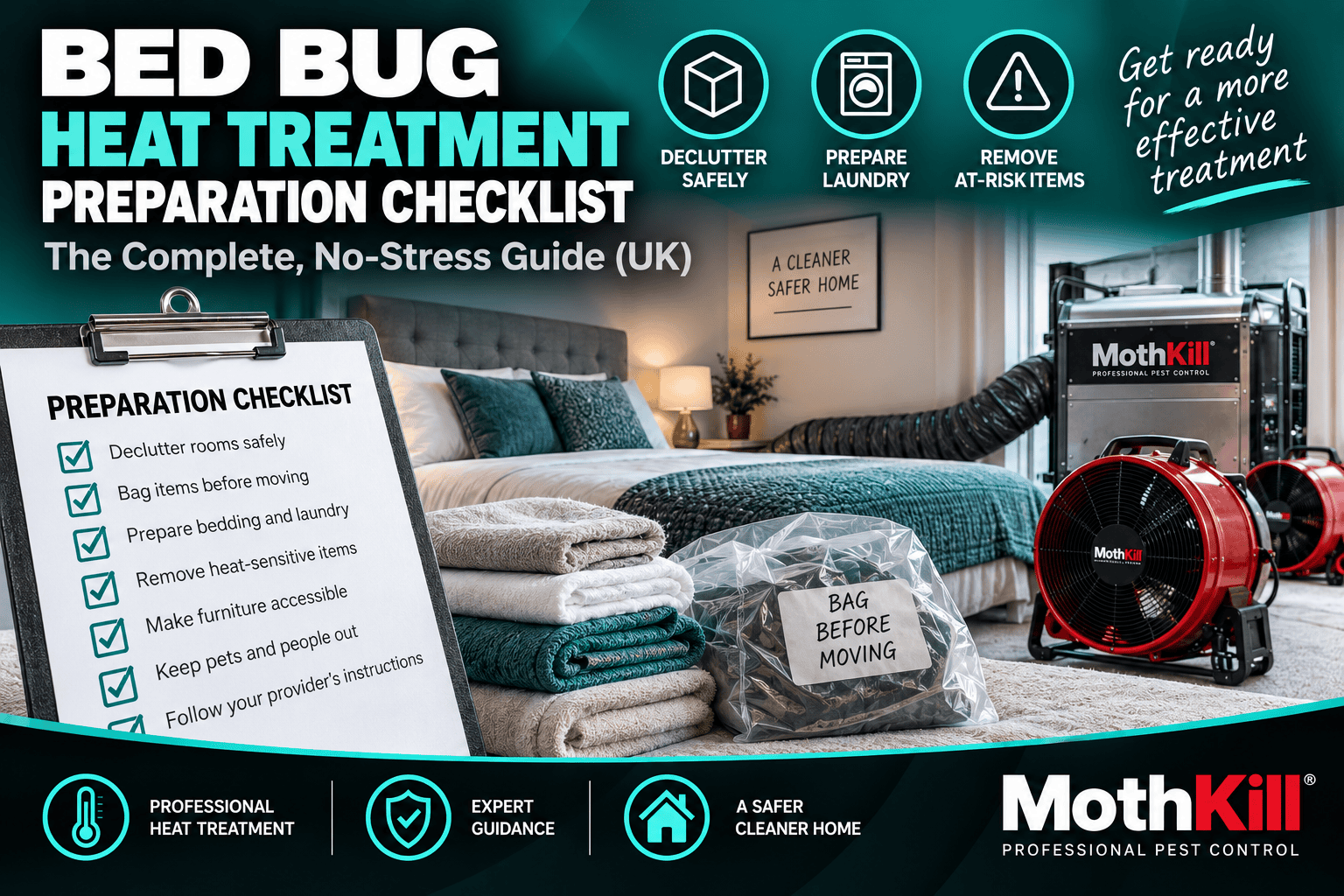
Good preparation helps professional bed bug heat treatment work efficiently, safely and with fewer obstacles to heat circulation.
You don't need to empty your entire home. In fact, moving too many belongings can create another problem by transferring bed bugs into areas that were previously unaffected.
The aim is simple: give the technician access, allow heated air to circulate and identify anything that could be damaged by elevated temperatures.
Use this practical MothKill checklist before your treatment day.
🔥 The Three Most Important Rules
1. Don't move potentially infested belongings into untreated rooms.
2. Remove or identify anything that could be damaged by heat.
3. Create enough access and airflow for the treatment to be managed properly.
Preparation matters, but don't dismantle the whole property unless MothKill specifically asks you to.
Why Does Preparation Matter for Bed Bug Heat Treatment?
Professional heat treatment works by creating controlled thermal conditions throughout the treatment area.
Bed bugs can hide in locations such as:
- mattress seams;
- bed frames;
- headboards;
- divan bases;
- bedside furniture;
- sofas;
- furniture joints;
- skirting gaps; and
- other sheltered locations close to sleeping and resting areas.
Different parts of a room and different materials heat at different rates.
Preparation helps the technician manage airflow, gain access to important areas and monitor locations that may heat more slowly.
For more about the process, see How Does Bed Bug Heat Treatment Work? .
Before You Start: Don't Spread the Infestation
⚠️ Don't Carry Loose Items Into Another Bedroom
If an item could contain bed bugs, moving it untreated from an affected room into another part of the property can spread the infestation.
If something genuinely needs to be removed, follow the instructions supplied by MothKill. Where appropriate, items should be contained before they are moved.
This is particularly important with:
- clothing;
- bedding;
- bags;
- soft furnishings;
- boxes;
- luggage; and
- items stored close to beds or sofas.
48–72 Hours Before Treatment
Reduce Excess Clutter
Remove rubbish and unnecessary items while avoiding the transfer of potentially infested belongings into untreated rooms.
Identify Heat-Sensitive Items
Check the property for aerosols, medicines, wax products, delicate plastics and other belongings that may not tolerate treatment temperatures.
Check Furniture and Fittings
Tell MothKill about laminate furniture, MDF furniture, plastic blinds, plastic clothes rails and other items you are concerned about.
Plan for People and Pets
People and pets must remain outside the heated treatment area while the treatment is underway.
Should I Wash All My Clothes Before Heat Treatment?
No. You do not necessarily need to wash every item in the property.
Unnecessary movement of clothing can create additional work and potentially move bed bugs around.
Follow the preparation instructions supplied for your particular treatment.
Where laundering is recommended, bag potentially affected items before carrying them through the property.
Suitable items can then be washed and/or tumble dried according to their care instructions.
Keep treated or clean items separated from potentially untreated belongings until the treatment process is complete.
Bedroom Preparation Checklist
Bedrooms are normally one of the most important treatment areas because bed bugs frequently establish harbourages close to where people sleep.
Before Treatment
- Remove unnecessary floor clutter.
- Make the bed and surrounding furniture accessible.
- Remove bedding if instructed.
- Check underneath the bed for stored belongings.
- Remove aerosols and other unsuitable heat-sensitive items.
- Tell MothKill about delicate or potentially heat-sensitive furniture.
- Leave wardrobes and drawers as instructed.
- Do not move bedroom furniture into another room.
- Do not carry loose clothing around the property unnecessarily.
Living Room Preparation
Bed bugs aren't restricted to beds. Sofas and armchairs can become important harbourage areas where people spend long periods sitting or sleeping.
- Remove unnecessary clutter around sofas and chairs.
- Make furniture edges accessible.
- Remove aerosols and heat-sensitive belongings.
- Do not transfer cushions or throws into untreated rooms unless instructed.
- Clear unnecessary items from the floor.
- Tell MothKill about delicate furniture or finishes.
Hallways, Cupboards and Storage Areas
Keep access routes clear so equipment, ducting and monitoring equipment can be positioned safely.
- Clear excessive floor clutter.
- Make doors accessible.
- Do not block treatment routes with boxes or bags.
- Tell the technician about relevant stored belongings.
What Must Be Removed Before Bed Bug Heat Treatment?
The exact preparation depends on the property, so MothKill's instructions take priority.
Typical items requiring removal or special consideration include:
🧯 Pressurised Items
Aerosols, gas canisters and other pressurised containers should not remain in the heated treatment area unless specifically approved.
💊 Medicines
Medicines and temperature-sensitive medical products should be removed and stored according to their instructions.
🕯 Wax Products
Candles, wax melts, crayons and similar products can soften or melt.
🌱 Plants & Living Things
Plants, pets and other living things must be removed from the heated treatment area.
💄 Heat-Sensitive Cosmetics
Some cosmetics and toiletries can melt, separate or deteriorate when exposed to elevated temperatures.
💿 Delicate Plastics & Vinyl
Some plastics, vinyl products and other temperature-sensitive materials can distort.
⚠️ Laminate and MDF Furniture
Please Tell MothKill About Laminate Furniture
Laminate, veneer, MDF and bonded furniture can sometimes be affected by elevated temperatures.
Heat can potentially soften adhesives or contribute to lifting, bubbling or delamination in susceptible items.
This doesn't mean every laminate item will be damaged, but MothKill needs to know about it before treatment.
If you're unsure what a piece of furniture is made from, point it out when the property is assessed.
⚠️ Plastic Blinds, Rails and Fittings
Plastic blinds and fittings deserve particular attention.
Some plastics may soften, distort or warp under elevated temperatures.
Check:
- plastic Venetian blinds;
- roller-blind components;
- plastic curtain fittings;
- plastic clothes rails;
- lightweight plastic shelving;
- plastic storage units; and
- other thin plastic fixtures.
Do not assume that because an item normally sits in a warm room it is suitable for professional heat-treatment temperatures.
What About Electronics?
Don't automatically remove every television, computer or electrical item.
Whether an electronic item remains in the treatment area depends on the equipment, manufacturer limits, location and treatment conditions.
Ask MothKill if you are unsure.
What Should Stay in the Room?
This is just as important as knowing what to remove.
If an item is potentially infested and suitable for heat exposure, removing it from the treatment area could allow bed bugs to escape treatment.
Depending on the property and instructions, items that may remain can include:
- mattresses;
- bed frames;
- divan bases;
- suitable furniture;
- some clothing;
- suitable luggage;
- some electronics; and
- other belongings that need exposure to the treatment environment.
Always follow the specific instructions for your booking.
Do I Need to Empty Wardrobes and Drawers?
Not automatically.
Over-emptying a room can create unnecessary movement of potentially infested belongings.
MothKill will advise how wardrobes, drawers and clothing should be prepared for your treatment.
The objective is to allow suitable heat circulation while avoiding unnecessary movement from affected areas.
Should I Move the Bed Away From the Wall?
Only if instructed.
The technician may reposition furniture as part of the treatment setup.
You do not need to dismantle or rearrange the entire bedroom beforehand unless this has been specifically requested.
Treatment-Day Checklist
Before MothKill Arrives
- Make sure all treatment areas are accessible.
- Remove people and arrange for pets to be away.
- Remove identified aerosols and pressurised items.
- Remove medicines and other temperature-sensitive products.
- Remove plants.
- Remove or identify heat-sensitive plastics and belongings.
- Tell us about laminate/MDF furniture and plastic blinds or rails.
- Remove rubbish as instructed.
- Keep potentially infested items within the treatment area unless advised otherwise.
- Have keys and access arrangements ready.
What Happens During the Treatment?
MothKill uses professional indirect diesel heating equipment positioned outside the property.
Combustion gases remain outdoors while clean heated air is ducted into the treatment area.
Industrial fans help distribute heated air and multiple temperature sensors allow conditions to be monitored in different locations.
The important factor isn't simply the hottest air temperature recorded.
Furniture, floor-level locations and other protected areas may heat more slowly, which is why temperature distribution and exposure time need to be monitored.
Read more: Professional Bed Bug Heat Treatment .
How Hot Does Bed Bug Heat Treatment Get?
Bed bugs and their eggs are vulnerable when they receive sufficiently high temperatures for sufficient time.
Professional treatments may involve room temperatures around the 50–60°C range or higher in selected locations, but a room-air temperature alone does not prove that every harbourage has received adequate thermal exposure.
This is why MothKill uses multiple sensors and monitors the treatment rather than simply heating the room according to a timer.
See: What Temperature Kills Bed Bugs? .
How Long Does Bed Bug Heat Treatment Take?
Treatment generally takes several hours.
The precise duration depends on:
- property size;
- room layout;
- starting temperature;
- furniture and belongings;
- heating capacity;
- air circulation; and
- how quickly slower-heating locations reach the required conditions.
MothKill does not judge treatment purely by the clock.
Read: How Long Does Bed Bug Heat Treatment Take? .
Common Preparation Mistakes
❌ Moving Everything Out
Potentially infested belongings can spread bed bugs into untreated parts of the property.
❌ Leaving Excessive Clutter
Heavy clutter can restrict access and make airflow management more difficult.
❌ Forgetting Aerosols
Check bedrooms, bathrooms, drawers, cupboards and cleaning products for pressurised containers.
❌ Forgetting Heat-Sensitive Furniture
Laminate, MDF, bonded furniture and some plastics deserve particular attention.
❌ Hiding Items in Cupboards
Putting potentially infested belongings into densely packed storage can make controlled heating more difficult.
❌ Ignoring MothKill's Instructions
Generic internet checklists cannot account for every property. The instructions supplied for your treatment take priority.
What Should You Take With You?
Keep what you take out of the property to a sensible minimum.
Avoid placing bags or coats on beds and upholstered furniture immediately before leaving.
If there is concern that an item may contain bed bugs, ask how it should be handled rather than carrying it loose through the property.
What Happens After Heat Treatment?
Follow MothKill's re-entry instructions and allow the property to cool appropriately.
Afterwards:
- avoid immediately bringing untreated suspect belongings back into the property;
- keep an eye out for physical evidence of bed bugs;
- vacuum appropriately;
- reduce unnecessary clutter;
- follow any specific aftercare instructions; and
- contact MothKill if you find evidence that concerns you.
Don't Judge Success by Bites Alone
Skin reactions are not a reliable way to confirm whether bed bugs remain.
Some people do not react to bites, while reactions in others may appear later or persist after the original exposure.
Look for physical evidence such as:
- live bed bugs;
- fresh faecal spotting;
- cast skins;
- eggs; and
- other confirmed signs of activity.
See: How Do I Know If Bed Bugs Are Gone After Treatment? .
Bed Bug Heat Treatment Preparation FAQs
Do I need to empty my house before heat treatment?
No. Removing everything can be counterproductive because potentially infested belongings may be moved outside the treatment area. Follow MothKill's preparation instructions for the specific property.
Should I wash all my clothes?
Not necessarily. Laundry requirements depend on the treatment plan. Avoid unnecessarily carrying loose potentially infested clothing around the property.
Do I need to remove my mattress?
Normally a potentially infested mattress should remain available for treatment rather than simply being moved elsewhere. Follow the instructions given for your property.
Can laminate furniture stay during heat treatment?
Laminate, veneer, MDF and bonded furniture can be vulnerable to heat-related lifting or delamination. Tell MothKill about these items before treatment so they can be assessed.
Should plastic blinds be removed?
Some plastic blinds and fittings can soften or warp at elevated temperatures. They should be identified before treatment so MothKill can advise on the appropriate action.
Can electronics stay in the room?
Some electronics may be able to remain, but this depends on the device and treatment conditions. Ask MothKill about valuable or temperature-sensitive electronics rather than assuming.
Can pets stay in the property?
No. Pets and people should remain outside the heated treatment area during treatment. Any special arrangements, including fish tanks, should be discussed in advance.
Can bed bugs survive heat treatment?
Bed bugs can survive if they do not receive sufficient thermal exposure. Professional treatment therefore depends on appropriate heating capacity, airflow, monitoring and exposure time.
Does good preparation guarantee eradication?
No treatment should be described as incapable of failure. Good preparation improves access and treatment conditions, but results also depend on treatment scope, thermal distribution, exposure and whether bed bugs are present in untreated areas or later reintroduced.
Final Bed Bug Heat Treatment Checklist
- Do not move loose potentially infested belongings into untreated rooms.
- Clear unnecessary clutter from floors and treatment areas.
- Make beds and furniture accessible.
- Remove aerosols and pressurised containers.
- Remove medicines and temperature-sensitive medical products.
- Remove candles, wax products and unsuitable heat-sensitive belongings.
- Remove plants and pets.
- Tell MothKill about laminate and MDF furniture.
- Identify plastic blinds, clothes rails and delicate plastic fittings.
- Ask before removing valuable electronics or potentially infested furniture.
- Follow the preparation instructions supplied for your particular treatment.
One Last Rule: If You're Unsure, Ask
Every property is different.
If you have an expensive item, unusual furniture, medical equipment, delicate plastics or anything else you're worried about, don't guess.
Show or describe the item to MothKill before treatment and we can advise you.
Booked a Bed Bug Heat Treatment?
Good preparation makes the treatment process easier. If you're unsure about an item or part of your property, contact MothKill before treatment rather than removing potentially infested belongings unnecessarily.