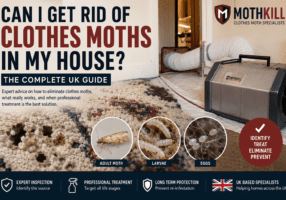
Are Clothes Moths a Landlord or Tenant Responsibility


You open the wardrobe, pull out a jumper you love, and… holes. Or you spot tiny cream-coloured larvae in the seams of a wool coat. Clothes moths aren’t just annoying — they can quietly destroy hundreds (or thousands) of pounds’ worth of clothing, rugs, blankets, and soft furnishings.
Then comes the awkward bit: who’s responsible in a rented property — the landlord or the tenant?
In the UK, there isn’t one magic sentence in law that says “clothes moths = landlord pays” or “tenant pays.” Instead, responsibility usually depends on cause, timing, property condition, and what your tenancy agreement says — plus whether the issue makes the home arguably unfit to live in.
Below is the practical, real-world way this usually plays out, with UK resources you can rely on.
The short answer (most of the time)
Landlord responsibility is more likely when:
- The infestation was present at the start of the tenancy (or very soon after move-in).
- Moths are linked to a property issue the landlord must fix (for example: damp, disrepair, gaps, broken seals, poor ventilation, damaged plaster, missing floorboards, or storage conditions that allow pests to thrive).
- The problem is widespread and could make the property not fit for habitation.
Tenant responsibility is more likely when:
- The infestation can be traced to tenant belongings or lifestyle factors (e.g., infested second-hand textiles brought in, stored woollens not cleaned, cluttered storage with undisturbed natural fabrics, not reporting early signs).
- The tenancy agreement clearly states that the tenant handles pest treatment unless caused by disrepair.
- The issue is localised to tenant-owned items (like a suitcase of vintage jumpers) rather than building-wide or structural.
Shelter’s guidance on pests in rented homes is a good starting point:
Citizens Advice also frames it in a very similar way:
Why clothes moths are a grey area (compared to rats, mice, bed bugs)
Clothes moths don’t usually come from filth or food waste the way rodents can. They’re attracted to natural fibres (wool, silk, cashmere, feathers, leather) and particularly like dark, quiet, undisturbed areas: wardrobes, under beds, edges of rugs, cupboard corners, behind skirting, and loft storage.
That means they can appear in:
- spotless homes,
- high-end wardrobes,
- well-kept flats,
- shared blocks where moths travel between units via corridors/risers.
So instead of “clean vs dirty,” the key question becomes:
Was the infestation caused or enabled by something the landlord must repair or provide — or did it mainly arise from the tenant’s possessions and day-to-day control of the space?
What the law and guidance actually point to
1) Repairs obligations (Landlord and Tenant Act 1985 – Section 11)
Section 11 is the classic “landlord must repair structure/exterior and keep installations working” provision. It doesn’t mention moths — but it matters if moths are linked to disrepair, the landlord must fix (e.g., damp or broken fabric of the building).
Shelter’s professional guidance explains the scope of Section 11 clearly:
2) Fitness for habitation (Homes (Fitness for Human Habitation) Act 2018)
This is a big one in arguments about pests. Landlords must ensure a property is “fit for human habitation” throughout the tenancy, and serious pest issues can be evidence that the property isn’t fit.
Government guide for tenants:
Shelter overview (“Is your home fit for habitation?”):
3) Local authority enforcement (Housing Act 2004 / HHSRS)
If the issue is severe and a landlord refuses to act, councils can inspect under the Housing Health and Safety Rating System (HHSRS). This is more commonly used for hazards like damp, mould, or rodents — but a serious infestation combined with damp/poor conditions can bring it into enforcement territory.
HHSRS guidance:
The “timing test”: when did you first notice moths?
This is one of the most practical ways disputes get decided (informally and formally).
If you notice signs within the first few weeks
That leans towards landlord responsibility, especially if:
- You can show the property had signs at move-in (dead moths in light fittings, larvae skins in cupboards, damage to carpets/rugs provided by landlord),
- previous tenants mention it,
- There’s evidence of an ongoing issue in communal areas.
If you notice signs months later
That leans towards tenant responsibility, unless:
- There’s a strong property-condition link (damp, broken seals, poor storage/ventilation provided by landlord),
- It appears building-wide (neighbours also have it),
- You reported early signs, and the landlord ignored them, letting it escalate.
The golden rule: report early, in writing. Waiting three months and then saying “the flat is crawling with moths” is how tenants accidentally lose a winnable argument.
The “cause test”: what caused or enabled the infestation?
Here’s how responsibility is commonly allocated.
Likely landlord responsibility scenarios
A) Moths are tied to damp/condensation or building defects
Clothes moths thrive in quiet, undisturbed areas — and damp, poorly ventilated storage spaces can make the environment worse. If wardrobes are built-in against cold external walls, with poor airflow and obvious damp, that’s a landlord problem to address.
Clothes moths thrive in quiet, undisturbed areas — and damp, poorly ventilated storage spaces can make the environment worse. If wardrobes are built-in against cold external walls, with poor airflow and obvious damp, that’s a landlord problem to address.
B) The infestation is in landlord-provided soft furnishings
If the tenancy includes carpets, rugs, curtains, or upholstered furniture that show moth damage/larvae activity, it’s hard for a landlord to argue “that’s all you.”
If the tenancy includes carpets, rugs, curtains, or upholstered furniture that show moth damage/larvae activity, it’s hard for a landlord to argue “that’s all you.”
C) The property was not reasonably pest-free at move-in
Landlords are expected to provide accommodation in a habitable condition at the start. A pre-existing infestation is usually not something tenants should pay to “inherit.”
Landlords are expected to provide accommodation in a habitable condition at the start. A pre-existing infestation is usually not something tenants should pay to “inherit.”

Likely tenant responsibility scenarios
A) Infested items were introduced
Vintage/second-hand coats, rugs, charity shop woollens, suitcases stored in lofts — these are classic ways moths arrive. If the infestation is essentially “inside the tenant’s textiles,” landlords will often push back.
Vintage/second-hand coats, rugs, charity shop woollens, suitcases stored in lofts — these are classic ways moths arrive. If the infestation is essentially “inside the tenant’s textiles,” landlords will often push back.
B) Storage and housekeeping factors
Clothes moths love undisturbed wool. If wardrobes are packed, items are stored unwashed for long periods, and there’s little rotation/cleaning, the tenant has significant control here.
Clothes moths love undisturbed wool. If wardrobes are packed, items are stored unwashed for long periods, and there’s little rotation/cleaning, the tenant has significant control here.
C) You didn’t report it promptly
Even if it started as a small issue, failure to report can make the tenant responsible for avoidable escalation.
Even if it started as a small issue, failure to report can make the tenant responsible for avoidable escalation.
What your tenancy agreement says (and what it can’t override)
Many tenancy agreements include a line like: “Tenant is responsible for pest control” or “Tenant must keep property free from pests.”
That matters — but it’s not a cheat code that lets a landlord ignore serious problems caused by disrepair or unfitness for habitation. If the root cause is something the landlord must fix, a blanket clause may not protect them.
Citizens Advice notes that responsibility can depend on the tenancy terms and the cause of the infestation:
What evidence actually helps (tenant and landlord)
If this turns into a “he said / she said,” evidence wins.
Tenants: gather this
- Photos/video of larvae, moths, webbing, casings, and affected areas (date-stamped if possible)
- A list of affected items and where they were stored
- Proof of when you first noticed it (email to landlord/agent)
- Move-in inventory, check-in report, and photos from day one
- Evidence of damp/condensation or defects (mould behind wardrobes, peeling wallpaper, musty odour)
- Any neighbour reports (especially in blocks)
Landlords: gather this
- Check-in inventory and professional cleaning records
- Pest contractor report stating likely source (property vs tenant items)
- Evidence of property condition (recent repairs, ventilation upgrades)
- Communication record showing tenant reported promptly (or didn’t)
If you hire a professional, ask for a written report that answers:
- likely source(s),
- spread and level of infestation,
- recommended treatment,
- prevention steps.
What to do if you’re the tenant (step-by-step)
- Report it immediately in writing.
Be calm and factual: what you saw, where, and when. - Ask the landlord to propose a plan within a reasonable time
Moths spread. A “we’ll look next month” response is not good enough if you’re seeing larvae. - Offer access for inspection/treatment.
Keep the focus on solutions. - If the landlord refuses, escalate properly.
- Shelter advice on environmental health:
https://england.shelter.org.uk/housing_advice/repairs/complain_to_environmental_health_about_private_rented_housing - GOV.UK private renting complaints steps:
https://www.gov.uk/private-renting/complaints - GOV.UK repairs route (includes contacting environmental health):
https://www.gov.uk/private-renting/repairs - Citizens Advice: asking the council for help with repairs/conditions:
https://www.citizensadvice.org.uk/housing/repairs-and-housing/repairs-and-housing-conditions/getting-your-landlord-to-do-repairs/asking-the-council-to-help-you-get-repairs-done/asking-the-local-authority-for-help-with-repairs/
- Do the immediate containment basics (even while responsibility is disputed)
Wash what you can, isolate textiles in sealed bags, vacuum thoroughly, and reduce “quiet” undisturbed fabric piles. Even if the landlord pays for treatment, tenants usually still need to do prep.
What to do if you’re the landlord (and you want this handled cleanly)
- Respond fast and take it seriously.
Even if you suspect tenant-origin, dragging your feet can turn a small problem into a building-wide headache. - Inspect and document
Look at built-in wardrobes, carpets, underfloor gaps, loft spaces, and communal areas if relevant. - Choose a treatment route appropriate to the scale.
DIY traps can be fine for monitoring, but they’re rarely the whole solution once larvae are present. A professional clothes moth treatment can be more cost-effective than repeated failed DIY.
If you need a professional option, here’s the requested link:
https://www.mothkill.co.uk/clothes-moth-treatment/
https://www.mothkill.co.uk/clothes-moth-treatment/
- Decide responsibility based on evidence, not vibes
If the infestation is in landlord-provided carpets/curtains or present at move-in, it’s usually sensible for the landlord to cover it. If it’s clearly introduced by tenant items, you can still support treatment while agreeing on how costs are handled (sometimes, split-cost agreements reduce conflict). - Fix enabling conditions
If there are damp, ventilation issues, cracked plaster, gaps around skirting, or poor sealing in storage spaces, address them — otherwise, moths (or other pests) will keep finding a way back.
A fair “rule of thumb” you can use in a dispute
If you want a simple decision framework:
- Pre-existing or property-driven? → landlord is more likely to be responsible
- Introduced by belongings / lifestyle / delayed reporting? → tenant is more likely responsible
- Both factors? → shared responsibility or negotiated split is common in practice
Shelter’s pest advice sums this “cause-based” approach up well:
Important UK note: different rules across the UK
Most of the guidance above is strongest for England (and some applies similarly in Wales). Scotland and Northern Ireland have different procedures and sometimes different routes for enforcement and tribunals. If you’re outside England, check your nation-specific housing advice body or your local council’s guidance.
Final takeaway
Clothes moths in rented homes are a cause-and-timing problem more than a “tenant vs landlord” problem. If it’s linked to disrepair, was present at move-in, or affects the property’s habitability, landlords are far more likely to be on the hook. If it’s introduced via tenant belongings or grows due to storage/housekeeping factors — especially if it wasn’t reported early — tenants are far more likely to pay.
If you want, tell me (1) England/Wales/Scotland/NI, (2) when you first noticed them, (3) whether carpets/furnishings are landlord-provided, and I’ll map out the strongest argument and the cleanest next steps.