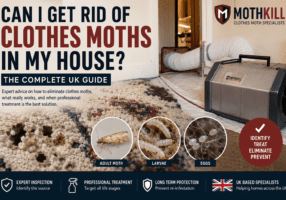
Clothes Moth Heater Hire: The Fastest Way to Eliminate Clothes Moths for Good

If you've discovered clothes moths in carpets, wardrobes, clothing or upholstery, you may be considering clothes moth heater hire as an alternative to repeated sprays and other DIY treatments.
Heat can be highly effective against clothes moths because sufficiently high temperatures can affect the insect throughout its life cycle, including the larvae responsible for textile damage and the eggs that can otherwise be difficult to locate.
But hiring powerful equipment does not automatically guarantee a successful treatment.
Preparation, airflow, temperature monitoring, exposure time and the extent of the infestation all matter.
This guide explains how clothes moth heater hire works, what equipment is needed, which belongings need special attention and when DIY heat treatment may or may not be appropriate.
What Is Clothes Moth Heater Hire?
Clothes moth heater hire gives you access to professional pest heat-treatment equipment so that suitable areas of a property can be heated and monitored.
A proper system involves considerably more than placing a heater in a room.
Depending on the treatment setup, equipment can include:
- powerful indirect diesel heating equipment;
- heat-resistant ducting;
- industrial air-moving fans;
- multiple temperature sensors;
- thermal imaging;
- appropriate electrical equipment;
- protective equipment and barriers; and
- other equipment required for the property.
The objective is to achieve effective thermal conditions throughout the relevant treatment area — not simply a high air temperature beside the heater.
Why Are Clothes Moths Difficult to Eliminate?
The small adult moths flying around a room are only one part of an infestation.
The textile damage is caused by the larval stage.
Larvae can develop in sheltered locations where suitable animal-derived materials are available, including wool, fur, feathers and other susceptible materials.
Potential harbourages include:
👕 Wardrobes
Stored woollens, suits, coats and other susceptible textiles can provide food and sheltered areas for developing larvae.
🧶 Carpets & Rugs
Wool carpets and rugs can be affected, particularly around edges and undisturbed areas beneath furniture.
🛋️ Upholstery
Furniture containing susceptible natural materials can provide concealed feeding sites.
📦 Stored Textiles
Blankets, clothing and other natural-fibre items left undisturbed for long periods can support an infestation.
This is one reason killing the adult moths you happen to see does not necessarily eliminate the infestation.
For more information on the damaging stage, read our guide to the clothes moth larvae life cycle .
How Does Heat Kill Clothes Moths?
Clothes moth eggs, larvae, pupae and adults are vulnerable to sufficiently high temperatures when effective thermal conditions reach them for sufficient exposure.
Heat therefore offers an important advantage: it does not depend on finding and individually treating every visible insect.
However, the treatment still has to reach the places where the insects are located.
What Temperatures Are Used for Clothes Moth Heat Treatment?
Professional pest heat treatment commonly creates room conditions in the region of 50–60°C or higher in selected areas, depending on the treatment plan and equipment.
But there is an important distinction between:
- the temperature of air leaving the heater;
- the general room temperature; and
- the temperature actually achieved within or around potential harbourages.
These can be very different.
That is why temperature monitoring is essential.
Why Temperature Sensors Matter
A heater may be producing extremely hot air while another part of the room is heating much more slowly.
Potential cold spots can occur around:
- external walls;
- floor-level areas;
- dense furniture;
- stored contents;
- large rugs and carpets;
- areas with poor airflow; and
- other thermally protected locations.
Using multiple temperature readings helps establish what is happening across the treatment environment rather than relying on one convenient measurement.
Why Industrial Fans Are Important
Professional heat treatment is not simply about heater power.
Air-moving fans help distribute heated air around the treatment area and can reduce uneven temperature conditions.
Fan position may need adjusting during treatment as different parts of the property heat at different rates.
This is why hiring a heater by itself is not the same as carrying out a properly controlled pest heat treatment.
What Does MothKill Clothes Moth Heater Hire Include?
MothKill's clothes moth heater hire is designed as a supported heat-treatment package rather than simply supplying a standalone heater.
Depending on the property and package, the equipment can include professional indirect diesel heaters, heat-resistant ducting, industrial fans, temperature monitoring equipment and the supporting equipment needed for treatment.
The diesel heaters remain outside. Combustion gases are exhausted outdoors while clean heated air is ducted into the property.
You receive instruction and help with setup, and the diesel heaters themselves are operated by the technician.
You are involved in monitoring the treatment and need to be physically capable of following the treatment instructions and entering heated areas for short periods when required.
See the full clothes moth heater hire packages .
How Clothes Moth Heater Hire Works
Check the Property Is Suitable
The property type, access, number of rooms and extent of the infestation need to be considered before equipment is selected.
Prepare the Treatment Area
Heat-sensitive belongings are identified and removed or protected as appropriate. Rooms are prepared to allow effective airflow.
Set Up the Heating System
Indirect diesel heating equipment remains outside while heated clean air is ducted into the treatment area.
Position Air-Moving Fans
Industrial fans help distribute heat around rooms and towards areas that would otherwise heat more slowly.
Monitor Temperatures
Temperature readings are taken from different locations rather than relying on the heater output or one room reading.
Maintain Effective Conditions
The treatment continues according to monitored conditions and the treatment plan rather than simply ending when the room first feels hot.
How Long Does Clothes Moth Heater Hire Take?
The heating phase takes several hours and depends on factors such as:
- room size;
- property construction;
- starting temperature;
- amount of furniture and contents;
- number of heaters;
- airflow;
- heat loss; and
- how quickly the relevant areas reach the required thermal conditions.
A general treatment may take around six hours, but the clock alone should not determine whether treatment is complete.
Temperature readings and thermal exposure are more important than an arbitrary finishing time.
Does Clothes Moth Heater Hire Kill the Eggs?
Heat can kill clothes moth eggs as well as larvae, pupae and adults when the required thermal conditions reach them for sufficient exposure.
This is particularly useful because eggs can be difficult to find and are not necessarily affected equally by every conventional treatment.
But again, the important qualification is thermal exposure.
An egg hidden in an inadequately heated location has not been successfully treated simply because the open room air reached a high temperature.
Is Clothes Moth Heater Hire Chemical-Free?
The heat itself does not leave an insecticide residue.
This can make heat particularly attractive where the aim is to reduce reliance on insecticides.
However, heat and insecticides should not be treated as mutually exclusive.
Depending on the infestation and treatment plan, targeted insecticide, insecticidal dust or monitoring may sometimes form part of an integrated approach.
Heat Treatment vs Other Clothes Moth Methods
| Method | Useful For | Limitation |
|---|---|---|
| Vacuuming | Removing accessible larvae, debris, hair and lint from carpets and edges | Cannot reliably reach every hidden egg or larva |
| Pheromone Traps | Monitoring adult male clothes moth activity | Should not be relied upon as complete infestation control |
| Laundering | Treating suitable washable clothing and fabrics | Does not treat carpets, furniture or the wider room |
| Freezing | Potentially useful for suitable individual items when an appropriate freezing protocol is followed | Impractical for treating an entire room or large furnishings |
| Insecticides | Can form part of professional or authorised DIY treatment | Correct product selection, application and coverage are important |
| Steam | Direct treatment of suitable accessible surfaces | Limited treatment zone means careful application is required |
| Room Heat Treatment | Treating suitable rooms, carpets, furniture and contents together | Requires preparation, airflow, monitoring and sufficient thermal exposure |
Do Clothes Moth Pheromone Traps Work?
Yes — but it is important to understand what they do.
Clothes moth pheromone traps can be extremely useful for monitoring adult male moth activity.
They can help establish whether moths are present and can be useful after treatment for ongoing monitoring.
They should not normally be treated as a complete solution to an established infestation because larvae and eggs can remain elsewhere.
Read our full guide: What Do Clothes Moth Pheromone Traps Do?
Can You Use Domestic Electric Heaters Instead?
Heating an entire room to pest-treatment conditions requires substantial heat input.
A small domestic heater may make a room feel very warm without establishing the controlled conditions required throughout carpets, furniture and other potential harbourages.
There are also significant safety considerations when attempting to operate multiple high-load electrical heaters.
For room-scale pest heat treatment, equipment capacity, airflow and monitoring all need to be considered together.
What About Hairdryers?
A hairdryer is not a substitute for room heat treatment.
It heats only a very small area and provides no reliable method of establishing the required thermal exposure throughout a room, carpet or item of furniture.
There is also a risk of overheating or damaging materials when very hot air is directed at them at close range.
Can a Clothes Steamer Kill Clothes Moths?
Steam can kill insects on suitable surfaces when adequate temperature and contact are achieved.
It can therefore be a useful tool for some accessible areas.
Its limitation is coverage.
Steam is applied locally, whereas a room-scale heat treatment aims to create controlled thermal conditions throughout a much larger treatment environment.
The two approaches should not be confused.
⚠️ What Needs Special Attention Before Heat Treatment?
Professional pest heat treatment exposes a room and its contents to temperatures well above normal household conditions.
Some belongings and materials can therefore be damaged and may need to be removed or protected.
Examples can include:
- plastic blinds and curtain rails;
- laminated furniture that may delaminate or peel;
- items assembled with heat-sensitive adhesives;
- candles and wax products;
- aerosols and pressurised containers;
- medicines;
- some cosmetics;
- plants;
- certain electronics;
- musical instruments;
- valuable artwork and delicate antiques;
- heat-sensitive plastics; and
- other delicate or irreplaceable belongings.
Do not assume that an item is heat-safe simply because it contains wool, silk, cashmere or another natural fibre. Construction, dyes, adhesives, finishes, linings and other components also need consideration.
Can Heat Damage Furniture?
Most discussions about clothes moth heat treatment understandably focus on the insects, but protecting the property matters too.
Potential risks can include:
- laminate or veneer lifting;
- adhesive softening;
- plastic distortion;
- effects on some blinds and fittings;
- changes to wax-based products;
- effects on delicate finishes; and
- damage to items that were not designed for elevated temperatures.
This is why preparation instructions should be followed carefully before heating begins.
Can You Heat Treat Wool Carpets?
Wool carpets are a common location for clothes moth larvae, particularly around edges, beneath furniture and in areas that receive little disturbance.
Heat treatment can be particularly useful where carpet infestation extends beyond one small accessible area.
However, the entire carpet does not instantly reach room-air temperature.
Furniture position, airflow and temperature monitoring therefore remain important.
Can You Heat Treat Clothes in the Room?
Suitable clothing and textiles may be included in a heat-treatment plan, but they need to be arranged so that heat can circulate effectively.
A tightly packed wardrobe or densely packed pile of clothes can behave very differently from exposed room air.
Some items may instead be better treated separately by laundering, drying, freezing or another suitable method.
Always follow the preparation instructions for the particular treatment.
Common Reasons DIY Clothes Moth Heat Treatment Can Fail
Heat itself is highly effective when the insects receive sufficient thermal exposure. The challenge is delivering that exposure throughout the relevant area.
Common problems can include:
🌡️ Measuring the Wrong Place
A high temperature beside the heater says little about a colder location elsewhere in the room.
💨 Poor Airflow
Without adequate air movement, some parts of the treatment area can heat much more slowly than others.
📦 Dense Contents
Closely packed belongings can interfere with airflow and may take considerably longer to heat.
🚪 Incomplete Treatment Area
Treating one room may not solve the problem if eggs or larvae are established elsewhere.
⚠️ Poor Preparation
Incorrect preparation can create treatment difficulties and increase the risk of damage to heat-sensitive belongings.
⏱️ Stopping Too Early
Ending treatment because the room air has become hot may leave slower-heating areas inadequately treated.
Should You Treat One Room or the Whole Property?
This depends on the extent and distribution of the infestation.
If activity is genuinely confined to one suitable area, a more limited treatment may be appropriate.
But clothes moth infestations can involve carpets, wardrobes, stored textiles and furniture in several rooms.
Choosing the smallest possible treatment area simply to reduce cost can be a false economy if affected material remains elsewhere.
A proper assessment should therefore come before deciding how many rooms to heat.
Is Clothes Moth Heater Hire Suitable for Flats?
Access matters because professional heat-treatment equipment is substantial and must be positioned safely.
MothKill's standard clothes moth heater hire service is suitable for ground-floor flats with appropriate access, subject to the individual property and treatment requirements.
If you're unsure whether your property is suitable, discuss the access and layout before booking.
DIY Heater Hire or Professional Clothes Moth Heat Treatment?
The two options use the same basic thermal principle, but the level of involvement is different.
| Supported Heater Hire | Professional Heat Treatment | |
|---|---|---|
| Your involvement | You participate in the treatment and monitoring | The technician manages the treatment process |
| Equipment | Professional heat-treatment equipment supplied | Professional equipment supplied and operated as part of the service |
| Instruction | Instruction and setup support provided | Treatment carried out professionally |
| Cost | Designed as the lower-cost option | Higher service cost reflects technician-led treatment |
| Best suited to | Suitable customers and properties where the customer is comfortable being actively involved | Customers who want the treatment process managed for them |
If you would rather have MothKill carry out the treatment, see our professional clothes moth heat treatment service.
How to Prepare for Clothes Moth Heater Hire
Exact preparation depends on the property and treatment plan, but the process generally involves:
- identifying all affected areas;
- removing or protecting heat-sensitive items;
- reducing unnecessary clutter;
- vacuuming appropriate areas;
- arranging suitable contents to allow airflow;
- following instructions for clothing and stored textiles;
- ensuring access for equipment and ducting; and
- keeping people and pets away from heated treatment areas.
Preparation is part of the treatment — not an optional extra.
What Happens After Clothes Moth Heat Treatment?
Do not judge success only by whether you see an adult moth.
Pheromone traps can be useful for post-treatment monitoring, while regular inspection helps identify any continuing activity.
After treatment:
- vacuum regularly, particularly carpet edges and beneath furniture;
- inspect vulnerable natural-fibre textiles;
- store clean seasonal clothing appropriately;
- use pheromone traps for monitoring where appropriate;
- check previously affected areas for fresh larval activity or damage; and
- investigate continuing activity rather than repeatedly treating blindly.
How to Reduce the Risk of Clothes Moths Returning
No treatment can prevent another clothes moth from ever entering a property.
Prevention therefore remains important.
Useful measures include regular cleaning and vacuuming, inspecting stored natural-fibre clothing, avoiding long-term undisturbed storage where possible and monitoring areas that have previously been affected.
Our guide to how to identify clothes moths can help distinguish an actual textile-pest problem from other small household moths.
Clothes Moth Heater Hire FAQs
Does clothes moth heater hire kill eggs?
Heat can kill clothes moth eggs when they receive sufficiently high temperatures for sufficient exposure. Effective airflow and temperature monitoring are important because hidden areas and dense materials can heat more slowly than open room air.
Can clothes moth heat treatment fail?
Yes. Heat is effective when the insect receives the required thermal exposure, but treatment can fail if relevant areas remain too cool, treatment is stopped too early, preparation is inadequate or the infestation extends beyond the treated area.
How long does clothes moth heater hire take?
The heating phase normally takes several hours and depends on room size, contents, construction, airflow and how quickly monitored areas reach the required conditions. Allowing a full day for setup, treatment and packing away may be appropriate.
Can I stay in the room during heat treatment?
No. People and pets should not remain in the heated treatment area. Customers using the supported hire service may need to enter for short periods as instructed for monitoring, so they need to be comfortable with the physical requirements involved.
Are diesel fumes pumped into the property?
No. MothKill uses indirect diesel heating equipment. The heaters remain outside and combustion gases are exhausted outdoors while clean heated air is ducted into the treatment area.
Do I operate the diesel heater myself?
No. With MothKill's supported heater-hire service, the diesel heating equipment is operated by the technician. You receive instruction and are involved in the treatment and monitoring process.
Can heater hire damage furniture?
Heat-sensitive materials can be damaged if they are not identified and protected. Laminates, adhesives, some plastics, blinds, delicate finishes and other sensitive items require particular attention. Follow all preparation instructions before treatment begins.
Can I heat treat wool, silk and cashmere?
Do not assume an item is automatically safe simply because of its main fibre. Linings, dyes, adhesives, trims, finishes and construction can also be heat-sensitive. Valuable or delicate items should be assessed individually.
Are pheromone traps enough to get rid of clothes moths?
Pheromone traps are particularly useful for detecting and monitoring adult male clothes moth activity, but they should not normally be relied upon as the sole control method for an established infestation involving eggs and larvae.
Can I hire a heater for a flat?
MothKill's standard heater-hire service is suitable for ground-floor flats with appropriate access, subject to the property and treatment requirements. Check suitability before booking.
Is heater hire cheaper than professional heat treatment?
Supported DIY heater hire is designed as a lower-cost option because the customer takes an active role in the treatment. Whether it is appropriate depends on the property, access, infestation and the customer's ability to follow the treatment process.
Is Clothes Moth Heater Hire Worth It?
For a suitable property and customer, clothes moth heater hire can provide access to powerful professional equipment at a lower cost than having the entire treatment carried out for you.
Its major advantage is the ability to create controlled high-temperature conditions capable of affecting clothes moths throughout their life cycle, including eggs and larvae.
But successful heat treatment involves considerably more than heater power.
Preparation, airflow, temperature monitoring, exposure and treatment coverage are what turn a powerful heater into an effective pest-control process.
If you would prefer to treat your property yourself with professional equipment and support, heater hire may be suitable.
If you would rather have the entire treatment managed professionally, MothKill also provides a full clothes moth heat-treatment service.
Interested in Clothes Moth Heater Hire?
Tell MothKill about your property, number of rooms and the extent of the clothes moth problem. We can advise whether supported heater hire is suitable or whether professional treatment would be the better option.