Signs You Have Clothes Moths
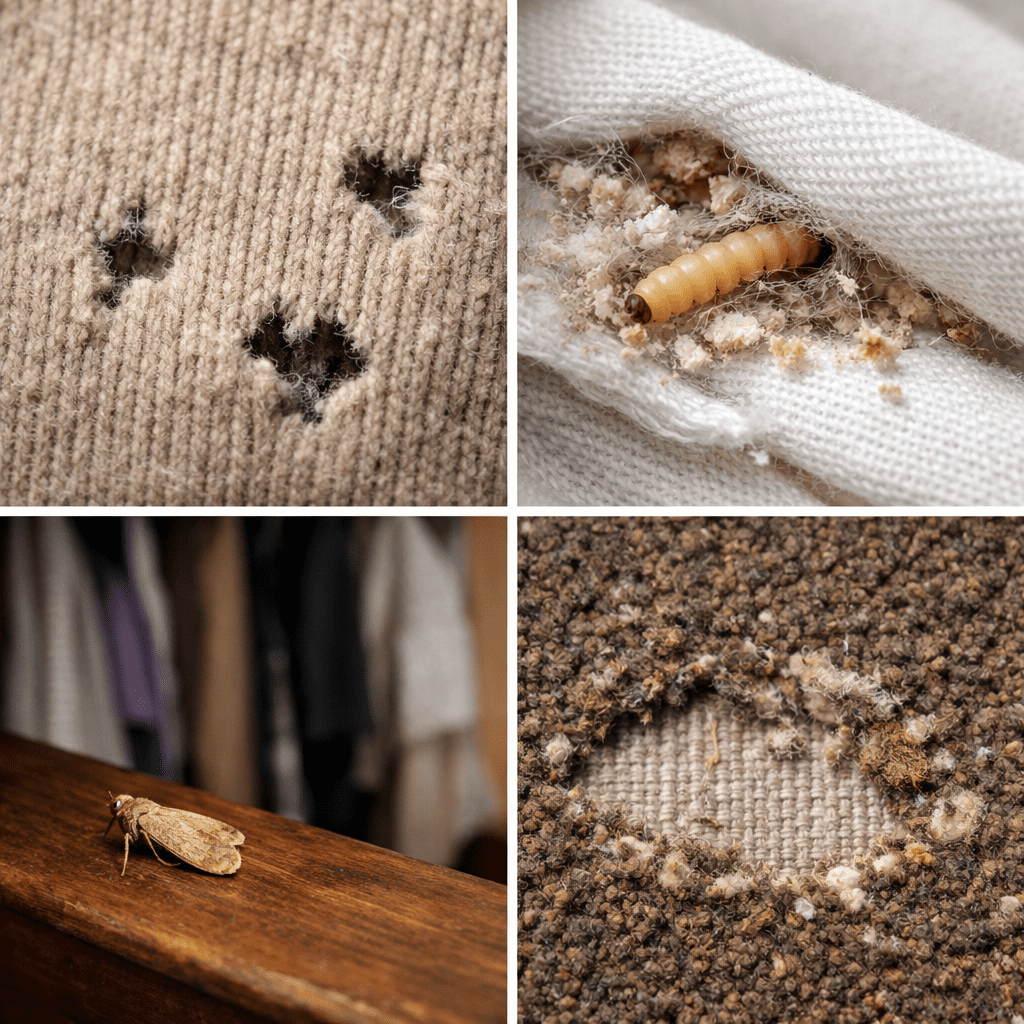
If you've pulled a favourite jumper from the wardrobe and found mysterious holes, clothes moths are one possible explanation — but damaged clothing isn't the only sign to look for.
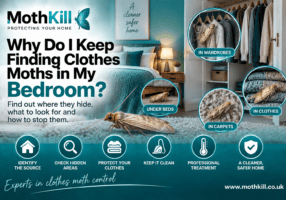
Clothes moth infestations can remain relatively inconspicuous because the damaging larvae prefer protected, undisturbed areas. Activity may be occurring beneath furniture, around carpet edges or among stored textiles before the problem becomes obvious.
This guide covers 10 important signs of clothes moths, where to inspect, how to distinguish them from other textile pests and what to do if you find evidence in your home.
What Are the Main Signs of Clothes Moths?
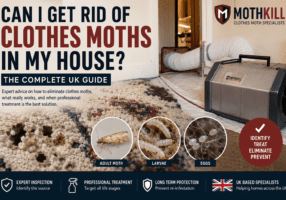
The strongest evidence includes live larvae, adult clothes moths, silk or larval cases, fresh damage to natural-fibre textiles and activity in dark, undisturbed areas.
Finding one suspicious hole is not enough by itself to prove an active infestation. Look for a combination of physical evidence and inspect the surrounding area carefully.
What Are Clothes Moths?
Clothes moths are small moths associated with materials containing animal-derived fibres and other suitable sources of nutrition.
Unlike many moths that are readily noticed around lights, clothes moths are commonly associated with darker and less disturbed parts of the home.
Vulnerable materials can include:
- wool;
- cashmere;
- fur;
- feathers;
- some silk items;
- wool carpets and rugs; and
- other materials containing suitable animal fibres.
10 Signs You May Have Clothes Moths
Small or Irregular Holes in Clothing
Damage to vulnerable clothing is one of the signs most likely to alert a homeowner to a possible clothes moth problem.
Check areas such as:
- collars;
- cuffs;
- seams;
- folded areas; and
- parts of garments left undisturbed.
Remember that holes can have other causes, so look for additional evidence before concluding that clothes moths are responsible.
Silk, Webbing or Larval Cases
Depending on the clothes moth species, you may find silken material, webbing or portable larval cases associated with feeding areas.
Fine silk mixed with fibres or debris around damaged textiles can be useful evidence that larvae have been active.
Small Adult Moths Indoors
Repeatedly finding small moths around wardrobes, bedrooms, carpets or other textile-rich areas deserves investigation.
Adult activity alone does not tell you exactly where the larvae are developing, so inspect nearby carpets, furniture and vulnerable textiles rather than simply killing the moths you can see.
Live Clothes Moth Larvae
Finding larvae associated with damaged natural-fibre material is much stronger evidence than simply seeing an unidentified flying moth.
Larvae can be small and pale and may remain concealed among fibres, beneath furniture or around protected carpet edges.
Thinning or Bald Patches in Carpets
Wool carpets can be particularly vulnerable in places that receive little disturbance.
Inspect:
- under beds;
- beneath wardrobes;
- under sofas;
- behind furniture; and
- around carpet edges.
Debris Around Feeding Areas
Active areas may contain a mixture of fibres, silk, larval material, droppings or shed material.
Check wardrobe corners, carpet edges, drawers and other locations where vulnerable textiles have remained undisturbed.
Repeated Moth Activity During Warmer Periods
Clothes moth activity can become more noticeable during warmer conditions because temperature influences insect development.
However, heated modern homes can support activity at other times of year too, so clothes moths should not be regarded as exclusively a spring or summer problem.
Damage to Stored or Little-Used Clothes
Clothing that remains undisturbed for long periods can provide favourable conditions if eggs or larvae are already present.
Soiling such as perspiration, food residues and body oils can also make some materials more attractive or nutritionally suitable to larvae.
Activity in Hidden, Undisturbed Areas
One of the biggest clues is where the activity occurs.
Common places to inspect include:
- behind wardrobes;
- under beds;
- beneath sofas;
- inside wardrobes and cupboards;
- beneath rugs; and
- other dark, low-disturbance areas.
Adult Moths but No Obvious Damage
Do not assume there is no problem simply because you cannot immediately find damaged clothing.
Adult activity can justify a closer inspection of carpets, rugs, wardrobes and stored natural-fibre items.
Finding the breeding material early can prevent further textile damage.
Where Should You Look for Clothes Moths?
Start with the places that are least frequently disturbed rather than simply looking around the middle of the room.
How Do You Confirm You Have Clothes Moths?
Avoid diagnosing the problem from one sign alone.
Instead, combine several pieces of evidence:
- identify the adult moth where possible;
- look for larvae or larval cases;
- inspect damaged materials;
- check the fibre type being attacked;
- look beneath and behind furniture;
- inspect nearby wardrobes and stored clothing; and
- use suitable monitoring traps where appropriate.
If you're unsure which moth you're dealing with, see our guide to identifying clothes moths .
Clothes Moths or Carpet Beetles?
This is a common source of confusion because both pests can damage natural-fibre materials.
Clothes moth activity may be associated with silk, webbing, larval cases and small moths around textile-rich areas.
Carpet beetle larvae look very different. They are typically hairy or bristly, and their shed larval skins can be an important clue.
If you find hairy larvae or shed skins rather than moth larvae, see our guide to carpet beetle larvae .
Do Clothes Moths Only Damage Clothing?
No.
The name can be misleading because infestations are not necessarily restricted to wardrobes.
Depending on the materials present, larvae may be associated with:
- wool carpets;
- rugs;
- upholstered furniture containing suitable fibres;
- blankets;
- stored textiles;
- natural-fibre clothing; and
- other suitable animal-derived material.
Why Are Clothes Moths So Easy to Miss?
The damaging stage is small, often concealed and tends to occupy protected areas.
A room can therefore look perfectly normal from standing height while larvae are active beneath a heavy wardrobe or along an undisturbed carpet edge.
This is also why simply killing adult moths does not necessarily solve an infestation.
What Should You Do If You Find Signs of Clothes Moths?
Confirm the Pest
Look for larvae, adult moths, silk or cases and the type of material being damaged. Don't rely on holes alone.
Find the Source
Inspect wardrobes, carpets, rugs, furniture and stored textiles, particularly in dark and undisturbed locations.
Choose the Right Control
The appropriate response depends on whether activity is limited to one item or established across carpets, furniture or several rooms.
Should You Vacuum If You Have Clothes Moths?
Yes. Thorough vacuuming can physically remove accessible larvae, some eggs, fibres, hair, lint and other material from potential feeding areas.
Concentrate on places that routine cleaning often misses:
- under beds;
- beneath movable furniture;
- around carpet edges;
- inside empty wardrobes;
- under rugs; and
- along room edges and corners.
Vacuuming is particularly useful as part of a wider control strategy, but an established infestation may require additional measures.
What Should You Do With Infested Clothes?
Suitable items can potentially be treated using methods such as laundering, tumble drying where appropriate, professional dry cleaning or controlled freezing.
Always consider the care instructions and material before exposing a valuable garment to heat, water or low temperatures.
Clean items should then be protected from reinfestation while the wider problem is being addressed.
Do Clothes Moth Pheromone Traps Work?
Pheromone traps can be very useful for monitoring clothes moth activity.
They can help show whether adult male moth activity is present and whether catches continue over time.
However, traps should not be expected to eliminate eggs and larvae hidden in carpets, furniture or clothing.
Read more about what clothes moth pheromone traps do .
Can Clothes Moth Sprays Work?
Authorised insecticides can have a legitimate role in clothes moth treatment when the correct product is used appropriately and according to its label.
The limitation is that treatment still needs to address the actual infestation.
Spraying obvious exposed areas while leaving larvae beneath furniture or among infested textiles may not resolve the problem.
When Should You Consider Professional Clothes Moth Treatment?
Professional treatment becomes particularly worth considering when activity is no longer limited to one easily identified item.
Examples include:
- damage in more than one room;
- larvae beneath several pieces of furniture;
- damage to fitted wool carpets;
- activity returning after cleaning or DIY treatment;
- valuable clothing or textiles being affected; or
- difficulty identifying the main breeding areas.
Does Heat Treatment Kill Clothes Moths?
Professional heat treatment can kill clothes moth eggs, larvae, pupae and adults when effective thermal conditions reach them for sufficient time.
This can make heat particularly useful where an infestation is established across furnished areas rather than confined to one removable item.
Professional heat treatment requires appropriate preparation, airflow and temperature monitoring. Heat-sensitive belongings also need to be considered before treatment.
Find out how MothKill carries out professional clothes moth heat treatment .
Will One Clothes Moth Treatment Be Enough?
It depends on the treatment method and the extent of the infestation.
Some insecticide treatment programmes may require follow-up visits because of the clothes moth life cycle, hidden harbourages and the way the chosen product works.
Heat treatment uses a different approach by attempting to expose the relevant life stages within the treatment area to effective thermal conditions during treatment.
Why Do Clothes Moths Sometimes Come Back?
Recurring activity can happen for several reasons:
- a breeding area was overlooked;
- only part of the infestation was treated;
- larvae remained in protected locations;
- affected textiles were missed;
- follow-up required by the treatment programme was not completed; or
- moths were subsequently reintroduced.
Continued monitoring can help distinguish ongoing infestation from a new introduction.
How Can You Help Prevent Clothes Moths?
Clean beneath furniture and around carpet edges rather than only open floor areas.
Avoid leaving stained or soiled wool and other vulnerable textiles in long-term storage.
Periodically check wool, cashmere, blankets and other susceptible items.
Suitable clean garments can be stored in well-sealed containers or garment storage systems.
Inspect used rugs, woollen items and upholstered furniture before bringing them into the home.
Pay particular attention to areas that have previously shown moth activity.
Frequently Asked Questions
What is the first sign of clothes moths?
There is no single first sign in every infestation. People may notice adult moths, damage to clothing or carpet, larvae, silk or larval cases. Physical evidence should be considered together rather than relying on one symptom.
How do I know if holes in clothes are caused by moths?
Holes alone do not prove clothes moth activity. Inspect the garment and surrounding area for larvae, silk, cases, adult moths or other evidence. Carpet beetle larvae and ordinary fabric damage should also be considered.
How do I know if I have clothes moths or carpet beetles?
Clothes moth larvae and adult moths look very different from carpet beetle larvae. Carpet beetle larvae are typically hairy or bristly and may leave shed skins. Clothes moth activity can be associated with silk or larval cases.
Do clothes moths go away on their own?
An active breeding infestation should not be expected to disappear simply by ignoring it. Removing the breeding material, cleaning, treating affected items and using appropriate control methods may be necessary.
Can clothes moths spread between rooms?
Yes. Activity can become established in more than one part of a property, particularly where suitable carpets, clothing, rugs, furniture or other vulnerable materials are available.
Do adult clothes moths damage clothing?
The characteristic textile damage is caused by the larvae rather than the adult moths. Adult activity is important because it can indicate that a breeding population may be present nearby.
Can clothes moths live in carpets?
Larvae can feed on suitable animal-derived fibres in vulnerable carpets. Activity is often most noticeable beneath furniture and around low-disturbance areas.
Does heat treatment kill clothes moth eggs?
Sufficient thermal exposure can kill clothes moth eggs as well as larvae, pupae and adults. The important factor is ensuring effective conditions actually reach the relevant areas for sufficient time.
Signs of Clothes Moths: Final Thoughts
Finding a moth indoors does not automatically mean your wardrobe is infested, and finding one hole in a jumper does not prove clothes moths caused it.
What matters is the combination of evidence.
Adult moth activity, larvae, silk or cases, fresh textile damage and activity in dark undisturbed locations together provide a much clearer picture.
If you find evidence, inspect beyond the wardrobe. Clothes moth larvae can also be associated with carpets, rugs, furniture and other vulnerable textiles elsewhere in the property.
Found Signs of Clothes Moths in Your Home?
If clothes moth activity is affecting carpets, clothing, furniture or several rooms, MothKill provides professional clothes moth treatment including monitored heat treatment for established infestations.