

Posts Tagged ‘clothes moth infestation’
Clothes Moths Under Floorboards
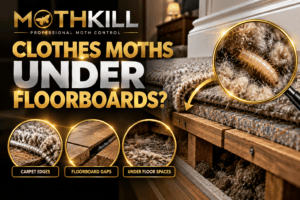
Can clothes moths live under floorboards? If moths keep appearing in a room but you cannot find an obvious source, it is reasonable to wonder whether the infestation is hidden beneath the floor. In some properties, the area around flooring can certainly be involved — but finding clothes moths in a room does not automatically…
Read MoreClothes moth larvae on walls and ceiling

Finding clothes moth larvae crawling on a wall or even across the ceiling can be confusing. Clothes moth larvae feed on natural fibres, so why would they be halfway up a painted wall where there is apparently nothing for them to eat? The answer is usually that the wall is not the source of the…
Read MoreWhy Your Vacuum is the Best Defence for Clothes Moths

Why Is Vacuuming So Important for Clothes Moths? Thorough vacuuming is one of the most useful things you can do when dealing with clothes moths because it physically removes accessible eggs, larvae, adults, webbing and debris. It also removes hair, fibres and other material from the quiet, undisturbed areas where clothes moth larvae often develop.…
Read MoreDo Cedar Blocks and Mothballs Actually Work for Clothes Moths

Cedar blocks may have a limited role as a clothes moth deterrent, while moth-control products must be used strictly according to their label. Neither should be relied upon as a simple cure for an established clothes moth infestation throughout your home. If you are finding holes in wool clothing, damaged carpets or clothes moth larvae,…
Read MoreWhy You Should Consider Heat Treatment for a Moth Infestation

Is clothes moth heat treatment worth it? It can be when an infestation has become established across carpets, furniture or several rooms and repeatedly treating individual belongings is no longer practical. That does not mean every clothes moth sighting requires professional heat treatment. A small, localised problem may be manageable with careful inspection, cleaning, monitoring…
Read MoreClothes Moth Myths & Facts

Clothes moths are surrounded by myths. Some people blame poor housekeeping, others rely on cedar or lavender, and many assume that killing the small moths flying around the room means the infestation has gone. Unfortunately, these misunderstandings can result in damaged clothes, carpets and furnishings while the real source of the infestation remains untreated. So…
Read MoreBest Treatment for Clothes Moths in the UK

What is the best treatment for clothes moths? The answer depends on what you have actually found. One affected woollen jumper is a very different problem from clothes moth larvae established in wool carpets, rugs, furniture and several rooms. That’s why I don’t think there is one single clothes moth treatment that is automatically “best”…
Read MoreThe Hidden Clothes Moth Problem Ruining UK Wardrobes

Clothes moths can damage wool clothing, carpets, rugs and furnishings while remaining almost completely unnoticed. The reason is simple: the small adult moth isn’t actually eating your clothes. The damage is caused by hidden larvae feeding on susceptible natural materials. That distinction explains why some DIY treatments appear to work for a while, only for…
Read MoreHow to Deal with a Clothes Moth Infestation

A clothes moth infestation can be frustrating and expensive, particularly when larvae begin damaging wool carpets, clothing, rugs or valuable natural-fibre textiles. The good news is that clothes moths can be controlled. The important part is identifying the pest correctly, finding where the larvae are feeding and choosing a treatment that reaches the affected areas.…
Read More