
I Found a Bed Bug in My Bed – What Should I Do?

If you have found what appears to be a bed bug in your bed, do not immediately start moving bedding, furniture or belongings around the house.
The first step is to confirm that the insect really is a bed bug. If it is, carefully inspect the bed and surrounding area for further evidence before deciding what treatment is needed.
Finding one bed bug does not tell you how large the problem is. It could be an isolated introduction, or it could be the first visible sign of an established infestation hidden around the bed.
Here is what to do next.
I Found a Bed Bug in My Bed – What Should I Do First?
If you have just found a suspected bed bug:
- Keep the insect or take a clear close-up photograph.
- Do not move belongings into another bedroom.
- Inspect the mattress, particularly seams and edges.
- Inspect the bed frame and headboard.
- Check nearby furniture and sheltered hiding places.
- Contain suspect bedding before moving it.
- Confirm the identification before launching into treatment.
The aim is to find out what you are dealing with without accidentally spreading it around the property.
1. Keep the Bed Bug If You Can
If you have captured the insect, keep it for identification rather than immediately disposing of it.
Place it securely in a small clear sealed container or bag.
A clear, close photograph can also be useful, particularly if the specimen is still intact.
Correct identification matters because several small insects can be mistaken for bed bugs.
2. Don't Start Moving Everything Out of the Bedroom
One of the first reactions after finding a bed bug can be to strip the room and move belongings somewhere else.
Be careful.
Moving potentially infested bedding, clothing, furniture and belongings through the property can spread bed bugs to areas that were previously unaffected.
3. Inspect the Mattress Carefully
Use a bright torch and inspect the mattress systematically.
Check the Mattress
- Seams
- Piping
- Labels
- Handles
- Buttons
- Folds
- Underside
Look for Evidence
- Live bed bugs
- Dark faecal spotting
- Pale shed skins
- Eggs
- Nymphs
- Blood spotting
Do not look only for a large adult bed bug. Smaller nymphs and other physical evidence can be much easier to miss.
4. Inspect the Bed Frame and Headboard
The mattress is only one possible hiding place.
Bed bugs frequently shelter within the structure of the bed itself.
Check:
- bed-frame joints;
- screw and fixing holes;
- slats;
- cracks and joins;
- the rear of the headboard;
- headboard fixings;
- divan bases;
- fabric folds; and
- stapled areas.
A headboard positioned against a wall can provide particularly useful harbourage for bed bugs.
5. Check the Area Around the Bed
Bed bugs often remain relatively close to where people spend long periods resting, particularly during the earlier stages of an infestation.
As an infestation develops, however, activity can extend beyond the bed.
Nearby Furniture
- Bedside cabinets
- Chairs
- Sofas used for sleeping
- Drawers and furniture joints
Around the Room
- Skirting areas
- Carpet edges
- Curtains near the bed
- Cracks and crevices
- Other sheltered areas near the sleeping position
Our guide to where bed bugs hide during the day covers the most important harbourages in more detail.
What Does a Bed Bug Look Like?
Adult bed bugs are small, flat insects with a broadly oval body.
Adults are generally brown, although their appearance changes after feeding.
Young bed bugs, known as nymphs, are smaller and can be considerably paler.
Bed bugs do not have wings and cannot fly.
Identification from colour or size alone can be unreliable, particularly with a small or damaged specimen, so consider the overall body shape and any supporting evidence found around the bed.
Could It Be Something Other Than a Bed Bug?
Yes.
Several insects can be mistaken for bed bugs, particularly when a specimen is tiny, damaged or crushed.
This is why treating an entire property based on uncertain identification is not a good starting point.
If possible, confirm what the insect is before using pesticides or paying for professional treatment.
Does Finding One Bed Bug Mean I Have an Infestation?
Not necessarily — but don't assume it is the only one.
An individual bed bug can be introduced into a property on luggage, clothing, furniture or another belonging.
On the other hand, a single visible bed bug can also be the first insect you have noticed from an infestation already hidden around the bed.
If a mated female has been introduced or eggs have already been laid, further activity may also develop.
Finding one confirmed bed bug should therefore trigger a careful inspection, not an assumption in either direction.
What Other Signs of Bed Bugs Should I Look For?
Look for a combination of physical evidence rather than relying on bites alone.
Possible signs include:
- live bed bugs;
- dark faecal spotting;
- shed skins;
- eggs;
- small nymphs;
- blood spotting on bedding; and
- repeated unexplained bites.
Not everyone reacts to bed bug bites in the same way, and some people show little or no obvious skin reaction.
The absence of bites therefore does not prove that bed bugs are absent.
Should I Strip the Bed?
You can remove bedding when it needs to be inspected, laundered or treated, but do it carefully.
Avoid carrying loose suspect bedding through the house.
Place it directly into suitable sealed bags or containers before transporting it.
Follow the care instructions for individual items when laundering or drying.
Should I Sleep in Another Bedroom?
Moving into another bedroom is not usually the first response simply because you have found a suspected bed bug.
Moving bedding, bags and personal belongings between rooms can physically spread insects.
Regularly changing the sleeping location can also complicate the distribution of activity within the property.
Keep the situation contained while you establish what is happening and decide on the appropriate treatment strategy.
Should I Throw Away My Mattress?
No — not automatically.
Finding bed bugs does not mean your mattress has to be discarded.
Mattresses and beds can often be included within a properly planned bed bug treatment.
Throwing away an expensive mattress may achieve very little if bed bugs are also hiding in the frame, headboard, furniture or elsewhere in the room.
Read our detailed guide: should you throw away your mattress if you have bed bugs?
Should I Throw Away the Bed?
Again, usually not before the infestation has been assessed.
Bed bugs can hide within bed frames and divan bases, but many beds can be treated.
If heavily infested furniture genuinely needs to be removed, it should be handled carefully so bed bugs are not spread through the property, communal areas or into another home.
- Don't start carrying loose belongings into other rooms.
- Don't automatically throw away the mattress or bed.
- Don't randomly combine several different pest-control products.
Should I Use Bed Bug Spray Immediately?
Avoid randomly spraying products around the room before you understand where bed bugs may be hiding.
Authorised insecticides can have a legitimate role in professional and DIY bed bug control when they are appropriate for the intended location and used strictly according to their labels.
But repeatedly spraying exposed surfaces does not guarantee that hidden bed bugs or eggs have been reached.
What About Bed Bug Foggers or Smoke Bombs?
Do not assume that filling a room with an insecticide mist or smoke will reach every bed bug.
Bed bugs can shelter within joints, cracks, furniture and other protected locations.
Any pest-control product should only be used according to its authorised label.
For an established infestation, treatment should be based on inspection and harbourage location rather than simply choosing the product that appears to cover the largest area.
Can I Vacuum Bed Bugs?
Vacuuming can physically remove visible bed bugs and debris from accessible locations.
It can therefore be useful as one part of an integrated control strategy.
Concentrate carefully on accessible seams, cracks, edges and joints.
However, vacuuming alone cannot reliably reach every concealed insect or egg.
Dispose of the vacuum contents carefully afterwards.
Can Washing Bedding Kill Bed Bugs?
Suitable laundering and drying can be useful for bedding and clothing when the item's care instructions permit the required conditions.
However, treating the bedding does not treat:
- the bed frame;
- the headboard;
- nearby furniture;
- cracks and joints; or
- the rest of an affected room.
Where Did the Bed Bug Come From?
Bed bugs can be transported between locations with belongings.
Possible introductions can involve:
- luggage;
- overnight travel;
- second-hand furniture;
- clothing and bags;
- visitors' belongings; and
- movement between neighbouring areas in some multi-occupancy buildings.
Finding the exact origin is not always possible.
The immediate priority is confirming whether additional bed bugs are present and establishing the extent of the problem.
If you've recently bought used furniture, see our guide to signs of bed bugs after buying second-hand furniture .
Can Bed Bugs Live Away From the Bed?
Yes.
The name “bed bug” can be misleading because the insects are not restricted to mattresses and beds.
As an infestation develops, bed bugs may be found in nearby furniture, skirting areas, cracks and other protected harbourages.
This is one reason a proper inspection should extend beyond the mattress.
How Quickly Can a Bed Bug Problem Get Worse?
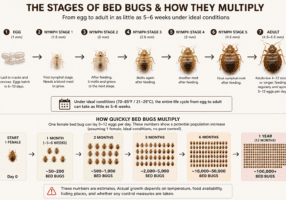
Bed bugs reproduce over time when suitable conditions and access to a host are available.
One sighting does not mean your home will suddenly contain thousands of bed bugs overnight.
But ignoring confirmed activity can allow an infestation to become progressively more established and more difficult to control.
Early identification and an appropriate response are therefore useful.
Can I Get Rid of Bed Bugs Myself?
A very small and recently introduced problem may sometimes be manageable with careful inspection, containment and appropriate control measures.
DIY treatment becomes considerably more difficult when:
- bed bugs are found in several locations;
- more than one room is affected;
- eggs and nymphs are present;
- activity continues after DIY treatment;
- the infestation appears to have been present for some time; or
- the main harbourages cannot be located.
When Should I Consider Professional Bed Bug Treatment?
Professional treatment becomes worth considering when the identification is confirmed and there is evidence of an established infestation.
A professional approach should consider the entire affected area rather than simply treating the mattress.
Depending on the circumstances, control may involve:
| Method | Potential Role | Important Consideration |
|---|---|---|
| Heat Treatment | Controlled thermal treatment of affected areas and hidden life stages. | Airflow, exposure time, preparation and temperature monitoring matter. |
| Insecticides | Targeted and/or residual treatment where appropriate. | Product selection, coverage, resistance and follow-up can affect results. |
| Steam | Direct treatment of suitable accessible harbourages. | It is a local treatment and needs careful application. |
| Vacuuming / Physical Removal | Removal of accessible insects and debris. | Does not reliably reach every hidden insect or egg. |
| Integrated Treatment | Combines appropriate methods according to the infestation. | The strategy needs to match the property and extent of activity. |
Does Heat Treatment Kill Bed Bugs?
Bed bugs and their eggs are vulnerable to sufficiently high temperatures when effective thermal conditions reach them for sufficient time.
Professional heat treatment uses controlled heating, air circulation and temperature monitoring throughout the treatment area.
The important part is ensuring that effective conditions reach the places where bed bugs may actually be concealed.
Our guide explaining how bed bug heat treatment works covers the process in more detail.
Can Bed Bugs Survive Professional Treatment?
No responsible pest-control treatment should be described as incapable of failure.
With heat treatment, factors including preparation, airflow, exposure time, property layout and temperature monitoring can affect the outcome.
With insecticide treatment, product choice, coverage, insecticide resistance and appropriate follow-up can also matter.
If you have already received treatment but are concerned about continuing activity, read still got bed bugs after treatment?
What Should I Do Tonight If I Found a Bed Bug?
If you have just found a suspected bed bug, use this checklist:
- Keep the specimen or take a clear close-up photograph.
- Inspect the mattress, especially seams, piping and the underside.
- Inspect the bed frame and headboard, including joints and fixings.
- Check nearby furniture and harbourages.
- Avoid moving loose belongings into other rooms.
- Contain suspect bedding before transporting it.
- Avoid randomly applying multiple pesticides.
- Arrange identification or professional advice if you remain unsure.
These steps give you a much better starting point than immediately dismantling the room, changing bedrooms or throwing furniture away.
Frequently Asked Questions
I found one bed bug. Should I be worried?
Take a confirmed bed bug seriously, but one insect does not automatically mean you have a large infestation. Keep the specimen if possible and inspect the bed and surrounding area carefully for additional evidence.
Can there really be just one bed bug?
Yes. An individual bed bug can be introduced into a home. However, you should still investigate because additional insects or eggs may already be present.
Does one bed bug mean there are more?
Not always, but it is possible. Finding one confirmed bed bug should trigger a careful inspection rather than an assumption that it is either definitely alone or definitely part of a large infestation.
Should I throw my mattress away after finding a bed bug?
Usually not. Mattresses can often be treated, and throwing one away does not resolve bed bugs hiding elsewhere in the bed frame, headboard, furniture or room.
Should I sleep somewhere else?
Moving rooms can complicate containment, particularly if bedding and belongings are moved with you. Establish the extent of the problem before relocating potentially infested items around the property.
Can I see bed bug eggs?
Bed bug eggs are visible but very small and can be difficult to spot, particularly when concealed within cracks, joints and other protected locations.
Should I spray the bed bug immediately?
Random spraying is not a substitute for inspection. Authorised insecticides can have a legitimate role when correctly selected and used according to their labels, but the wider infestation and hidden harbourages still need to be considered.
How soon should I treat bed bugs?
Once the identification and presence of an infestation are confirmed, dealing with the problem promptly can reduce the opportunity for it to become more established.
I Found a Bed Bug in My Bed: Final Thoughts
Finding a bed bug is unpleasant, but what you do next matters.
Confirm the identification, inspect carefully and avoid spreading potentially infested belongings around your home.
Do not automatically throw away your mattress or furniture, and do not assume that killing or spraying the one visible insect has solved the problem.
If you discover further bed bugs, eggs, nymphs or other clear signs of an established infestation, a properly planned treatment may be appropriate.
Found More Than One Bed Bug?
If your inspection finds further bed bugs or evidence of an established infestation, MothKill provides professional monitored bed bug heat treatment and can advise on the appropriate next step.