Still Got Bed Bugs After Treatment

Finding bed bugs after treatment does not automatically mean that the treatment was badly carried out.
Bed bug control can require follow-up because insects may remain in hidden harbourages, insecticide susceptibility varies, treatment may not reach every relevant area, or the treatment programme may be designed around more than one visit.
Bed bugs can also be reintroduced after successful treatment or move from another infested area in a connected building.
Why Might Bed Bugs Still Be Present After Treatment?
There is no single explanation. The reason depends on the treatment method, infestation, property and evidence found afterwards.
Hidden Harbourages
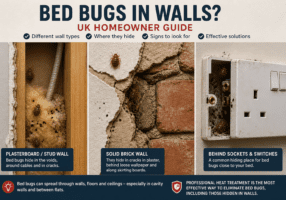
Bed bugs can remain inside bed frames, headboards, furniture, cracks, skirting and other concealed areas.
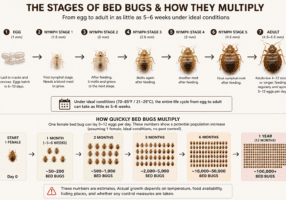
Eggs & Life Cycle
The effect of a treatment on eggs depends on the method used and whether effective conditions or products reach them.
Insecticide Resistance
Resistance to some insecticides is documented in bed bug populations and can complicate chemical control.
Incomplete Coverage
Treatment that fails to reach an important harbourage may leave surviving activity behind.
Preparation Problems
Depending on the treatment method, clutter, inaccessible furniture or tightly packed belongings can interfere with effective treatment.
Reintroduction
Bed bugs can be brought back into a treated property in luggage, furniture, bags, clothing and other belongings.
Bed Bug Eggs Can Complicate Some Treatments
Bed bug eggs are small and are often deposited in protected harbourages.
Whether eggs survive a treatment depends on the control method and the conditions achieved. Some treatment programmes are therefore designed around follow-up visits so that activity can be reassessed and newly emerged insects treated where necessary.
Can Bed Bugs Be Resistant to Insecticides?
Yes. Resistance to insecticides has been documented in bed bug populations.
Resistance is not an all-or-nothing characteristic of every bed bug in every property. It can vary between populations and between active ingredients.
This is one reason effective bed bug management should not simply consist of repeatedly applying the same product without investigating why activity continues.
Professional control may involve different products, physical methods, monitoring, heat or an integrated approach depending on the circumstances.
Why Are Follow-Up Bed Bug Treatments Sometimes Necessary?
Follow-up treatments can be a legitimate part of a professional treatment programme.
They allow the pest controller to assess whether activity remains, investigate harbourages again and treat surviving or newly detected insects where appropriate.
One Visit Doesn't Suit Every Method
An insecticide-based programme may be intentionally designed around more than one application or inspection.
Evidence Should Guide the Follow-Up
The important question is whether fresh physical evidence remains and, if it does, where that activity is coming from.
Can Poor Preparation Affect Bed Bug Treatment?
Yes, although the preparation required depends on the treatment being carried out.
Excessive clutter, inaccessible furniture and densely packed belongings can make inspection and treatment more difficult.
Always follow the preparation instructions supplied by the company carrying out your treatment rather than following generic internet advice that may have been written for a different method.
For heat treatment, see our bed bug heat treatment preparation checklist .
Why Treating Only the Bed Can Fail
Bed bugs are strongly associated with sleeping and resting areas, but an established infestation may extend beyond the mattress.
Harbourages can include:
- bed-frame joints;
- headboards;
- divan bases;
- bedside furniture;
- sofas and upholstered furniture;
- skirting and cracks;
- furniture joints; and
- other protected areas close to where people rest.
Treating the mattress while leaving an active harbourage elsewhere can allow the infestation to continue.
What About Foggers and Bed Bug Bombs?
A treatment needs to reach the insects or create effective conditions where they are hiding.
Bed bugs spend much of their time concealed in cracks, furniture and other protected harbourages. Products that do not adequately reach those areas should not be relied upon as a substitute for proper inspection and an appropriate control programme.
Any pesticide should only be used for its authorised purpose and in accordance with its label instructions.
Why Is Bed Bug Heat Treatment Different?
Professional heat treatment uses elevated temperatures rather than relying on insecticide susceptibility.
When sufficient temperatures reach relevant harbourages and are maintained for the necessary exposure, heat can kill bed bugs at different stages of the life cycle, including eggs.
Professional treatment therefore requires more than simply heating the air. Air circulation, preparation, temperature monitoring and reaching difficult harbourages are all important.
Learn more about how bed bug heat treatment works .
Can Bed Bugs Still Appear After Heat Treatment?
Yes. Finding a bed bug afterwards deserves investigation rather than an automatic assumption about what happened.
Possible explanations include:
- a relevant harbourage not reaching the required treatment conditions;
- an area being outside the treatment zone;
- bed bugs moving from another infested part of a connected building;
- infested belongings being returned to the property; or
- a completely new introduction after treatment.
Does a Bite Mean the Treatment Failed?
No. A skin reaction by itself cannot reliably confirm that bed bugs remain.
People react differently to bites, reactions may not always be noticed at the same time, and other conditions can produce marks that resemble insect bites.
Fresh physical evidence is much more useful when assessing whether bed bug activity continues.
What Are the Strongest Signs Bed Bugs Are Still Active?
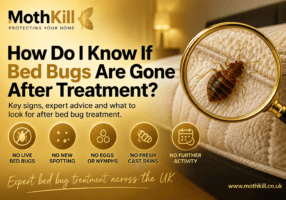
Old staining, dead bed bugs and historic cast skins can remain after a successful treatment, so concentrate on whether new evidence is developing.
Treatment Failure or Reintroduction?
Possible Continuing Infestation
Repeated live bugs or fresh evidence in the same areas shortly after treatment may indicate that activity remains and should be investigated.
Possible Reintroduction
New activity may also follow travel, second-hand furniture, infested belongings or movement from another affected area in a connected building.
What About Flats, HMOs and Neighbouring Properties?
Bed bug control can be more complicated in multi-occupancy buildings.
Where another flat, room or adjoining area is infested, bed bugs may move through cracks, service routes and connected structures.
Treating one property successfully does not necessarily remove an infestation elsewhere in the building.
Repeated activity in a flat or HMO may therefore require investigation beyond the individual room where bed bugs were first found.
When Should You Contact the Pest Controller Again?
Contact the company that carried out the treatment if you continue finding convincing fresh evidence, particularly:
- live bed bugs;
- new spotting;
- fresh cast skins;
- eggs or nymphs; or
- activity that appears to be increasing.
Photograph or safely capture a suspected insect where possible. Correct identification can make the follow-up much more useful.
For more detail, see how to know if bed bugs are gone after treatment .
Bed Bug Treatment Options
Frequently Asked Questions
Why do I still have bed bugs after spraying?
Possible reasons include hidden harbourages, incomplete coverage, insecticide resistance, surviving life stages or activity outside the treated area. Some insecticide programmes are also deliberately designed around more than one treatment.
Does needing a second bed bug treatment mean the first one failed?
Not necessarily. Follow-up treatments may form part of the planned control programme, particularly with methods where reassessment and repeat application are appropriate.
Are bed bugs resistant to insecticides?
Resistance to some insecticides is documented in bed bug populations. The degree of resistance can vary between populations and active ingredients.
Does heat treatment kill bed bug eggs?
When sufficient temperatures reach the eggs and are maintained for the necessary exposure, professional heat treatment can kill bed bugs at all life stages, including eggs.
Is heat treatment better than spraying?
The methods work differently. Heat does not depend on insecticide susceptibility and can target all life stages when lethal conditions reach the harbourages. Insecticides can also play an important role in professional bed bug management. The appropriate method depends on the property, infestation and treatment strategy.
Can bed bugs come back after successful treatment?
Yes. Bed bugs can be introduced again through luggage, furniture and belongings or potentially move from another infested area in a connected building.
Useful UK Bed Bug Information
For additional health and pesticide information, see the NHS bed bug guidance and Health and Safety Executive biocides information .
Still Got Bed Bugs After Treatment? – Final Thoughts
Continued bed bug activity does not have one universal explanation.
Treatment method, insecticide resistance, hidden harbourages, preparation, untreated areas, neighbouring infestations and reintroduction can all be relevant.
And importantly, a treatment programme requiring more than one visit is not automatically a failed treatment.
Concentrate on fresh physical evidence, establish where it is coming from, and choose the next treatment step based on that evidence.
Repeated Bed Bug Treatments Haven't Solved the Problem?
MothKill provides professional bed bug heat treatment using specialist heating equipment, industrial air circulation and multiple temperature sensors to monitor treatment conditions.