Can You Have Bed Bugs and Never See One
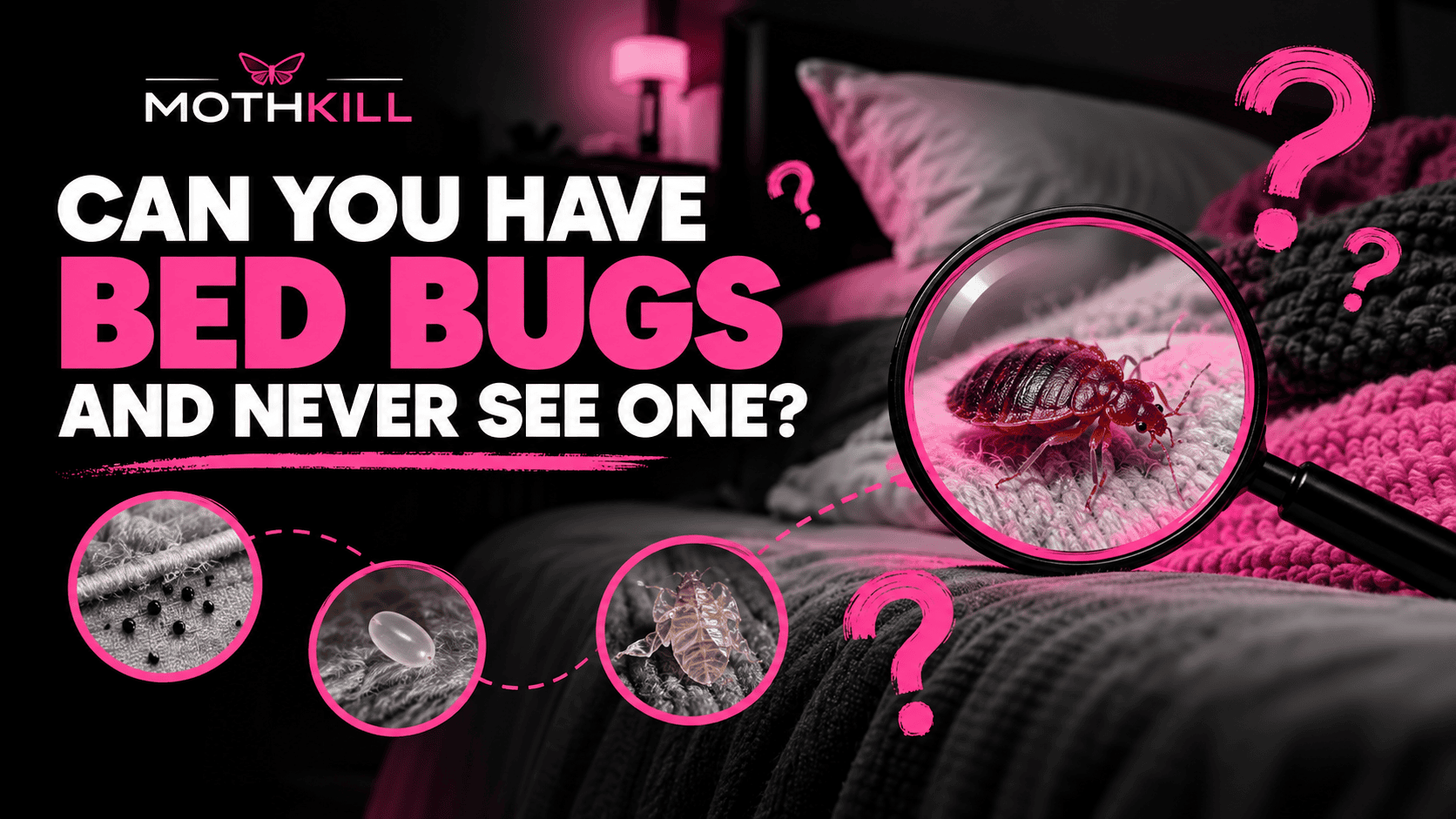
Can You Have Bed Bugs and Never See One?
Yes. You can have bed bugs in your home without ever seeing a live one. Their small size, hiding behaviour and preference for concealed harbourages can make even an active infestation surprisingly difficult to find.
One of the questions I regularly hear is: “Can I really have bed bugs if I haven't actually seen one?”
The answer is yes.
You might wake up with unexplained marks, notice tiny black spots around the bed or simply feel that something is biting you at night. You inspect the mattress, look underneath the bed and find absolutely nothing.
That does not necessarily mean the room is clear.
Why Are Bed Bugs So Difficult to See?
Bed bugs are very good at remaining out of sight.
They do not need to wander continuously around a bedroom. Once they have found a suitable hiding place close to somebody who regularly sleeps or rests there, they can remain concealed for much of the time.
The places they choose can also be remarkably small.
A narrow furniture joint, screw hole, crack in a bed frame or gap behind a headboard can provide enough space for bed bugs to hide.
That is why pulling back the duvet and checking the visible surface of the mattress is not enough to rule them out.
If you want to know the locations I would check first, read our guide to where bed bugs hide during the day.
Where Could Bed Bugs Be Hiding?
The mattress is certainly worth inspecting, but it is only part of the picture.
In real infestations, I would be interested in the entire area around where somebody sleeps or spends long periods resting.
- Mattress seams, piping and labels
- Bed-frame joints and fixings
- Screw holes and brackets
- Behind and underneath headboards
- Inside and underneath divan bases
- Bedside cabinets and drawer joints
- Behind skirting boards and trim
- Along carpet edges
- Behind pictures and nearby wall fittings
- Sofas and upholstered chairs used regularly
The important point is that not finding bed bugs on the mattress does not prove that there are no bed bugs in the room.
What Signs Can You Find Without Seeing a Bed Bug?
A live insect is only one piece of evidence.
Sometimes the first indication of an infestation is something the bed bugs have left behind.
Dark Spotting
Small dark or black marks may be visible around mattress seams, headboards, bed frames and established harbourage areas.
Cast Skins
Young bed bugs shed their outer skin as they develop. These pale empty skins can sometimes be easier to find than the insects themselves.
Eggs
Bed bug eggs are tiny and pale. They can be extremely difficult to see when tucked into cracks, joints and other protected areas.
Unexplained Bites
Bites can raise suspicion, but bites alone cannot reliably prove that bed bugs are responsible.
For a more detailed inspection guide, see our article on the signs you have bed bugs.
Can You Have Bed Bugs Without Any Obvious Signs?
Yes, particularly at the beginning of an infestation.
Imagine that only a very small number of bed bugs have been introduced into a bedroom. There may not yet be enough activity to produce obvious spotting or large numbers of cast skins.
The insects themselves may be hidden inside a bed-frame joint or another harbourage that has not been disturbed.
There is another complication: not everybody reacts to bed bug bites in the same way.
One person may develop noticeable marks while another person sleeping in the same property may show little or no visible reaction.
Small infestations are therefore easy to overlook. Our guide to the early signs of bed bugs most people miss covers some of the less obvious clues.
Can You Have Bed Bugs Without Getting Bites?
You can certainly have bed bugs without noticing obvious bites.
That does not necessarily mean the insects are not feeding.
People's skin reactions vary considerably. Some notice itchy marks quickly, while others show very little visible reaction.
There is also an important point I make to customers: a skin reaction cannot identify an insect.
If you wake up with marks on your skin, bed bugs are one possible explanation, but they are not the only explanation.
Physical evidence around the bed and surrounding furniture is much more useful when trying to establish what is actually happening.
Why Haven't I Seen Bed Bugs Crawling Around?
Because hiding is what bed bugs are good at.
They generally have little reason to sit exposed on a wall, mattress or carpet when a protected crack is available nearby.
During an established infestation you may eventually see insects moving across beds, walls or furniture. But waiting for that to happen is not a sensible way to decide whether bed bugs are present.
The absence of obvious daytime activity does not rule them out.
Can Bed Bugs Hide Inside the Bed Frame?
Absolutely — and this is an area people often underestimate.
A bed frame can contain numerous potential harbourages. Joints, fixings, brackets, screw holes, cracks and hollow sections may all provide protected spaces.
Divan beds can be even more complicated because insects may be concealed underneath fabric coverings or around the internal wooden framework.
A quick glance underneath the mattress is therefore very different from a thorough bed bug inspection.
“I Can't See Any” Doesn't Mean “There Aren't Any”
This is probably the most important point in this article.
A bedroom can look completely normal while bed bugs remain hidden only a short distance from where somebody sleeps.
But the opposite mistake is also worth avoiding.
If you cannot find bed bugs or physical evidence of bed bugs, repeatedly treating the property just because you have unexplained bites is not necessarily the right approach.
Good pest control begins with identification and evidence.
What Do Bed Bugs Look Like?
Adult bed bugs are small, flattened insects with a broadly oval body. Their appearance changes depending on whether they have recently fed.
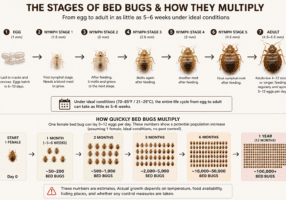
Young bed bugs — known as nymphs — are much smaller and can be pale or almost translucent.
That makes them particularly easy to overlook on light-coloured materials.
The eggs are smaller again and can be hidden deep inside furniture joints and cracks.
So when somebody says, “I've looked everywhere and I can't see anything,” I would always want to know where they looked and how they inspected.
Do Bed Bug Bites Prove You Have Bed Bugs?
No.
It is tempting to identify bed bugs from photographs of bites, particularly when marks appear overnight, but skin reactions are not reliable enough to confirm the pest responsible.
If bed bugs are suspected, the better approach is to look for supporting physical evidence around sleeping and resting areas.
That might include spotting, cast skins, eggs or eventually a live or dead specimen that can be identified.
How to Check for Bed Bugs Properly
If you want to carry out an initial inspection yourself, use a good torch and take your time.
Do not simply remove the bedding, look at the mattress and stop.
- Remove the bedding and inspect mattress seams carefully.
- Look underneath mattress labels, piping and handles.
- Inspect the headboard, including behind it where possible.
- Check bed-frame joints, brackets, fixings and screw holes.
- Examine bedside cabinets and drawer joints.
- Look around skirting boards and floor-to-wall junctions.
- Check nearby upholstered furniture.
- Look for spotting, eggs and cast skins as well as live insects.
If you find a suspicious insect, try not to crush or dispose of it immediately. A clear photograph or safely retained specimen can make identification much easier.
What If You Find Just One Bed Bug?
This is another situation that causes understandable confusion.
It is possible for a single bed bug to be introduced into a home through luggage, furniture, clothing or belongings.
But once you have found one, you cannot safely assume it was the only one.
There may be other insects or eggs hidden nearby, and a fertilised female has the potential to establish an infestation.
If you have actually found an insect, our guide I Found a Bed Bug in My Bed – What Should I Do? explains what I recommend doing next.
Should You Throw Away the Mattress?
Usually, finding evidence of bed bugs does not automatically mean your mattress needs to go in the skip.
Throwing furniture away without dealing with the infestation can be expensive and may achieve very little if bed bugs are also hiding in the bed frame, skirting, bedside furniture or elsewhere in the room.
Before disposing of an otherwise usable mattress, read our guide: Should You Throw Away Your Mattress If You Have Bed Bugs?
Could Bed Bugs Be in Another Room?
Yes.
Although bedrooms are the obvious location, bed bugs are not interested in the name of the room. They are interested in access to people.
Sofas, armchairs and other places where somebody spends long periods sitting or sleeping can also become associated with activity.
In a more established infestation, bed bugs may be present in several areas of a property.
This is one reason I am cautious about assuming that treating one visible hotspot automatically solves the whole problem.
Why Killing the Bed Bugs You See Isn't Enough
This is where many DIY attempts go wrong.
If you find and kill three bed bugs, you have killed three bed bugs.
You have not necessarily eliminated the infestation.
The real question is what remains inside the harbourages you cannot see.
Hidden insects and eggs are what make established bed bug problems difficult to solve with occasional surface spraying or by killing individual insects as they appear.
The objective has to be eradication of the infestation, not simply removing the visible evidence.
Professional Bed Bug Heat Treatment
Once a bed bug infestation has been confirmed, professional heat treatment provides a very different approach from chasing individual insects around a bedroom.
MothKill uses professional heating equipment with temperatures monitored throughout the treatment using multiple sensors.
Hot air is circulated throughout the treatment area, with the aim of bringing beds, furniture and potential harbourage areas to lethal temperatures and maintaining those temperatures for the required period.
It is not simply a case of making the room feel hot.
The temperature needs to reach the places where bed bugs are actually hiding.
You can read more about how we carry this out on our professional bed bug heat treatment page.
How Do You Know When Bed Bugs Are Gone?
This is almost the reverse of the question we started with.
If bed bugs can remain hidden before treatment, how do you know when an infestation has actually been eliminated afterwards?
It is a good question, because immediately seeing nothing after treatment is not the only thing to consider.
Our guide to how to know if bed bugs are gone after treatment explains what to monitor following treatment.
So, Can You Have Bed Bugs and Never See One?
Yes.
You can have bed bugs in your home without seeing a live insect.
This is particularly possible during the early stages of an infestation when numbers are low and the insects are concealed inside small harbourages.
You might notice other evidence first: spotting, cast skins, eggs or unexplained night-time bites.
But there is an equally important message here.
Not seeing a bed bug does not prove you have them either.
If you suspect bed bugs, look for evidence and inspect methodically before assuming what the problem is.
And if bed bugs are confirmed, remember that the insects you can see are rarely the whole story.
The difficult ones are usually the ones you can't.
Frequently Asked Questions
Can I Have Bed Bugs if I Can't Find Any?
Yes. Bed bugs can remain hidden inside bed frames, furniture joints, headboards, divan bases and other small gaps. Failing to find a live insect during an inspection does not automatically rule out an infestation.
Can You Have Bed Bugs Without Bite Marks?
Yes. People's reactions to bed bug bites vary considerably. Some people develop noticeable marks while others may show little or no visible reaction.
Where Should I Look if I Suspect Bed Bugs?
Start with mattress seams, the bed frame, headboard, divan base and bedside furniture. Then inspect nearby cracks, skirting boards and upholstered furniture. Look for physical evidence as well as live insects.
Does Finding One Bed Bug Mean There Are More?
Not necessarily, but you should not assume it is the only one. A thorough inspection is advisable because other bed bugs or eggs may be concealed nearby.
Can Bed Bugs Live Inside Furniture?
Yes. Bed bugs can hide inside furniture joints, cracks, screw holes, underneath coverings and other protected spaces.
Can Bed Bugs Be Present if the Mattress Looks Clean?
Yes. Bed bugs are not restricted to mattresses. They may be hiding in the bed frame, headboard, divan base, bedside furniture or other harbourages close to where people sleep.
Suspect Bed Bugs but Can't Find Them?
MothKill provides professional bed bug treatment across London and large parts of England. If you have found suspicious evidence or think bed bugs may be present, contact us and tell us what you have been experiencing.
Bed Bug Heat Treatment Contact MothKill