How Do I Know If Bed Bugs Are Gone After Treatment

The most reassuring sign is a continued absence of fresh bed bug activity.
Look for no live bed bugs, no new dark spotting, no fresh cast skins and no other developing physical evidence around beds and furniture. The longer you go without fresh evidence, the more encouraging it becomes.
Do not rely on one skin mark or old evidence around the bed to decide whether treatment has worked.
What Are the Best Signs That Bed Bugs Are Gone?
After treatment, concentrate on whether new evidence is appearing.
No single observation provides instant certainty. What matters is the pattern you see as time passes.
Old Bed Bug Evidence Does Not Mean Treatment Failed
One of the easiest mistakes to make after treatment is confusing old evidence with new activity.
Black spotting, cast skins and dead insects do not automatically disappear when an infestation has been controlled. You may continue finding old evidence while cleaning or moving furniture.
Usually Not Evidence of Current Activity
- Old dried spotting.
- Dead bed bugs.
- Old cast skins.
- Historic staining around harbourages.
- An isolated unexplained skin mark.
Evidence Worth Investigating
- Live bed bugs.
- New dark spotting appearing.
- Fresh cast skins.
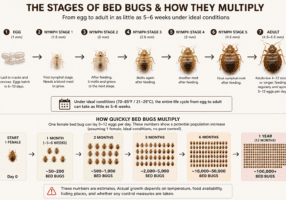
- Eggs or newly hatched nymphs.
- Repeated or increasing physical evidence.
Is It Normal to Find Dead Bed Bugs After Treatment?
Yes. Finding a dead bed bug after treatment does not mean that the infestation is still active.
Dead insects may remain inside bed frames, beneath furniture, behind skirting or in other hidden areas and only become visible later during cleaning or inspection.
The more important question is whether you are finding live bed bugs or fresh evidence.
Do Bites Mean Bed Bugs Are Still There?
Not necessarily.
Skin reactions alone are not a reliable way to confirm whether bed bugs remain after treatment. Reactions can vary considerably between people, and unexplained marks can have other causes.
Where Should You Check After Treatment?
There is no need to dismantle the entire bedroom every day. Concentrate on the places where fresh evidence is most likely to appear.
The Bed
Check mattress seams, piping, bed-frame joints, headboard connections and divan bases.
Nearby Furniture
Look around bedside furniture, drawer joints and upholstered furniture close to sleeping areas.
Room Edges
Check skirting, carpet edges and nearby cracks where previous activity was identified.
Record Anything Suspicious
Photograph or safely capture a suspected insect where possible. Correct identification can prevent unnecessary treatment.
A Simple Post-Treatment Monitoring Plan
You are looking for a trend rather than repeatedly searching every corner of the property.
Why Might Bed Bugs Still Be Present After Treatment?
Finding continued activity does not automatically tell you why a treatment has been unsuccessful.
Possible explanations can include hidden harbourages that were not adequately treated, treatment conditions not reaching all relevant areas, eggs or insects surviving a particular treatment method, insufficient follow-up, preparation problems or bed bugs being introduced again.
Professional insecticide programmes may involve follow-up inspections or repeat treatments. This is not automatically evidence of poor pest control; the treatment programme needs to reflect the method used, infestation and conditions within the property.
If you are continuing to find activity, read Still Got Bed Bugs After Treatment?
How Is Bed Bug Heat Treatment Different?
Professional heat treatment uses elevated temperatures rather than relying solely on an insecticide contacting individual insects.
Specialist heating equipment and industrial air circulation are used to distribute heated air throughout the treatment area, while multiple temperature sensors monitor conditions in different locations.
When sufficient temperatures reach relevant harbourages and are maintained for the required exposure, heat can kill bed bugs at different stages of their life cycle, including eggs.
Successful heat treatment involves considerably more than simply making a room hot. Airflow, preparation, temperature monitoring and reaching difficult harbourages all matter.
Read more about how bed bug heat treatment works .
Preparation Can Affect Treatment
Preparation can affect how easily heated air circulates around furniture and belongings.
Excessive clutter, tightly packed possessions and inaccessible areas can make treatment more difficult. Heat-sensitive belongings also need to be handled according to the preparation instructions supplied.
See our bed bug heat treatment preparation checklist .
Could the Bed Bugs Have Been Reintroduced?
Yes. Successful treatment does not prevent bed bugs from being brought into the property again later.
Bed bugs can travel in luggage, bags, furniture, clothing and other belongings. Second-hand beds and upholstered furniture should therefore be checked carefully before being brought indoors.
A new introduction after successful treatment is different from bed bugs surviving the original treatment.
What About Flats, HMOs and Shared Buildings?
Bed bug control can be more complicated in flats, hotels, HMOs and other multi-occupancy buildings.
Where neighbouring rooms or properties are infested, bed bugs may move between areas through cracks, service routes and connected structures.
Therefore, finding a bed bug after treatment does not by itself establish that the original treatment failed. The source of the new activity may need to be investigated.
When Should You Arrange Another Inspection?
Further investigation is sensible when you repeatedly find fresh physical evidence such as:
- Live bed bugs.
- New dark spotting.
- Fresh cast skins.
- Eggs or young nymphs.
- Activity that appears to be increasing rather than disappearing.
If possible, photograph or safely capture any suspected insect so that it can be correctly identified.
Bed Bug Treatment Options
Frequently Asked Questions
How can I tell if bed bugs are completely gone?
A continued absence of live bed bugs and fresh physical evidence such as new spotting, eggs, nymphs or cast skins is reassuring. Monitor for a pattern over time rather than relying on one sign.
Is it normal to find dead bed bugs after treatment?
Yes. Dead bed bugs can remain hidden in bed frames, furniture and other areas and may only be discovered later during cleaning. Finding a dead insect does not by itself indicate an active infestation.
Does one bite mean I still have bed bugs?
No. A skin mark alone cannot reliably confirm an active bed bug infestation. Physical evidence such as a correctly identified live insect or fresh signs around a harbourage is much stronger evidence.
Can bed bugs come back after successful treatment?
Yes. Bed bugs can be introduced again through luggage, furniture, clothing and other belongings, or potentially move from another infested area in a connected building.
Does heat treatment kill bed bug eggs?
When sufficient temperatures reach the eggs and are maintained for the required exposure, heat can kill bed bugs at all life stages, including eggs.
Does needing another treatment mean the first treatment was poor?
Not necessarily. Some treatment programmes are designed around follow-up inspections or repeat applications. The appropriate approach depends on the treatment method, infestation, property and evidence found after treatment.
How Do I Know If Bed Bugs Are Gone After Treatment? – Final Thoughts
Concentrate on fresh physical evidence.
No live bugs, no developing spotting, no fresh cast skins and no other increasing signs of activity are all encouraging. Old evidence or an unexplained skin mark should not automatically be interpreted as treatment failure.
If fresh evidence repeatedly appears, investigate why. The cause could be surviving activity, an untreated harbourage, the treatment method, reintroduction or movement from another infested area.
Still Finding Bed Bugs After Treatment?
MothKill provides professional bed bug heat treatment using specialist heating equipment, industrial air circulation and multiple temperature sensors to monitor treatment conditions.