Bed Bug Bites but No Signs of Bed Bugs – What Does It Mean
Bed Bug Bites but No Signs of Bed Bugs – What Does It Mean?
Waking up with unexplained itchy marks but finding no bed bugs, eggs, spotting or cast skins can be extremely confusing. Bed bugs are one possibility – but they are certainly not the only explanation.
You wake up with what look like bites.
You strip the bed, inspect the mattress, check the sheets and look around the bedroom.
Nothing.
No bed bugs. No black spotting. No eggs. No cast skins. Nothing crawling around the bed frame.
So what does that mean?
This is a situation I would approach carefully. Bed bugs are extremely good at hiding, so failing to find one during a quick inspection does not rule them out. But bites alone are not enough to confirm a bed bug infestation either.
First: Bites Alone Do Not Prove You Have Bed Bugs
This is the most important place to start.
People often send pest controllers photographs of red marks and ask, “Are these bed bug bites?”
The problem is that skin reactions are not specific enough to identify the pest responsible.
Different people react differently to bites. Other insects can produce similar marks, and several non-pest causes can also create redness, itching or raised areas on the skin.
Our guide to the signs you have bed bugs explains the physical evidence I would look for alongside suspected bites.
5 Reasons You May Have Bites but No Signs of Bed Bugs
Bed Bugs Are Present but Hidden
Bed bugs can conceal themselves in extremely narrow gaps around bed frames, headboards, divan bases, furniture and the surrounding room.
The Infestation Is Very Small
An early infestation may involve only a small number of insects, so obvious spotting, cast skins and eggs may not yet be easy to find.
Your Reaction Is Delayed
The marks appearing today may relate to an earlier exposure rather than something that happened in your bed last night.
Another Pest Is Responsible
Fleas, mosquitoes and other biting pests can sometimes produce skin reactions that people initially assume are caused by bed bugs.
They May Not Be Bites
Not every itchy red mark is caused by an insect. Skin irritation and other dermatological causes can sometimes resemble insect bites.
Possibility 1: Bed Bugs Are There – You Just Haven't Found Them
Bed bugs are remarkably good at hiding.
They do not normally sit in the middle of a mattress waiting to be discovered. During the daytime, they generally remain inside protected cracks and crevices close to where somebody sleeps or rests.
A small gap around a screw, bed-frame joint or headboard fixing can be enough.
This is why somebody can inspect the top and bottom of a mattress and genuinely believe there are no bed bugs present.
The insects may simply be somewhere else.
Our detailed guide to where bed bugs hide during the day shows the areas worth checking beyond the mattress.
Possibility 2: The Infestation Is Still Very Small
A large infestation usually leaves more evidence than a newly established one.
If only a small number of bed bugs are present, finding them can be much harder.
There may be little spotting, very few cast skins and only a tiny number of eggs.
Imagine trying to find one or two insects hidden somewhere inside an entire bed frame, headboard, divan base and surrounding furniture.
That is very different from inspecting a heavily established infestation.
This is why repeated unexplained marks alongside even subtle physical evidence deserve further investigation.
Possibility 3: The Marks Appeared After an Earlier Exposure
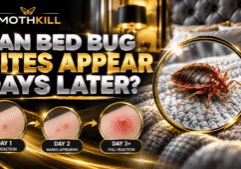
Another common source of confusion is delayed skin reactions.
A mark appearing this morning does not necessarily prove that the feeding event occurred last night.
Some people react relatively quickly, while others may not notice a visible reaction until later.
This becomes particularly relevant if you have recently stayed in a hotel, visited another property or travelled.
You may notice marks after returning home and naturally assume something in your own bedroom caused them.
That is possible – but the timing alone cannot prove it.
Read How Long After a Bed Bug Bite Does a Reaction Appear? for a more detailed explanation of delayed reactions.
Possibility 4: Another Insect Is Causing the Marks
Bed bugs are not the only household pest capable of biting people.
Depending on the circumstances, other possibilities may include fleas, mosquitoes and other biting insects.
For example, fleas become more plausible if pets are present or there is an animal-related source nearby.
Mosquitoes may be more likely when windows have been open during warmer weather.
The important point is not to decide that every unexplained bite must be a bed bug bite.
Look at the wider evidence.
Possibility 5: The Marks Are Not Insect Bites
This is easy to overlook once somebody becomes convinced there are insects in the bedroom.
Not every red, itchy or raised mark is a bite.
Skin irritation can have many causes, and pest controllers are not qualified to diagnose a medical condition from photographs.
If repeated skin reactions continue but thorough inspections produce no evidence of bed bugs or other pests, medical advice may be more appropriate than repeatedly applying insecticides to the property.
Don't Treat a Property for Bed Bugs Just Because You Have Bites
I understand the temptation. If something appears to be biting you at night, you want to do something immediately.
But repeatedly spraying beds, mattresses and bedrooms without establishing what you are dealing with can waste money and make the situation harder to understand.
Good pest control starts with identification and evidence.
If there are bed bugs, we want to find evidence of them. If there aren't, treating for bed bugs is unlikely to solve the real problem.
What Physical Signs of Bed Bugs Should You Look For?
If marks keep appearing, stop concentrating solely on your skin and start looking for evidence in the environment.
- Live bed bugs – including small pale nymphs as well as adults.
- Black or dark spotting – particularly around established harbourages.
- Cast skins – pale empty skins left behind as young bed bugs develop.
- Eggs – tiny pale eggs hidden inside protected cracks and joints.
- Blood spotting – small marks on sheets or bedding can sometimes be present.
- Evidence inside bed frames – particularly joints, fixings and screw holes.
- Activity around headboards – including behind wall-mounted headboards.
- Evidence inside divan bases – especially around fabric edges, staples and internal framework.
How to Inspect When You Have Bites but Cannot Find Bed Bugs
A quick look at the mattress is not a proper bed bug inspection.
Use a bright torch and work methodically.
Start with the Mattress
Check the seams, piping, labels, handles and folds. Do not simply inspect the flat sleeping surface.
Move to the Bed Frame
Look closely at joints, screw holes, bolt holes, brackets, slat supports and cracks.
Check the Headboard
If it can be inspected safely, look behind it as well as around fixings, seams and joins.
Inspect the Divan Base
Check fabric edges, feet, drawer runners, staples and accessible internal framework.
Look at Nearby Furniture
Bedside cabinets, upholstered chairs and sofas can provide additional harbourages.
Expand the Search if Necessary
In a more established infestation, activity may extend to skirting boards, carpet edges, wall fittings and other protected areas.
What Are You Actually Trying to Find?
Don't search only for a crawling adult bed bug. Black spotting, cast skins, eggs or a small nymph may be the first physical evidence you discover.
What If You Have Been Searching Every Day?
This can become a problem in itself.
When people are worried about bed bugs, it is very easy to start checking the bed several times a day, photographing every mark and interpreting every speck as possible evidence.
A methodical inspection is useful.
Constantly dismantling the bedroom without finding anything new usually is not.
If you have carried out a thorough inspection and found no physical evidence, monitor the situation rather than assuming that every new skin mark confirms bed bugs.
Should You Sleep in Another Room?
Generally, I would not recommend immediately moving around the house simply because you suspect bed bugs.
If bed bugs are present, changing sleeping locations can complicate the pattern of activity and potentially encourage insects to search for a host elsewhere.
It can also lead to bedding, clothing and belongings being moved unnecessarily between rooms.
Investigate first.
Should You Throw Away Your Mattress?
No – certainly not because you have unexplained bites and no other evidence.
Even when bed bugs are confirmed, replacing the mattress does not necessarily solve the infestation because the insects may be living in the frame, headboard or surrounding furniture.
Your new mattress could simply become exposed to the remaining infestation.
Read Should You Throw Away Your Mattress If You Have Bed Bugs? before disposing of an otherwise usable bed.
What If You Eventually Find One Bed Bug?
That changes the situation considerably.
A positively identified bed bug provides physical evidence that the insect has been present.
But even then, finding and killing one insect does not tell you whether it was genuinely alone.
You need to inspect the surrounding area for additional bugs, eggs, spotting and cast skins.
If this happens, read I Found a Bed Bug in My Bed – What Should I Do?.
What If Only One Person in the Bed Has Bites?
This does not rule bed bugs in or out.
People can react very differently to insect bites.
One partner may develop obvious itchy marks while the other shows little or no visible reaction.
So I would not use the absence of marks on one person as proof that bed bugs cannot be present.
Equally, one person developing marks does not prove that bed bugs are the cause.
Again, physical evidence matters more.
What If the Marks Keep Appearing but You Still Find Nothing?
This is the point where you need to avoid getting trapped in a cycle of assumption.
If you repeatedly develop skin marks but careful inspections continue to produce no bed bugs, no spotting, no eggs and no cast skins, consider the alternatives.
- Have I recently stayed somewhere else?
- Could the reaction be delayed?
- Are pets present?
- Could another biting insect be involved?
- Is there any actual physical evidence of a pest?
- Could this be a skin reaction that needs medical advice?
The longer you continue to find absolutely no pest evidence, the more important it becomes to keep an open mind about other explanations.
When Should You Seek Medical Advice?
MothKill can investigate pest activity, but we cannot diagnose bites, rashes or skin conditions.
If marks are severe, painful, becoming infected, causing significant swelling, accompanied by other symptoms or simply continuing without an identifiable pest source, seek advice from an appropriate healthcare professional.
If you have a severe allergic reaction or difficulty breathing, seek urgent medical assistance.
When Does Professional Bed Bug Treatment Make Sense?
Professional treatment makes sense when bed bugs have been confirmed or there is convincing physical evidence of an infestation.
Once that evidence exists, the challenge becomes reaching the insects and eggs hidden throughout their harbourages.
MothKill uses professional heat-treatment equipment, circulation fans and multiple temperature sensors to treat the affected environment rather than simply chasing individual insects that happen to be visible.
You can read more about our professional bed bug heat treatment service.
Bed Bug Bites but No Signs of Bed Bugs – What Should You Do Next?
If you remember only one thing from this guide, make it this:
Don't diagnose a bed bug infestation from your skin alone.
If you have unexplained marks, carry out a careful inspection of the mattress, bed frame, headboard, divan base and surrounding furniture.
Look for live insects, spotting, eggs and cast skins.
If you find evidence, you can start dealing with a confirmed pest problem.
If you find nothing, monitor carefully and consider other possible causes rather than automatically reaching for insecticide.
Bed bugs can certainly be difficult to find.
But “I can't find them” and “I definitely have them” are not the same thing.
Frequently Asked Questions
Can You Have Bed Bug Bites but No Signs of Bed Bugs?
Yes. Bed bugs can be difficult to locate, particularly when only a small number are present. However, bites alone cannot confirm bed bugs, so other possible causes should also be considered.
Why Am I Getting Bites but Cannot Find Any Bugs?
Possible explanations include a small hidden bed bug infestation, a delayed reaction to an earlier exposure, another biting pest or a skin condition that is not caused by insects.
Can Bed Bugs Bite You Without Leaving Any Other Evidence?
A very small infestation may initially leave little obvious evidence. As activity continues, however, physical signs such as spotting, cast skins, eggs or live insects may eventually become detectable.
How Long Can Bed Bugs Stay Hidden?
Bed bugs normally spend much of their time concealed in protected harbourages and emerge when they need to feed. This is why inspecting cracks, joints and hidden areas is important.
Should I Spray My Bed if I Have Unexplained Bites?
It is better to establish what is causing the problem first. Applying insecticides without confirming the pest can be unnecessary and may not address the real cause.
Can My Partner Have No Bites Even if We Have Bed Bugs?
Yes. People react differently to insect bites. One person may show obvious marks while another shows little or no visible reaction.
When Should I Call a Bed Bug Specialist?
If you find a live bed bug, eggs, cast skins, characteristic spotting or other convincing evidence of an infestation, professional investigation or treatment may be appropriate.
Found Evidence of Bed Bugs?
If you have discovered bed bugs or convincing signs of an infestation, MothKill provides professional bed bug treatment across London and large parts of England.
Bed Bug Heat Treatment Contact MothKill