
Signs You Have Bed Bugs

The clearest signs of bed bugs are live insects, dark faecal spotting, cast skins and eggs around beds and nearby furniture.
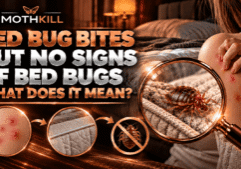
Skin bites can raise suspicion, but bites alone cannot reliably confirm bed bugs because different people react differently and many other conditions can produce similar marks.
If you think you have bed bugs, concentrate on finding physical evidence.
This UK guide explains the main signs of bed bugs, exactly where to look and what to do if you find them.
What Are the Main Signs of Bed Bugs?
The seven most useful signs to look for are:
- live bed bugs;
- dark faecal spotting;
- cast bed bug skins;
- bed bug eggs;
- small blood marks on bedding;
- possible bites or skin reactions; and
- evidence in several bed bug harbourages.
Some of these signs are much stronger evidence than others.
Finding and correctly identifying a live bed bug is far more useful than trying to diagnose an infestation from a skin mark.
1. Live Bed Bugs
A correctly identified live bed bug is the clearest evidence of an active infestation.
Adult bed bugs are small, flattened insects with broad oval bodies. They are generally brownish but can appear darker or more reddish after feeding.
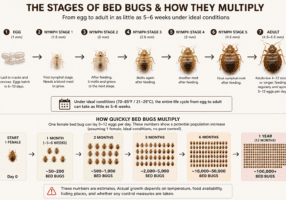
Young bed bugs, known as nymphs, are smaller and paler.
Because bed bugs are good at hiding, you may have to inspect carefully before finding one.
Where should you look for live bed bugs?
Start close to where you sleep.
- Mattress seams and piping
- Mattress labels
- Bed-frame joints
- Screw and bolt holes
- Headboards
- Divan bases
- Bedside furniture
- Sofa seams if someone sleeps or rests there
- Cracks close to the bed
Use a bright torch and inspect slowly.
2. Dark Bed Bug Faecal Spots
Dark spotting is one of the most useful signs of an established bed bug harbourage.
The marks can appear as small dark brown or black spots around places where bed bugs have been resting.
Look particularly around:
- mattress seams;
- bed-frame joints;
- headboards;
- divan bases;
- nearby skirting; and
- furniture close to the bed.
A concentration of spotting around a crack or furniture joint deserves careful inspection.
3. Cast Bed Bug Skins
Bed bug nymphs shed their outer skin as they develop.
These cast skins are pale, dry versions of the insect's body and can remain around a harbourage after the bed bug has moved elsewhere.
Finding several cast skins close together can indicate that bed bugs have been developing in that location.
4. Bed Bug Eggs
Bed bug eggs are tiny, pale and difficult to see without close inspection.
They are normally deposited in protected locations.
Possible sites include:
- bed-frame joints;
- cracks in headboards;
- mattress seams;
- furniture joints;
- protected crevices; and
- other established harbourages.
A torch and magnification can help when examining suspicious areas.
5. Small Blood Spots on Bedding
Small blood marks on sheets or pillowcases can occur when bed bugs are present.
For example, a recently fed insect may occasionally be crushed.
However, blood spots are not specific to bed bugs.
They should therefore be treated as a reason to inspect rather than proof of an infestation.
6. Possible Bed Bug Bites
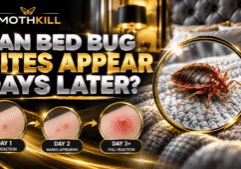
Bed bug bites can cause itchy red marks in some people.
Others may show little or no obvious reaction.
Reactions can also vary between different bites and different people.
This makes skin symptoms an unreliable identification method on their own.
What Do Bed Bug Bites Look Like?
Possible reactions include small itchy bumps or areas of redness.
Several marks may occur close together.
However, there is no bite pattern that conclusively proves bed bugs caused it.
Fleas, mosquitoes and other causes of skin irritation can produce marks that look similar.
If you are concerned about a significant or persistent skin reaction, seek appropriate medical advice rather than relying on pest identification from photographs of bites.
Do Bed Bug Bites Always Appear in a Line?
No.
The commonly repeated idea that bed bugs always produce a neat line of three bites is unreliable.
Skin reactions vary too much for that pattern to diagnose an infestation.
Look for insects and harbourage evidence instead.
Can You Have Bed Bugs Without Any Bites?
Yes.
Not everyone develops an obvious reaction after being bitten.
Therefore, the absence of visible skin marks does not prove that bed bugs are absent.
7. Evidence in Bed Bug Harbourages
The strongest picture often comes from several signs appearing in the same location.
For example, finding dark spotting, cast skins and live insects inside a headboard joint provides much stronger evidence than finding an unexplained mark on your arm.
Where Do Bed Bugs Hide During the Day?
Bed bugs usually remain hidden while they are not feeding.
They favour narrow, protected spaces.
Around the Bed
- Mattress seams
- Bed frames
- Headboards
- Divan bases
- Bedside furniture
Around the Room
- Sofas
- Skirting close to beds
- Cracks and crevices
- Furniture joints
- Gaps associated with nearby fittings
See our detailed guide to where bed bugs hide during the day .
Can Bed Bugs Hide Inside a Mattress?
Bed bugs do not normally burrow through intact mattress material.
Instead, they exploit existing seams, folds, labels, stitching and openings.
Pay particular attention to the mattress perimeter and areas close to the bed frame.
Can Bed Bugs Hide in a Bed Frame?
Yes.
Bed frames can provide excellent harbourages.
Inspect:
- joints;
- screw holes;
- bolt holes;
- cracks in timber;
- connecting brackets; and
- areas where different components meet.
Divan beds can contain numerous protected hiding places and should be inspected carefully.
Can Bed Bugs Hide Behind a Headboard?
Yes.
A headboard close to a sleeping person can provide an ideal harbourage.
Check the back, fixing points, joints and the area where the headboard meets the wall or bed.
Can Bed Bugs Hide Around Walls?
Bed bugs can use cracks, gaps behind skirting, loose wallpaper and openings around wall fittings.
However, finding a bed bug on a wall does not automatically mean the insects are living deep inside the wall cavity.
Our guide Are Bed Bugs in My Walls? explains this in more detail.
Can Bed Bugs Hide in Sofas?
Yes.
Sofas and upholstered chairs can become infested, particularly where people spend long periods resting or sleeping.
Inspect seams, folds, cushions, the underside and structural joints.
What Are the Early Signs of Bed Bugs?
An early infestation can be difficult to detect because only a small number of insects may be present.
Possible early evidence includes:
- one correctly identified live bed bug;
- a small amount of fresh spotting;
- a cast skin;
- eggs in a harbourage; or
- repeated suspicious evidence around the bed.
You do not need to wait until dozens of insects are visible before investigating.
What Are the Signs of a Larger Bed Bug Infestation?
A more established infestation may produce:
- multiple live insects;
- several life stages;
- larger areas of faecal spotting;
- numerous cast skins;
- multiple harbourages;
- activity further away from the bed; and
- evidence in more than one room.
The distribution of evidence can be just as important as the number of insects seen.
Does a Musty Smell Mean You Have Bed Bugs?
A noticeable odour has been associated with larger bed bug populations.
However, smell is subjective and many things can make a bedroom smell unusual.
Do not diagnose bed bugs from odour alone.
Does Itching at Night Mean Bed Bugs?
No.
Night-time itching can have many causes.
A crawling sensation or itching in bed is not reliable evidence unless physical signs of bed bugs can also be found.
Can You See Bed Bugs With the Naked Eye?
Yes.
Adult bed bugs are visible without magnification.
Young nymphs and eggs are much smaller and can be harder to spot, particularly against light-coloured backgrounds.
A torch and careful inspection are usually more useful than simply looking across the mattress from standing height.
What Does a Bed Bug Infestation Look Like?
There is no single appearance.
A small infestation might involve only a few insects and limited spotting around one bed-frame joint.
A well-established infestation can involve numerous harbourages, different life stages and evidence extending into nearby furniture and structural gaps.
Can You Find Just One Bed Bug?
Yes.
One bed bug could represent a recent introduction or the first insect you have noticed from a hidden infestation.
Finding one does not prove that hundreds are present, but it should trigger a careful inspection.
Read I Found a Bed Bug in My Bed – What Should I Do? if this is exactly what has happened.
How Quickly Do Bed Bugs Multiply?
Bed bugs can reproduce progressively when they have regular access to blood meals and suitable indoor conditions.
The actual rate varies with feeding, temperature, survival and other factors.
Be cautious of dramatic online calculations claiming that one bed bug automatically becomes thousands within a precise number of weeks.
The important point is that an established infestation can grow if it is left untreated.
Do Bed Bugs Mean Your House Is Dirty?
No.
Bed bugs feed on blood rather than dirt or food waste.
They can occur in clean or untidy properties.
Clutter can make inspection and treatment more difficult because it creates additional hiding places, but poor housekeeping does not create bed bugs.
How Do Bed Bugs Get Into a Home?
Bed bugs are often transported accidentally.
Possible routes include:
- luggage after travel;
- second-hand furniture;
- bags and belongings;
- movement between adjoining accommodation; and
- items transferred from an infested property.
If you buy used furniture, our guide to signs of bed bugs after buying second-hand furniture explains what to check.
What Should I Do If I Think I Have Bed Bugs?
Start with inspection rather than immediately spraying the room.
- Check the mattress carefully.
- Inspect the bed frame.
- Examine the headboard.
- Check nearby furniture.
- Look for live bugs, spotting, eggs and cast skins.
- Photograph or safely capture suspicious insects.
- Check whether activity is limited to one room or more widespread.
- Avoid moving potentially infested belongings unnecessarily.
Should I Throw Away My Mattress?
Usually not.
Bed bugs do not only live in mattresses.
Throwing the mattress away while insects remain in the bed frame, headboard or surrounding furniture can leave the infestation behind.
Many mattresses can be treated successfully.
See should you throw away your mattress if you have bed bugs?
Should I Sleep in Another Room?
Moving to another bedroom is generally not a useful treatment strategy.
It may encourage bed bugs to become distributed into additional areas while they search for a host.
Get advice appropriate to your infestation rather than repeatedly moving where you sleep.
Should I Use a Bed Bug Spray?
Authorised insecticides can have a legitimate role in professional bed bug control.
However, repeatedly spraying visible insects with random household products is not the same as a properly planned treatment.
Use pest-control products only according to their labels.
Do Bed Bug Foggers Work?
Foggers should not be assumed to reach bed bugs hidden deep within furniture joints, cracks and other protected harbourages.
Bed bug treatment needs to account for where the insects are actually hiding.
A product that fills the open air of a room does not automatically treat every concealed insect.
Does Steam Kill Bed Bugs?
Steam can kill bed bugs and eggs when sufficient heat contacts them directly.
It can be useful on accessible seams, furniture and harbourages.
Its limitation is reach, so steam should not be assumed to treat insects concealed beyond the area receiving sufficient heat.
Does Heat Treatment Kill Bed Bugs?
Professional heat treatment can kill bed bugs at multiple life stages, including eggs, when effective temperatures reach the insects for sufficient time.
The treatment involves much more than simply making a bedroom hot.
Professional heating equipment, air circulation, exposure time and temperature monitoring are all important.
Read how bed bug heat treatment works for a detailed explanation.
Can Bed Bug Heat Treatment Fail?
Any pest treatment can fail if insects remain in a location that does not receive effective treatment or if an affected area is overlooked.
Bed bugs can also be reintroduced after successful treatment.
Professional heat treatment therefore relies on preparation, appropriate treatment coverage, airflow and monitoring.
When Should I Call Professional Pest Control?
Professional help is worth considering when:
- you have confirmed live bed bugs;
- there is evidence of several life stages;
- more than one room appears affected;
- previous DIY treatment has not worked;
- the source or extent of the infestation is unclear; or
- you want the property professionally assessed and treated.
Frequently Asked Questions
What is the number one sign of bed bugs?
A correctly identified live bed bug is the clearest evidence. Dark faecal spotting, eggs and cast skins around established harbourages provide additional evidence.
What are the first signs of bed bugs?
Early signs can include a live insect, small amounts of dark spotting, eggs or cast skins around the bed. Bites may raise suspicion but cannot confirm bed bugs by themselves.
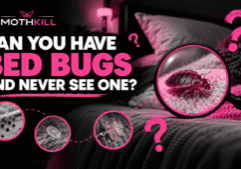
Can I have bed bugs without knowing?
Yes. Small infestations can be difficult to detect, and some people show little or no obvious skin reaction to bites.
Do blood spots mean bed bugs?
Not necessarily. Small blood marks can occur when bed bugs are present, but they have other possible causes. Look for physical evidence of the insects as well.
Does a musty smell prove bed bugs?
No. Odour may occur with substantial infestations but is not reliable enough to diagnose bed bugs by itself.
Can bed bugs live in clean homes?
Yes. Bed bugs feed on blood and can infest very clean properties. Clutter can provide additional harbourages but does not cause the infestation.
How do I know for certain that I have bed bugs?
Find and correctly identify a live insect or clear physical evidence such as characteristic spotting, eggs and cast skins around likely harbourages.
Signs You Have Bed Bugs: Final Checklist
- Live bed bug: strongest evidence.
- Dark spotting: inspect the surrounding harbourage.
- Cast skins: evidence that nymphs have been developing.
- Eggs: check nearby cracks and furniture joints.
- Blood spots: possible sign, but not diagnostic.
- Bites: possible clue, but not proof.
- Musty smell: possible with larger infestations, but unreliable alone.
If you can find physical evidence, act on that evidence rather than waiting for bites to become worse.
Found Signs of Bed Bugs?
If you've found live bed bugs or clear evidence of an established infestation, MothKill provides professional bed bug heat treatment using controlled heating, industrial air circulation and temperature monitoring.