Signs of Bed Bugs After Buying Second-Hand Furniture

Second-hand furniture can save a lot of money, but upholstered furniture, beds and other used items can occasionally transport bed bugs into a home.
Bed bugs are excellent at hiding in seams, folds, joints, screw holes and narrow gaps. An item can therefore appear perfectly normal during a quick inspection while still containing concealed insects or eggs.
If you have recently bought a used sofa, bed, mattress or other item and are worried about bed bugs, this guide explains the signs to look for, how to inspect the furniture and what to do if you find evidence.
Can You Get Bed Bugs From Second-Hand Furniture?
Yes. Bed bugs can be transported from one property to another in used furniture and belongings.
They do not need to live only in beds. Any item offering narrow, undisturbed hiding places can potentially harbour them.
The risk depends on the item's history and whether it has been exposed to an infested environment. Second-hand furniture is therefore a possible introduction route, not proof that a used item contains bed bugs.
What Are the Signs of Bed Bugs in Used Furniture?
Physical evidence on the furniture is much more useful than relying on bites alone.
Live Bed Bugs
Adult bed bugs are small, flattened insects. Nymphs are smaller and can be paler, particularly before feeding.
Check seams, folds, joints, screw holes and protected areas beneath the item.
Dark Faecal Spotting
Established harbourages may contain small dark marks produced by bed bug faeces.
Pay particular attention to fabric seams, wooden joints and other protected hiding areas.
Cast Skins
Bed bug nymphs shed their outer skin as they develop. These pale remains can accumulate around harbourages.
Bed Bug Eggs
Eggs are very small and pale and may be difficult to spot without careful inspection. They can occur in protected cracks, seams and joints.
Blood Marks
Small blood marks can sometimes occur on bedding or upholstery, although they are not specific enough to diagnose bed bugs on their own.
New Biting Activity
Unexplained skin reactions after introducing furniture may raise suspicion, but bites alone cannot confirm a bed bug infestation.
Where Should You Check Second-Hand Furniture?
Bed bugs favour tight, protected spaces. A quick look at the visible surfaces is therefore not enough.
A bright torch can make inspection easier. Take your time and examine joints and concealed surfaces rather than concentrating only on the areas that are immediately visible.
Our guide to where bed bugs hide during the day explains common harbourage locations in more detail.
How Do You Check a Second-Hand Sofa for Bed Bugs?
Sofas can contain numerous seams, folds and internal joints, particularly upholstered models.
Check:
- around cushion seams and zips;
- beneath removable cushions;
- fabric folds;
- underneath the sofa;
- around legs and fixings;
- wooden frame joints that are accessible; and
- cracks where upholstery meets the frame.
A sofa that has been used regularly for sleeping deserves particularly careful inspection because it may have provided bed bugs with regular access to a resting host.
How Do You Check a Used Bed or Mattress?
Inspect mattress seams, piping, labels and folds carefully.
With bed frames, pay particular attention to:
- headboards;
- slat supports;
- bolt and screw holes;
- joints where pieces of timber meet;
- divan bases;
- fabric underneath the base; and
- any cracks or damaged areas.
Do not assume a clean-looking mattress or frame is automatically free of bed bugs. Early infestations can be difficult to detect.
Can Bed Bugs Live in Wooden Furniture?
Yes, but they are not eating or burrowing through the wood.
They can use existing joints, cracks, screw holes and other protected gaps within wooden furniture as harbourages.
Bedside cabinets, wardrobes and drawers may therefore need inspection if they came from an infested environment.
How Soon Would You Notice Bed Bugs After Buying Furniture?
There is no reliable fixed period.
If several active bed bugs are already present, signs might become apparent relatively quickly. A small introduction may be much harder to detect.
Bed bug development also depends on factors including temperature and access to blood meals.
This is why the absence of obvious signs during the first few days does not guarantee that an item was free of bed bugs.
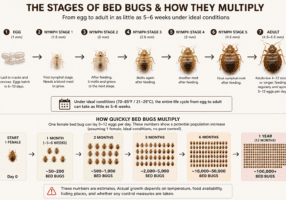
How Quickly Can Bed Bugs Multiply?
A small infestation can increase over time when bed bugs have suitable conditions and regular access to a host.
However, simple online calculations claiming that one bed bug will become a specific number within a fixed number of weeks can be misleading.
Development and reproduction depend on temperature, feeding opportunities, survival, mating and the condition of individual insects.
The practical point is that a confirmed introduction is worth dealing with promptly rather than waiting for the infestation to become larger.
What Should You Do If You Find Bed Bugs in Second-Hand Furniture?
First, avoid moving the furniture repeatedly around the property. Moving infested items from room to room can potentially distribute bed bugs into additional areas.
Confirm the identification where possible, inspect the surrounding room and consider whether the insects may already have moved beyond the original item.
Treatment should then be based on the extent of the infestation rather than assuming that treating or discarding the furniture alone will solve the problem.
What to Do Next: Three Practical Steps
Limit Unnecessary Movement
Avoid carrying suspect furniture and belongings through multiple rooms unless there is a clear reason to move them.
Inspect the Surrounding Area
Check nearby beds, sofas, skirting and furniture for live insects, eggs, cast skins and spotting.
Choose an Appropriate Treatment
The correct response depends on whether activity is confined to an item or an infestation has become established within the room or property.
Should You Spray Second-Hand Furniture for Bed Bugs?
Simply spraying a piece of furniture is not automatically an effective treatment.
Bed bugs may be concealed deep within seams, joints and other harbourages, and an infestation may already have spread beyond the item.
Authorised insecticides can have a legitimate role in bed bug control when the product is suitable for the intended surface and used strictly according to its label.
Avoid indiscriminately applying multiple products or using products in locations for which they are not authorised.
Should You Throw Away Furniture With Bed Bugs?
Not automatically.
Many beds, sofas and other items can potentially be treated. Whether an item is worth keeping depends on its condition, construction, value and the treatment strategy being used.
Discarding furniture also does not guarantee that an infestation has been eliminated if bed bugs have already moved into other harbourages within the room.
If an item genuinely needs to be discarded, it should be handled carefully so that other people do not unknowingly take infested furniture for reuse.
Can Vacuuming Remove Bed Bugs From Furniture?
Vacuuming can physically remove some accessible bed bugs, eggs and debris.
Concentrating on seams, folds and accessible joints can be useful as part of a wider control programme.
However, vacuuming alone may miss bed bugs concealed deep inside the structure of upholstered furniture.
Can Steam Treat Bed Bugs in Furniture?
Steam can kill bed bugs and eggs when sufficient heat reaches them through direct treatment.
It can be useful on appropriate seams, edges and other accessible harbourages.
Its limitations include penetration depth and the possibility of damaging materials that are sensitive to heat or moisture.
Steam should therefore be used carefully and is not proof that every concealed insect within a large item has been reached.
Can Heat Treatment Save Infested Furniture?
Professional heat treatment can be useful because beds, sofas and other furniture can remain within an appropriately prepared treatment area where suitable.
Bed bugs and eggs are vulnerable when lethal thermal conditions reach them for sufficient time.
Effective treatment depends on controlled heating, airflow, exposure time and temperature monitoring rather than simply making the room feel hot.
Learn more about MothKill's professional bed bug heat treatment .
How Can You Reduce the Risk When Buying Used Furniture?
You cannot make every second-hand purchase completely risk-free, but a careful inspection can reduce the chance of bringing an obvious infestation home.
Before Buying
- inspect seams, folds and joints carefully;
- look underneath the item;
- use a torch to examine dark gaps;
- look for live insects, cast skins, eggs and dark spotting;
- ask about the history of the item where appropriate;
- be particularly thorough with upholstered furniture and beds; and
- avoid taking an item if you find convincing evidence of bed bugs.
After Bringing Furniture Home
- inspect it again in good lighting;
- avoid immediately moving it between several rooms;
- keep an eye out for physical signs around the item;
- inspect nearby sleeping or resting areas if you become suspicious; and
- investigate promptly if convincing evidence appears.
What If the Furniture Has Already Been in My Home for Weeks?
Do not assume it is too late to do anything.
Inspect both the furniture and the surrounding room. If bed bugs were introduced with the item, some may now be using harbourages elsewhere.
This is why treatment should be based on the extent of the infestation, not solely on the piece of furniture that may have introduced it.
Frequently Asked Questions
Can bed bugs live in second-hand furniture?
Yes. Bed bugs can hide in sofas, beds, mattresses and other furniture, particularly within seams, folds, joints, cracks and screw holes.
Can you get bed bugs from a used sofa?
Yes. A sofa from an infested environment can potentially transport bed bugs. Upholstered sofas provide numerous protected seams, folds and internal joints where insects may hide.
How soon will I notice bed bugs after buying furniture?
There is no fixed period. A larger introduction may become obvious relatively quickly, while a small number of concealed insects may be much harder to detect initially.
What is the first sign of bed bugs in furniture?
There is no single first sign. Useful evidence includes live bed bugs, dark faecal spotting, cast skins and eggs around seams, joints and other harbourages.
Do bed bug bites prove my used furniture is infested?
No. Skin reactions alone cannot reliably identify bed bugs or prove where they came from. Look for physical evidence on the furniture and elsewhere in the room.
Should I throw away a sofa with bed bugs?
Not automatically. Depending on the item and the extent of the infestation, professional treatment may allow furniture to be retained.
Can heat treatment kill bed bugs inside furniture?
Heat can kill bed bugs and eggs when the required thermal conditions reach their harbourages for sufficient time. Professional treatment uses controlled heating, airflow and temperature monitoring to manage this process.
Bed Bugs and Second-Hand Furniture – Final Thoughts
Buying second-hand furniture does not mean you will get bed bugs, but used beds, sofas and other furniture can provide a route for them to enter a new property.
The best defence is careful inspection. Look beyond visible surfaces and check seams, folds, joints, screw holes and the underside of furniture.
If you discover convincing evidence after bringing an item home, avoid repeatedly moving it around the property and inspect the surrounding area to establish whether activity has spread beyond the furniture.
Most importantly, don't panic and start throwing everything away. Confirm what you are dealing with, establish the extent of the infestation and then choose an appropriate treatment.
Found Bed Bugs After Buying Used Furniture?
If bed bugs have become established in your home, MothKill provides professional bed bug heat treatment designed to target bed bugs and eggs throughout the prepared treatment area.