
Bed Bug Treatment Before Moving Into a New Home
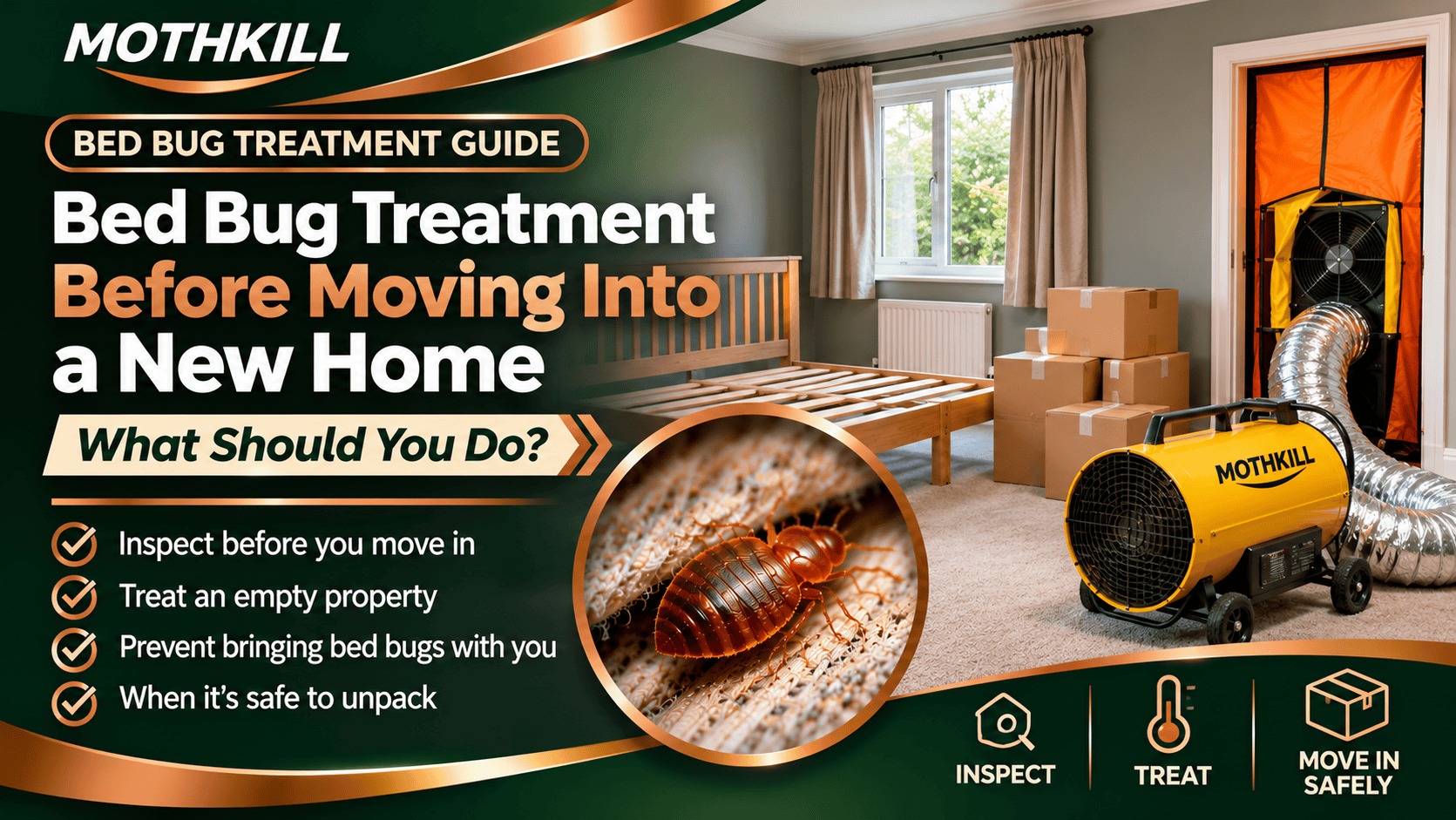
Bed Bug Treatment Before Moving Into a New Home – What Should You Do?
Discover how to check a property for bed bugs, whether an empty home can be heat treated, how to avoid transporting an infestation and when it is appropriate to move in.
Moving into a new home should be an exciting experience. However, discovering bed bugs before moving day can quickly turn that excitement into concern.
Perhaps the previous occupants reported an infestation, you have noticed suspicious marks around a bed, or you have discovered a live insect while inspecting the property.
Alternatively, you may already have bed bugs in your current home and are worried about taking them with you.
Both situations require careful planning, but they involve different risks.
When a property is known to contain bed bugs, arranging suitable professional treatment before moving belongings inside can reduce the likelihood of exposing furniture and possessions to an existing infestation.
However, an empty house is not automatically free of bed bugs, and moving to another address does not guarantee that insects will be left behind.
Can an Empty House Still Have Bed Bugs?
Yes. Bed bugs can remain in an empty property after the previous occupants have moved out.
Although they feed on blood, they do not need to feed every day.
Depending on temperature, life stage and other conditions, bed bugs can survive for extended periods without a meal.
They may remain concealed in cracks, furniture, skirting boards, wall junctions and other protected spaces.
Removing the beds and mattresses does not necessarily remove every insect.
Once new occupants arrive and begin sleeping in the property, surviving bed bugs may find another opportunity to feed.
Therefore, a vacant property with a confirmed infestation should not be assumed clear simply because it has been unoccupied for several weeks.
Eight Steps to Take Before Moving Into a Property With Suspected Bed Bugs
Confirm the Identification
Preserve a suspected insect or obtain clear photographs. A professional can help establish whether it is a bed bug.
Inspect the Property
Check bedrooms, remaining furniture, skirting boards and other likely harbourages before moving belongings inside.
Ask About Previous Treatment
Request available inspection findings, treatment reports and details of any recommended follow-up.
Delay Unnecessary Unpacking
Keep belongings out of suspected infested rooms until the situation has been assessed.
Arrange Suitable Treatment
Where bed bugs are confirmed, discuss professional heat treatment or other appropriate control methods.
Prepare the Property
Ensure access to relevant rooms and harbourages, and identify any heat-sensitive materials or fixtures.
Complete Safety Checks
Follow the treatment provider's instructions on cooling, re-entry, monitoring and any necessary follow-up.
Move In Carefully
Check incoming furniture and belongings, especially if they have come from another infested property.
Where Should You Check for Bed Bugs in an Empty Property?
Inspection is particularly important when the previous occupants have removed most of their belongings.
With the beds and furniture gone, some common harbourages may no longer be present.
However, insects can remain in structural gaps and fixtures.
Important Areas to Inspect
- Skirting boards and wall-to-floor junctions.
- Cracks around bedroom door frames.
- Remaining bed frames, mattresses and headboards.
- Fitted wardrobes and built-in furniture.
- Gaps behind fixed furniture and wall-mounted fittings.
- Carpet edges and protected floor junctions.
- Accessible cracks around pipe penetrations.
- Other rooms where people previously slept or rested.
Look for live insects, characteristic dark spotting, shed skins and eggs.
However, the absence of visible signs during a brief inspection does not guarantee that no bed bugs remain.
Read our guide to the signs of bed bugs for more information.
Is an Empty Property Easier to Heat Treat?
In many cases, a vacant property can be easier to prepare for professional heat treatment.
With fewer possessions, technicians may have improved access to walls, floors and remaining furniture.
There may also be fewer densely packed belongings restricting airflow.
However, this does not automatically mean that treatment will be faster or more effective.
The construction of the building, remaining fixtures and potential structural harbourages still matter.
For example, thick walls, enclosed voids and built-in furniture may heat differently from exposed room surfaces.
Professional treatment must be planned around the actual property rather than assuming that every empty room is straightforward.
Can Professional Heat Treatment Kill Bed Bugs Before You Move In?
Yes. Professional heat treatment can be an effective method of controlling bed bugs and their eggs in suitable properties.
The process involves raising temperatures under controlled conditions so that insects receive lethal thermal exposure.
However, simply making a room hot is not enough.
Bed bugs may be concealed in protected harbourages that heat more slowly than the surrounding air.
Professional treatment therefore requires suitable preparation, airflow, temperature monitoring and adequate exposure.
Where there are inaccessible structural voids or connected untreated areas, the provider may recommend additional assessment or complementary measures.
Read how professional bed bug heat treatment works.
Important: An Empty Property Is Not Automatically a Bed Bug-Free Property
Bed bugs may remain concealed after furniture has been removed.
Vacuuming, repainting or replacing carpets does not necessarily eliminate an established infestation.
If bed bugs have been confirmed, arrange an appropriate professional assessment before moving valuable furniture and belongings into the property.
This can reduce the risk of having to treat those possessions after they have already been exposed.
Should You Heat Treat Before or After Moving Furniture In?
The best sequence depends on where the infestation is located.
If the new property is infested but your incoming belongings are known to be unaffected, treatment before moving them inside may be preferable.
This can reduce the amount of furniture requiring treatment and simplify preparation.
However, if your belongings are coming from a bed bug-infested home, treating the empty destination alone will not address insects travelling with those belongings.
In that situation, a coordinated plan is required for the original property, the possessions and the move itself.
Failing to address incoming infested furniture could reintroduce bed bugs into a successfully treated destination.
Moving From a House That Already Has Bed Bugs
Moving house is not a reliable method of escaping an infestation.
Bed bugs can travel with beds, mattresses, upholstered furniture, luggage, clothing and other belongings.
Even small numbers of surviving insects may establish activity in a new property.
Before moving, obtain professional advice about the infestation and the safest way to manage your possessions.
Depending on the circumstances, treatment may be required before removal, during a controlled handling process or after belongings reach an appropriate treatment location.
There is no single procedure suitable for every move.
Which Belongings Are Most Important to Check?
Mattresses and Bed Frames
These are common harbourages and deserve particular attention before transportation.
Divan Beds
Internal timber frames, fabric coverings and storage compartments may contain concealed insects.
Sofas and Armchairs
Upholstery seams, frames and internal spaces can provide protected harbourages.
Luggage and Bags
Suitcases, backpacks and travel bags may transport insects between properties.
Clothing and Bedding
These items may harbour insects in folds and seams, particularly when stored near infested furniture.
Boxes and Stored Items
Cardboard boxes, books and belongings can contain narrow gaps where insects may shelter.
Our article on how moving furniture can spread bed bugs explains the risks in more detail.
Should You Throw Away Your Bed Before Moving?
Not automatically.
Finding bed bugs in a mattress or bed frame does not necessarily mean that the furniture must be discarded.
Suitable professional treatment may allow affected furniture to be retained.
However, some heavily damaged or inaccessible items may be unsuitable for practical treatment.
If disposal is necessary, the furniture should be handled in a way that reduces the risk of spreading insects or allowing other people to collect infested items.
Read Should You Throw Away Your Mattress If You Have Bed Bugs?.
Can Bed Bugs Travel in Moving Boxes?
Yes. Bed bugs may shelter in folds, seams and gaps within cardboard boxes or the belongings stored inside them.
They do not feed on cardboard, but the material can provide temporary hiding places.
Where an infestation is confirmed, avoid repeatedly moving uninspected boxes between affected and unaffected rooms.
Suitable sealed containers may help with controlled handling, but simply sealing a box does not immediately kill insects inside it.
The contents may still require inspection or appropriate treatment.
What About Removal Companies?
If you know that furniture or belongings are infested, discuss the situation with the removal company before transportation.
Do not conceal a known infestation from people who may be handling affected items.
Appropriate containment and handling procedures can reduce the risk of insects spreading to vehicles or other belongings.
The exact arrangements should be agreed with the removal company and pest control provider.
It is generally better to resolve these issues before moving day rather than discovering them while loading the van.
Buying a House With a Previous Bed Bug Infestation
If a seller discloses a previous infestation, ask what treatment was completed and whether there is supporting documentation.
Useful information may include the date of treatment, areas treated, follow-up findings and any ongoing monitoring recommendations.
A previous infestation does not automatically mean the property remains infested.
Equally, an old treatment invoice alone does not prove that the property is currently free of bed bugs.
Where there is uncertainty, a professional inspection before completion or occupation may be worthwhile, subject to access arrangements.
Any contractual or disclosure questions should be discussed with the appropriate property professional or solicitor.
Renting a Property With Bed Bugs Before Moving In
Tenants discovering bed bugs before the start of a tenancy should report the issue promptly and keep written records.
Photographs, insect specimens and inspection findings may help establish the situation.
Responsibility for treatment depends on the circumstances, the tenancy arrangements and applicable law.
It should not automatically be assumed that every infestation is the landlord's responsibility or that every case is the tenant's responsibility.
Where the infestation was present before occupation, the timing and evidence may be particularly relevant.
Seek appropriate housing advice if there is a dispute over treatment or whether the property is suitable for occupation.
Bed Bug Treatment Before a New Tenancy
For landlords and letting agents, the period between tenancies provides an opportunity to inspect and address suspected pest problems.
If bed bugs have been reported by previous occupants, professional inspection may be appropriate before the next tenant moves in.
Where treatment is necessary, allowing sufficient time for preparation, treatment and follow-up arrangements can reduce disruption.
However, an empty property should not be declared clear solely because no insects are visible during cleaning.
Read how to deal with bed bugs between tenancies.
How Long Before Moving In Should Treatment Be Arranged?
As early as practical.
The required time depends on the property, infestation and chosen treatment method.
Professional heat treatment involves preparation, equipment setup, heating, maintaining effective thermal exposure and allowing the property to cool.
Other methods may involve product-specific re-entry restrictions or follow-up visits.
Owners should avoid assuming that treatment can always be completed immediately before the removal van arrives.
A suitable schedule should be agreed with the treatment provider.
Comparing Treatment Options Before Moving In
| Method | Potential advantage | Important consideration |
|---|---|---|
| Professional heat treatment | Can treat suitable rooms and furnishings, killing bed bugs and eggs where lethal exposure is achieved. | Requires preparation, monitoring and assessment of heat-sensitive materials and concealed spaces. |
| Professional insecticide treatment | Can target suitable harbourages with authorised products. | May require follow-up visits and adherence to re-entry restrictions. |
| Steam treatment | Can kill insects and eggs where sufficient heat reaches them. | Limited penetration and possible moisture or material damage. |
| Vacuuming | Can remove accessible insects and debris. | Does not reliably eliminate hidden insects or attached eggs. |
| Inspection and monitoring | Helps establish whether bed bugs are present and assess activity. | Does not eradicate an established infestation on its own. |
Can You Move In Immediately After Heat Treatment?
Not until the treatment provider confirms that the property is safe to re-enter.
After heat treatment, equipment must be removed safely and the property allowed to cool sufficiently.
Any necessary safety checks and treatment recommendations should also be completed.
Where insecticides or other products have been used, their specific re-entry requirements must be followed.
Successful treatment does not prevent a future infestation if bed bugs are subsequently introduced with furniture or belongings.
How Can You Avoid Bringing Bed Bugs Into a New Home?
Moving-Day Prevention Checklist
- Confirm whether your current property has an active infestation.
- Arrange professional advice before moving potentially affected furniture.
- Inspect beds, upholstered furniture and luggage.
- Follow appropriate laundering or treatment instructions for suitable fabrics.
- Keep treated and untreated belongings clearly separated.
- Avoid transferring loose, potentially infested items into clean rooms.
- Coordinate safe handling with removal staff where necessary.
- Inspect the destination before unpacking.
- Follow any recommended monitoring procedure after moving in.
What If Bed Bugs Appear After You Move In?
Finding bed bugs shortly after moving into a property can raise questions about where the infestation originated.
However, timing alone does not always establish whether the insects were already present or arrived with belongings.
Evidence from inspections, treatment records and the location of sightings may help.
Arrange professional identification and assessment rather than immediately assuming a particular source.
Where an infestation is confirmed, prompt treatment can help prevent further establishment and spread.
Frequently Asked Questions
Can bed bugs survive in an empty house?
Yes. Bed bugs can remain concealed and survive for extended periods without feeding, depending on conditions.
Is it better to heat treat a house before moving furniture in?
It can be advantageous when the destination is infested and incoming belongings are unaffected. However, belongings from an infested property require their own management plan.
Will removing all the furniture eliminate bed bugs?
Not necessarily. Bed bugs may remain in structural gaps, skirting boards and other concealed spaces.
Can bed bugs travel in moving boxes?
Yes. They may shelter in cardboard folds and within packed belongings.
Should I throw away my mattress before moving?
Not automatically. Suitable professional treatment may allow the mattress to be retained.
Can bed bugs travel in a removal van?
They may be transported in infested furniture and belongings. Appropriate handling and containment can reduce the risk.
Can a landlord rent out a property with bed bugs?
Landlords have relevant legal obligations concerning property condition and suitability. The circumstances and applicable law should be assessed rather than assuming one universal rule.
Can an empty property be treated in one day?
Sometimes, but treatment duration depends on the building, infestation and method. Same-day completion should not be assumed.
When can I unpack after heat treatment?
Follow the treatment provider's re-entry and safety instructions. Ensure incoming belongings do not introduce a new infestation.
Does professional heat treatment prevent bed bugs coming back?
It can eliminate bed bugs that receive lethal exposure, but it does not provide permanent protection against new introductions.
Final Advice: Treat Bed Bugs Before They Become a Problem in Your New Home
Discovering bed bugs before moving into a new property can be worrying, but early identification and appropriate treatment can prevent further complications.
An empty property may offer practical advantages for professional heat treatment because there is often less furniture and improved access.
However, concealed harbourages still require careful assessment.
If you are moving from an infested property, your belongings must also be considered to avoid transporting insects into the new home.
The safest approach is to coordinate inspection, treatment, preparation and moving arrangements rather than treating each stage separately.
Dealing with a confirmed infestation before unpacking can be considerably easier than discovering bed bugs after every room has been furnished.
Moving Into a Property With Bed Bugs?
MothKill provides professional bed bug heat treatment for suitable houses, flats and other properties. If you have discovered bed bugs before moving in, or are concerned about transferring an infestation to your new home, contact us to discuss an appropriate treatment plan.
Request a Bed Bug Treatment Quote Explore Professional Heat Treatment