
Can Bed Bugs Live Inside Sofas and Recliner Chairs
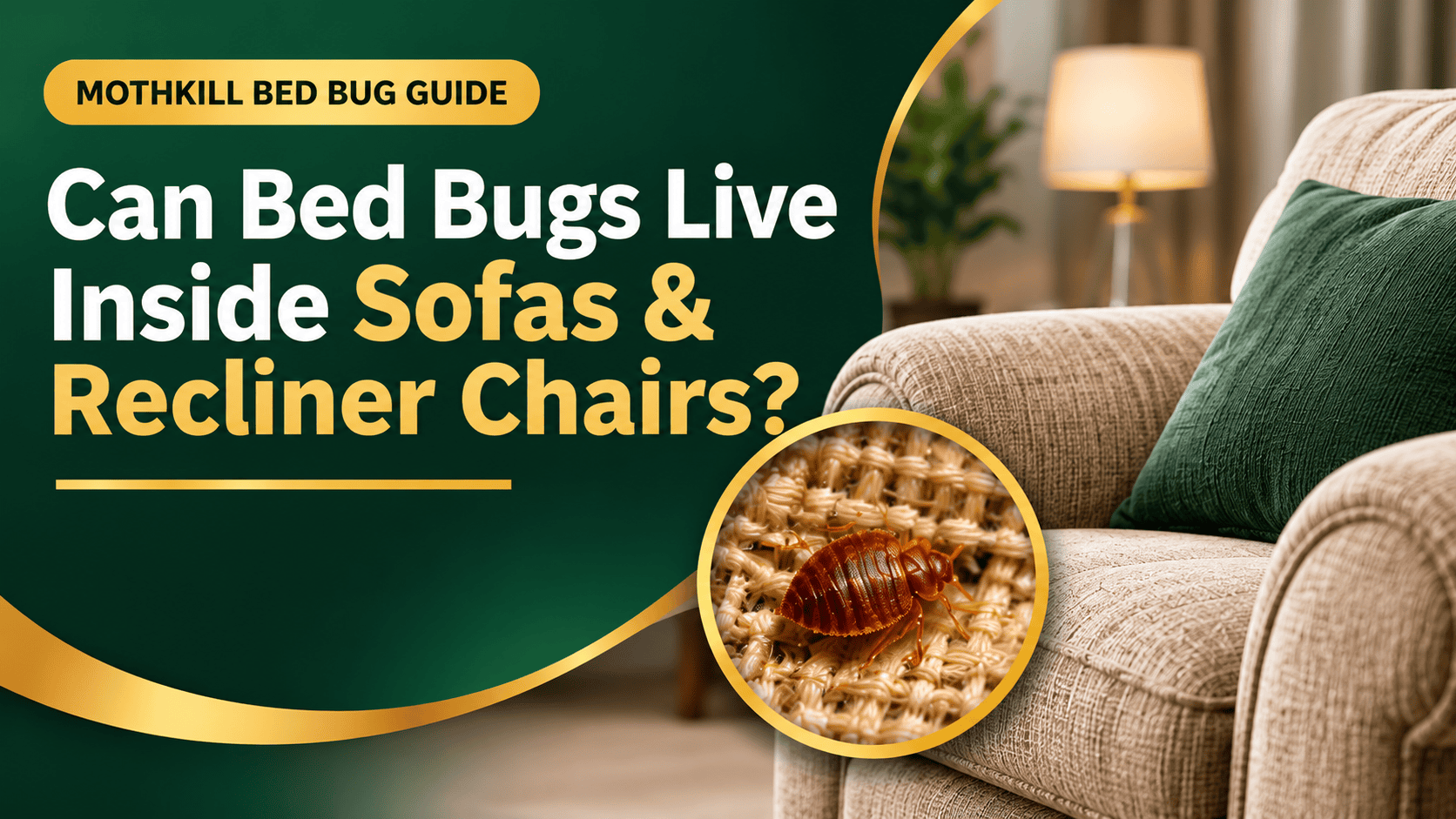
Can Bed Bugs Live Inside Sofas and Recliner Chairs?
Discover where bed bugs hide inside upholstered furniture, how to recognise an infestation and why professional treatment may be needed to reach concealed insects and eggs.
Most people associate bed bugs with mattresses, bed frames and bedrooms.
However, bed bugs are not restricted to beds. They can also infest sofas, armchairs, recliners, sofa beds and other upholstered furniture.
In some properties, the living room can become an important centre of bed bug activity, particularly when people regularly sleep or spend long periods resting on a sofa.
Upholstered furniture presents additional challenges because its construction may include fabric coverings, foam padding, wooden framing, metal components and enclosed spaces.
These features can provide numerous concealed harbourages that are difficult to inspect without suitable access.
Simply spraying the visible fabric or washing removable cushion covers may therefore leave insects hidden inside the furniture.
Understanding how bed bugs use sofas and recliner chairs is an important step towards choosing an effective treatment strategy.
Why Do Bed Bugs Live in Sofas and Armchairs?
Bed bugs feed on blood and generally remain close to places where people spend significant periods resting.
Although bedrooms are common infestation locations, a sofa may provide similar opportunities for feeding.
This can be particularly relevant where someone regularly sleeps on the sofa, watches television for extended periods or uses a reclining chair as their main resting place.
Bed bugs do not need to remain on exposed furniture surfaces.
They can retreat into narrow crevices and concealed spaces between feeding periods.
Many sofas contain suitable hiding places in their seams, internal framework, upholstery and fittings.
Our article about where bed bugs hide during the day explains how these insects use protected harbourages.
Eight Places Bed Bugs Hide Inside Sofas and Recliners
Fabric Seams and Piping
Stitched seams, decorative piping and folded fabric edges can provide narrow spaces where bed bugs shelter.
Underneath Seat Cushions
Gaps between cushions and the sofa structure are common inspection points, particularly where upholstery joins the frame.
Inside Wooden Frames
Wooden supports, corner joints, fixing holes and internal framework can conceal insects away from exposed fabric surfaces.
Beneath the Sofa Base
The underside of a sofa may contain protective fabric, webbing, support structures and inaccessible spaces.
Around Reclining Mechanisms
Metal brackets, hinges and other mechanical components can create concealed gaps, especially where they connect to upholstered sections.
Behind Backrest Panels
Fabric-covered rear panels and supporting frames can harbour insects that are not visible during a normal inspection.
Inside Sofa Bed Mechanisms
Convertible sofas may contain folding bed frames, mattress seams, hinges and internal cavities that require additional inspection.
Around Armrests and Fixings
Armrest joints, upholstery folds and connections between the arms and main frame can provide protected harbourages.
Not every sofa contains bed bugs in all these areas. The actual distribution depends on the construction of the furniture and the extent of the infestation.
What Are the Signs of Bed Bugs in a Sofa?
A heavily infested sofa may show obvious evidence of bed bug activity.
However, smaller infestations can be difficult to detect, particularly when insects remain concealed inside the framework.
Signs Worth Checking
- Live bed bugs: Small, flattened insects around accessible seams, joints or cushion edges.
- Dark faecal spotting: Small dark marks along fabric edges or protected harbourages.
- Shed skins: Pale or brownish empty skins left behind as immature bed bugs develop.
- Eggs: Small pale eggs attached to protected surfaces.
- Repeated sightings: Insects appearing around a particular sofa or reclining chair.
- Activity nearby: Signs around skirting boards, adjacent furniture or nearby sleeping areas.
Bites alone cannot reliably identify a bed bug infestation because skin reactions vary and may resemble those caused by other insects or conditions.
Our guide to the signs of bed bugs provides further identification advice.
How to Inspect a Sofa for Bed Bugs
Begin by inspecting accessible areas without carrying the sofa into another room.
Use a torch to examine seams, folds and junctions between different furniture components.
Where cushions can be removed safely, check their seams and the exposed areas beneath them.
Look closely at the junctions where the backrest meets the seat and where armrests join the main frame.
If the sofa has exposed wooden framework or visible underside fabric, inspect these areas carefully.
Avoid cutting upholstery, removing structural panels or dismantling complicated mechanisms without appropriate advice.
Professional inspection may be necessary when signs indicate activity inside inaccessible sections.
Are Recliner Chairs More Difficult to Treat?
Recliner chairs can create additional inspection and treatment challenges.
Some recliners contain complicated mechanical systems, moving components, upholstered panels and enclosed sections.
These components may provide narrow spaces that are difficult to reach with conventional surface treatments.
Motorised recliners may also contain electrical components, wiring and control systems that require special consideration.
These features are particularly important when planning heat treatment.
Not all furniture materials or electrical components are suitable for unrestricted exposure to elevated temperatures.
A professional treatment provider should assess these risks before deciding whether a recliner can be treated safely using a particular method.
Important: Do Not Spray Electrical Recliner Mechanisms
Electric recliners may contain motors, wiring, switches and other electrical components.
Do not apply insecticide sprays, liquids or dusts to electrical equipment unless the product is specifically authorised and labelled for that use and the procedure is safe.
Unapproved applications may create electrical hazards, damage components or expose occupants to unnecessary risks.
Seek professional advice before treating the internal components of a motorised recliner.
Can Bed Bugs Live Inside Leather Sofas?
Yes. Leather upholstery does not make a sofa immune to bed bugs.
Although exposed leather surfaces may offer fewer fabric folds than some upholstered coverings, bed bugs can still hide around seams, stitching, cushions and internal framing.
The construction beneath the leather is often more important than the visible material.
A leather sofa may contain wooden supports, concealed compartments and other suitable harbourages.
Therefore, replacing a fabric sofa with a leather one is not a reliable method of preventing bed bug infestations.
Can Bed Bugs Live in Sofa Cushions?
Yes. Bed bugs can shelter around cushion seams, zips, piping and fabric folds.
Removable cushion covers may be easier to inspect than the internal framework of a sofa.
However, removing and washing cushion covers alone will not necessarily eliminate insects elsewhere inside the furniture.
Care is also needed when handling infested cushions.
Moving them between rooms or placing them on other furniture can potentially transport insects.
Any laundering or drying should follow the fabric-care instructions and suitable bed bug treatment guidance.
Can Bed Bugs Spread From a Sofa to a Bedroom?
Yes. Bed bugs may disperse through their own movement or be transported in furniture and belongings.
If a sofa becomes infested, insects may establish themselves in other suitable harbourages within the property.
However, the presence of bed bugs in a living room does not automatically mean every bedroom is infested.
The wider property should be assessed to establish where activity is present.
Moving infested furniture unnecessarily can increase the risk of transporting insects.
Our existing article explains how moving furniture can spread bed bugs around your home.
Should You Throw Away a Sofa That Has Bed Bugs?
Not necessarily.
Many suitable upholstered furniture items can potentially be treated, depending on their construction and the available treatment methods.
However, some sofas contain inaccessible harbourages or components that make effective treatment particularly challenging.
In severe infestations, disposal may be considered when suitable treatment is impractical.
Throwing away the sofa alone does not guarantee that the infestation will disappear.
Bed bugs may remain in other furniture, skirting boards, adjoining rooms or additional harbourages.
If you decide to dispose of an infested sofa, arrange appropriate containment and follow local waste disposal requirements.
Never sell or donate furniture that you know is infested unless the infestation has been appropriately resolved.
Why Can DIY Sofa Bed Bug Treatments Fail?
DIY approaches often concentrate on the most visible areas of the sofa.
Unfortunately, bed bugs may remain concealed behind fabric, inside wooden joints or within inaccessible compartments.
Surface-Only Spraying
Spraying exposed upholstery does not guarantee that insecticide will reach bed bugs inside protected structural gaps.
Incomplete Vacuuming
Vacuuming can remove accessible insects and debris but may not reach deep internal harbourages or attached eggs.
Uncontrolled Steaming
Steam can kill bed bugs where sufficient heat reaches them, but inaccessible areas may remain untreated. Excess moisture and heat may also damage furniture.
Missing Nearby Harbourages
Even if insects are removed from the sofa, activity may continue in surrounding furniture or other infested areas of the property.
Learn more about the limitations of DIY methods in our article Bed Bug Spray: Does It Really Work?.
Can Professional Heat Treatment Kill Bed Bugs Inside Sofas?
Professional heat treatment can be effective against bed bugs in suitable upholstered furniture when the insects and eggs receive sufficiently lethal temperatures for the required duration.
However, heating the room does not automatically ensure that concealed harbourages inside a sofa have reached an effective temperature.
Thick upholstery, foam padding, wooden frameworks and enclosed compartments can slow heat penetration.
The position of the furniture and the movement of heated air are also important.
For professional treatment, sofas may need to be opened, repositioned or otherwise prepared so that difficult areas can be assessed.
Temperature monitoring can help identify whether selected locations have received adequate exposure.
Different furniture designs require different treatment considerations, and some items may not be suitable for whole-room heating.
Our guide explains how professional bed bug heat treatment works.
Why Heat Penetration Matters in Upholstered Furniture
Bed bug heat treatment depends on achieving effective temperature exposure where the insects are actually hiding.
The temperature of the surrounding room air may be substantially different from the temperature inside thick cushions or enclosed framework.
This is especially relevant with densely constructed recliners and sofas.
Internal materials may act as thermal barriers and delay heating.
Consequently, a professional treatment needs to account for furniture design, airflow, heating duration and the location of concealed harbourages.
There is no single room-air reading that guarantees every type of sofa has been adequately treated.
How Should You Prepare a Sofa for Professional Bed Bug Treatment?
Always follow the specific instructions supplied by the treatment company.
Preparation requirements can vary according to the furniture and chosen treatment method.
Sofa and Recliner Preparation Checklist
- Identify the furniture: Explain whether it is a standard sofa, sofa bed, manual recliner or electric recliner.
- Report suspected activity: Tell the technician where insects or other signs have been seen.
- Check removable cushions: Follow the provider's instructions for inspection and handling.
- Avoid unnecessary movement: Do not transfer potentially infested furniture into another room.
- Discuss electrical components: Identify motors, control systems and any heat-sensitive materials.
- Manage loose belongings: Follow instructions for blankets, throws and items stored around the sofa.
- Provide safe access: Clear surrounding obstructions as directed by the pest controller.
- Do not dismantle mechanisms: Leave complex or hazardous disassembly to suitably competent people.
Read our bed bug heat treatment preparation checklist for further guidance.
Sofa Bed Bug Treatment: Comparing Common Options
| Method | Potential benefit | Important limitation |
|---|---|---|
| Vacuuming | Can remove accessible insects, skins and debris | Does not reliably reach all harbourages or attached eggs |
| Steam treatment | Can kill exposed insects and eggs when sufficient heat reaches them | Limited penetration into inaccessible structures; risk of material damage |
| Authorised insecticides | Can form part of a professional treatment strategy | Product suitability, resistance and access to harbourages affect results |
| Professional heat treatment | Can treat suitable furniture and contents when lethal exposure is achieved | Requires careful planning, penetration and material-safety assessment |
| Disposal | Removes the furniture item from the property | Does not address insects remaining elsewhere; containment is essential |
Should the Whole House Be Treated If Bed Bugs Are Found in a Sofa?
Not automatically, but a wider assessment is advisable.
A confirmed infestation in living-room furniture may be localised or may form part of a more extensive problem.
Inspection should consider nearby furniture, bedrooms and other relevant harbourages.
The appropriate treatment area depends on what the inspection reveals and the potential routes of spread.
Treating only the sofa without checking adjacent areas could overlook additional infestations.
For further discussion, read Bed Bugs in One Bedroom: Do You Need to Treat the Whole House?.
What If Bed Bugs Are Still Present After Sofa Treatment?
Continued activity should be investigated rather than automatically assuming a particular treatment method has failed.
Possible explanations include surviving insects in concealed harbourages, untreated nearby areas or reintroduction.
The treatment history, timing of sightings and evidence of live activity should be considered.
A professional follow-up inspection may be needed to determine the most appropriate next step.
Our guide Bed Bug Heat Treatment Failed: What Should You Do Next? explains possible reasons for persistent activity.
Frequently Asked Questions
Can bed bugs live inside a sofa without being visible?
Yes. Bed bugs can remain concealed behind fabric, within joints and inside protected areas, particularly during the day.
Can bed bugs live in leather sofas?
Yes. They may hide around stitching, cushions and internal framework even when the visible upholstery is leather.
Can bed bugs live inside electric recliners?
Yes. Upholstered panels and structural gaps can provide harbourages. Motors and electrical components require careful treatment planning.
Will washing sofa cushion covers kill bed bugs?
Appropriate laundering or tumble-drying may treat suitable removable fabrics, but washing covers alone will not eliminate insects hidden elsewhere inside the sofa.
Can bed bugs move from sofas into bedrooms?
Yes. They can disperse naturally or be transported with infested items. However, movement between rooms is not inevitable.
Should I throw away my sofa if I find bed bugs?
Not automatically. Some sofas can be treated successfully. The decision depends on infestation severity, furniture construction and treatment suitability.
Can steam kill bed bugs inside a sofa?
Steam can kill bed bugs and eggs where sufficient heat reaches them. However, deep internal areas may be inaccessible and inappropriate application can damage upholstery.
Does professional heat treatment work on recliner chairs?
It may be suitable for some recliners, but construction, motors, electronics and heat-sensitive materials must be assessed before treatment.
Can bed bugs live in a sofa that nobody sleeps on?
Yes. People who regularly sit or rest on a sofa can provide feeding opportunities. The insects do not require someone to sleep there.
Can bed bugs survive in a sofa placed in storage?
Yes. Depending on conditions, bed bugs can survive for extended periods without feeding. Storage alone is not a reliable elimination method.
Final Advice: Never Overlook Upholstered Furniture
Bed bugs are not confined to mattresses and bed frames.
Sofas, armchairs and recliner chairs can contain numerous sheltered locations where insects remain hidden between feeding periods.
These harbourages may be especially difficult to inspect when upholstery conceals complex internal structures.
The most appropriate treatment depends on identifying the affected areas and selecting a method capable of reaching the insects and eggs.
Professional heat treatment may help preserve suitable furniture, but correct preparation, adequate temperature penetration and consideration of the wider infestation are essential.
Successfully treating bed bugs in a sofa means addressing the concealed harbourages, not simply treating the visible fabric.
Found Bed Bugs in Your Sofa or Recliner?
MothKill provides professional bed bug heat treatment for suitable properties and furniture. If you have discovered bed bugs in a sofa, recliner or other upholstered furniture, contact us to discuss the infestation and possible treatment options.
Request Professional Advice & a Quote Explore Professional Heat Treatment