Why Do I Keep Finding Clothes Moths in My Bedroom
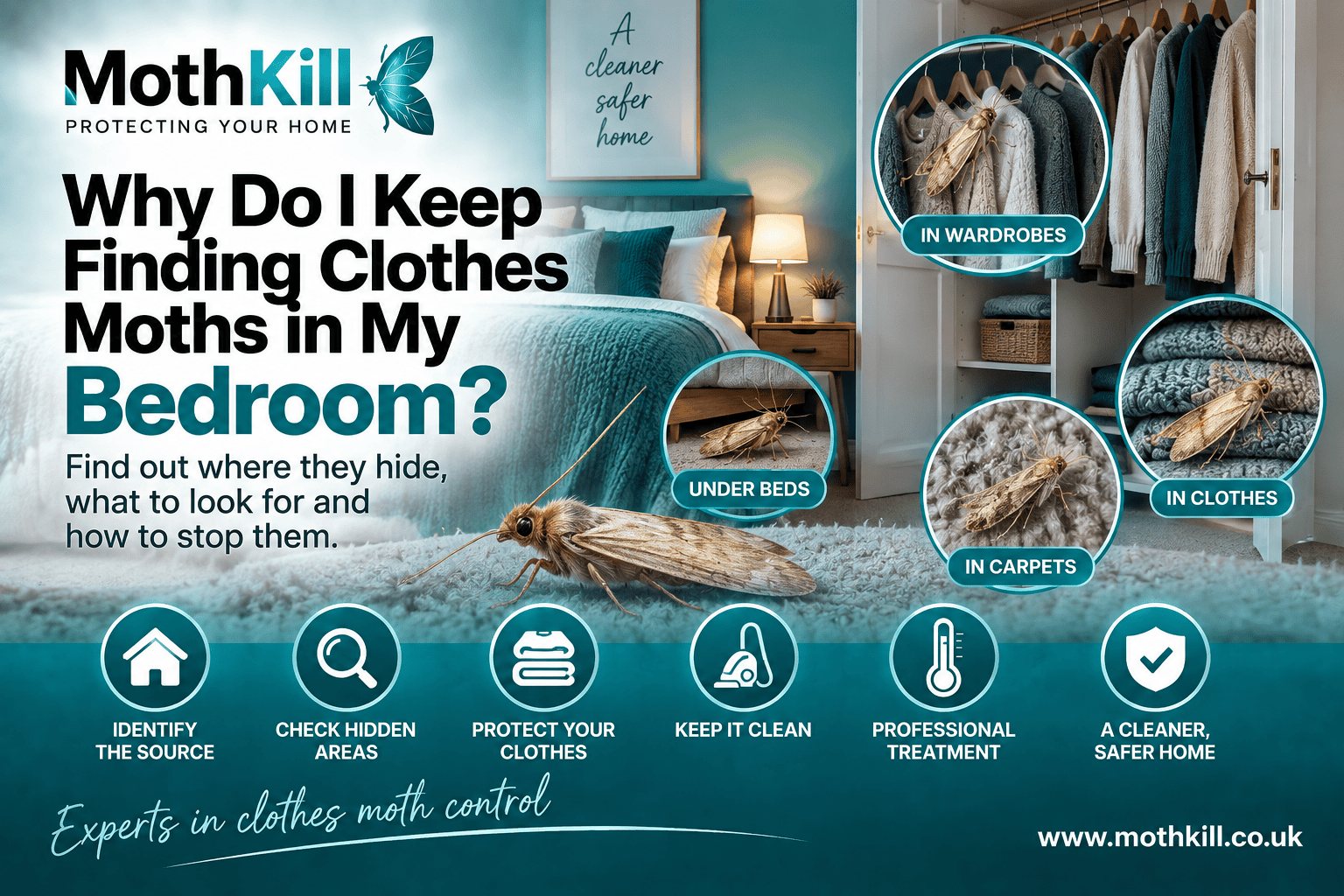
Why do I keep finding clothes moths in my bedroom? If small beige or golden moths repeatedly appear around your bed, wardrobe or carpet, there may be a breeding source somewhere nearby.
The adult moths you see flying are not usually responsible for the fabric damage. It is the larvae that feed on natural fibres.
Start by checking wool carpets, particularly underneath beds and wardrobes, natural-fibre clothing, rugs, upholstered furniture and other dark areas that remain undisturbed.
Why Do Clothes Moths Keep Appearing in a Bedroom?
Repeatedly seeing clothes moths usually indicates that suitable conditions for breeding and larval development exist somewhere nearby.
Bedrooms can provide exactly the sort of environment clothes moth larvae favour: natural fibres combined with dark, quiet areas that may remain undisturbed for months or even years.
Importantly, the place where you see an adult moth is not necessarily where the infestation originated. Adult moths can move away from the material where the larvae have been feeding.
Where Should You Check First?
If clothes moths keep appearing in your bedroom, concentrate your inspection on these areas.
The Most Common Bedroom Hiding Places
Wool Carpets
If your bedroom has wool or wool-rich carpet, inspect it carefully. Clothes moth larvae can feed on animal-based natural fibres within carpets.
Damage is often concentrated in quieter areas rather than the middle of the room. Check carpet edges, corners, underneath furniture and areas that normal vacuuming rarely reaches.
Underneath the Bed
Under a bed can provide an ideal environment: dark, relatively undisturbed and capable of accumulating hair, dust and natural fibres.
Where practical, move the bed and inspect underneath for larvae, thinning carpet, loose fibres, webbing or small larval cases.
Wardrobes & Clothing
Wardrobes are dark and may contain wool, cashmere, fur, silk and other natural materials.
Pay particular attention to garments that are rarely worn. Inspect folds, seams, collars and stored blankets rather than looking only at the visible front of clothing.
Underneath Wardrobes
If moths are appearing around a wardrobe but the clothes look unaffected, inspect the floor underneath it.
Heavy furniture may remain unmoved for years, creating an undisturbed section of wool carpet that receives virtually no regular vacuuming.
Rugs & Stored Textiles
Natural-fibre rugs, blankets and stored textiles can all provide food for clothes moth larvae.
Inspect underneath rugs as well as the visible surface, and check bags or boxes containing woollen or natural-fibre items.
Furniture & Hidden Edges
Upholstered furniture can contain suitable materials and protected areas. Inspect seams, underneath cushions and the underside of chairs.
Also look behind bedside cabinets, chests of drawers and other furniture where fibres and debris can accumulate.
For a wider inspection checklist, see our guide to the most common places clothes moths hide .
Do Clothes Moths Only Eat Clothes?
No. The name is slightly misleading.
Clothes moth larvae can feed on several animal-based natural materials, including wool, cashmere, fur, feathers and silk. They may also feed within natural-fibre carpets, rugs and some upholstered furnishings.
This is why finding moths near a wardrobe does not automatically mean the clothes inside are the source.
Why Do Clothes Moths Keep Coming Back?
When clothes moths disappear and then return, one possibility is that eggs or larvae remained in an area that was not identified or treated.
For example, treating clothing inside a wardrobe will not address larvae developing in wool carpet underneath it. Likewise, concentrating only on visible carpet may miss affected stored textiles elsewhere in the room.
Will Pheromone Traps Get Rid of Clothes Moths?
Pheromone traps can be useful for monitoring. They can help indicate the presence and activity of adult male moths of particular species.
However, traps should not normally be relied upon as the sole treatment for an established infestation because they do not directly eliminate all hidden eggs and larvae.
What Can You Do Yourself?
A small and localised problem may sometimes be managed through careful inspection, cleaning and appropriate treatment of affected textiles.
Regular, thorough vacuuming can remove some eggs, larvae, fibres and debris from accessible areas. Moving furniture periodically, where safe and practical, also helps expose areas that normal cleaning may miss.
Read why vacuuming is one of the best defences against clothes moths .
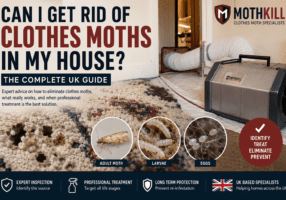
You can also read: Can I Get Rid of Clothes Moths in My House?
Why Heat Treatment Can Help With Bedroom Clothes Moths
Established infestations can be difficult when activity extends underneath furniture, throughout wool carpets or into several areas of a property.
Professional heat treatment heats the treatment area while industrial fans circulate heated air. Multiple temperature sensors are used to monitor different locations and identify areas that are slower to heat.
The objective is for sufficient heat to reach the harbourages where moth eggs, larvae and adults may be present. When the required temperatures and exposure are achieved, heat can kill clothes moths at different stages of their life cycle, including eggs and larvae.
Learn more about professional clothes moth heat treatment or read our guide explaining how clothes moth heat treatment works .
What If Moths Are Appearing in Several Bedrooms?
If clothes moth activity is present in several rooms, consider whether the infestation extends beyond one obvious breeding source.
Inspect carpets, wardrobes, rugs and stored textiles throughout the affected property. Treating one bedroom alone may leave eggs or larvae elsewhere if the infestation is more widespread.
The extent of the infestation should therefore be considered before deciding which areas require treatment.
Professional Clothes Moth Treatment Options
If moths continue to appear despite thorough cleaning, vacuuming and monitoring, there may be hidden activity that has not yet been located.
Frequently Asked Questions
Why are clothes moths suddenly appearing in my bedroom?
There may be a breeding source nearby. Check wool carpets, wardrobes, stored natural-fibre clothing, rugs, upholstered furniture and undisturbed areas underneath beds and other furniture.
Does seeing one clothes moth mean I have an infestation?
Not necessarily. However, repeatedly seeing clothes moths in the same room is a good reason to inspect for larvae, eggs, shed material and textile damage.
Where should I look for clothes moth larvae in a bedroom?
Start with carpet edges, underneath beds and wardrobes, stored natural-fibre clothing, underneath rugs and other dark, undisturbed areas.
Why do clothes moths keep appearing after I kill them?
Killing adult moths does not necessarily remove hidden eggs and larvae. If the breeding source remains, additional adults can continue to emerge.
Can clothes moths live under my bed?
They can develop in suitable material underneath a bed, particularly where there is wool carpet, natural-fibre material or accumulated fibres in a dark and undisturbed area.
Can clothes moths damage bedroom carpets?
Yes. Clothes moth larvae can damage wool and other suitable animal-based fibres in carpets. Damage is often concentrated underneath furniture and around quieter carpet edges.
Why Do I Keep Finding Clothes Moths in My Bedroom? – Final Thoughts
If clothes moths repeatedly appear in your bedroom, do not concentrate only on the adults you can see.
Look for the source. Check wool carpets, wardrobes, underneath beds, behind furniture, rugs and stored natural-fibre clothing. Hidden eggs and larvae are usually more important when trying to stop an established infestation.
Thorough inspection and regular vacuuming may help with smaller problems, but persistent or widespread activity can require professional treatment.
Still Finding Clothes Moths?
If moths keep appearing despite cleaning and inspection, MothKill can advise on professional clothes moth treatment and whether heat treatment is suitable for your property.