Carpet Beetles vs Clothes Moths – How to Tell the Difference

Carpet beetles and clothes moths can cause remarkably similar problems in UK homes. Both can damage carpets, clothing and other natural materials, and both may remain hidden until damage has already occurred.
However, they are very different insects. If you are finding damaged textiles, larvae or small insects around your home, knowing whether you have carpet beetles or clothes moths is an important first step.
The good news is that there are several useful clues that can help you tell them apart.
Carpet beetles vs clothes moths: carpet beetle larvae are normally brown, banded and noticeably hairy or bristly. Clothes moth larvae are usually pale or cream, caterpillar-like and have a darker head.
Finding small adult beetles repeatedly around windows can also point towards carpet beetles, while silken material, webbing or larval cases can indicate clothes moth activity.
Carpet Beetles vs Clothes Moths: What's the Difference?
It is tempting to identify the pest from the damage alone. Unfortunately, holes in a wool carpet or damaged clothing do not always provide a definite answer.
A much better approach is to look at the adult insect, larvae and evidence surrounding the damaged material.
Carpet Beetle or Clothes Moth?
These are some of the quickest differences to look for when inspecting your home.
Small oval or rounded beetle.
Brown, banded and hairy or bristly.
Larvae, hairy cast skins and adult beetles.
Adults appearing around windows.
Small buff, beige or golden moth.
Pale, cream and caterpillar-like.
Larvae, silk, webbing or larval cases.
Activity around natural-fibre textiles.
What Do Carpet Beetles Look Like?
Adult carpet beetles are small beetles. Their appearance varies between species, with some having distinctive mottled colouring and others appearing considerably darker.
One of the places homeowners frequently notice them is around windows and window ledges.
However, the place where you find an adult carpet beetle is not necessarily where the infestation originated. Adults may move towards light after developing elsewhere in the property.
What Do Carpet Beetle Larvae Look Like?
The larval stage provides one of the best identification clues.
Colour & Shape
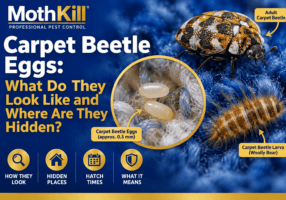
Carpet beetle larvae are generally brown or golden-brown and often have a segmented or banded appearance.
Hairy Appearance
The larvae have noticeable hairs or bristles. This is one of the easiest features for distinguishing them from clothes moth larvae.
Cast Skins
As carpet beetle larvae grow they moult, leaving old hairy skins behind. These can remain after the larva has moved elsewhere.
Hidden Locations
Look around carpet edges, beneath furniture, inside cupboards and other quiet areas where suitable food material is present.
For more detail, see our guide to carpet beetle larvae.
What Do Clothes Moths Look Like?
Clothes moths are small and relatively inconspicuous. They are commonly buff, beige or golden rather than resembling some of the larger moth species people see flying around lights.
Clothes moths are often associated with dark, relatively undisturbed areas containing suitable materials for their larvae.
Importantly, the adult moth is not responsible for eating your carpet or clothing. It is the larval stage that causes the textile damage.
What Do Clothes Moth Larvae Look Like?
Clothes moth larvae look quite different from carpet beetle larvae.
They are generally pale, whitish or cream and caterpillar-like, usually with a darker head capsule.
Depending on the species, you may also find silk, webbing or portable larval cases associated with their activity.
Quick identification clue: if the larva is brown and obviously hairy or bristly, carpet beetle should be considered. If it is pale and caterpillar-like, clothes moth becomes more likely.
Whenever possible, identification should be based on the insect itself and other evidence rather than textile damage alone.
Can Both Pests Damage Carpets?
Yes. This is one reason the two infestations are sometimes confused.
Carpet beetle larvae can feed on a range of animal-derived natural materials. Clothes moth larvae can also attack suitable natural-fibre carpets.
Potentially vulnerable materials include wool, cashmere, fur, feathers, hair, natural-fibre rugs, some upholstered furnishings and wool-rich carpets.
Carpet Beetle Damage vs Clothes Moth Damage
There can be differences in the pattern of damage, but I would be cautious about diagnosing an infestation purely from the holes themselves.
Instead, inspect the damaged material and the surrounding area for:
- live larvae;
- cast larval skins;
- adult insects;
- silken material;
- webbing;
- larval cases; and
- additional hidden damage.
Where Should You Check First?
If you suspect either carpet beetles or clothes moths, concentrate your inspection on quiet areas that receive little disturbance.
The Most Important Places to Inspect
Carpet Edges
Inspect around skirting boards and underneath furniture. These areas may receive little routine vacuuming and can remain undisturbed for long periods.
Under Beds
Move beds where practical and inspect the carpet underneath for larvae, cast skins, damaged fibres or other evidence.
Wardrobes & Clothing
Inspect natural-fibre garments, stored blankets, folds, seams and items that are rarely worn or moved.
Beneath Furniture
Heavy furniture can remain unmoved for years. Inspect beneath wardrobes, sofas, cabinets and other large items.
Rugs & Stored Textiles
Inspect both sides of rugs and check stored boxes or bags containing woollen or other susceptible natural materials.
Lofts & Hidden Sources
With carpet beetles in particular, consider less obvious sources such as old nesting material, accumulated animal hair or dead insects.
Why Do I Keep Finding Carpet Beetles on the Windowsill?
Finding adult carpet beetles around a window can be an important clue.
Adults may move towards light, so windows and window ledges are common places for them to be noticed.
But this does not mean that the breeding source is at the window.
Why Correct Identification Matters
Successful control begins with knowing which pest is actually present.
If carpet beetles are mistaken for clothes moths — or clothes moths are mistaken for carpet beetles — you may concentrate on the wrong areas and overlook the actual source.
The aim of an inspection should be to establish:
- which pest is present;
- where the larvae are developing;
- what they are feeding on;
- how widespread the activity is; and
- whether a hidden source is allowing the infestation to continue.
What Can You Do Yourself?
A small and localised infestation may sometimes be managed through careful inspection, cleaning and appropriate treatment of affected materials.
Identify the Pest
Look for larvae, adults, cast skins, silk, cases and other evidence before deciding how to tackle the problem.
Find the Source
Inspect carpets, clothing, furniture, rugs, cupboards and hidden areas rather than treating only where an adult insect was seen.
Clean & Monitor
Vacuum thoroughly and continue checking for fresh larvae, adults or damage instead of assuming the infestation has disappeared.
Can Vacuuming Get Rid of Carpet Beetles or Clothes Moths?
Thorough vacuuming is an important part of managing both pests.
Concentrate on carpet edges, underneath beds and furniture, skirting boards and other areas that normal cleaning may miss.
Vacuuming can physically remove some larvae, eggs, fibres and debris from accessible areas.
However, established infestations may extend into locations a normal vacuum cleaner cannot reach. Cleaning should therefore be considered part of the control process rather than proof that the infestation has been eradicated.
When Professional Treatment May Be Needed
Finding one carpet beetle or clothes moth does not automatically mean that an entire property needs professional treatment.
Professional treatment becomes more appropriate when larvae are repeatedly found, fresh textile damage continues, several rooms are affected or you cannot locate the source of the infestation.
It may also be worth considering professional treatment where valuable carpets, clothing or furnishings are at risk or where appropriate DIY measures have failed to stop continuing activity.
MothKill provides professional treatment for both carpet beetles and clothes moths, including treatment options for established or widespread infestations.
Carpet Beetles vs Clothes Moths: Frequently Asked Questions
How can I quickly tell carpet beetle larvae from clothes moth larvae?
Carpet beetle larvae are generally brown and noticeably hairy or bristly. Clothes moth larvae are usually pale or cream, caterpillar-like and normally have a darker head.
Do carpet beetles make holes in clothes?
Carpet beetle larvae can damage susceptible natural-fibre clothing and other animal-derived materials. Finding damaged clothing therefore does not automatically mean clothes moths are responsible.
Can both carpet beetles and clothes moths damage wool carpets?
Yes. The larvae of both pests can damage suitable wool and other natural-fibre materials.
Why do I keep finding carpet beetles by the window?
Adult carpet beetles may move towards windows because they are attracted towards light. Their larvae may have developed somewhere else in the property.
Are carpet beetle larvae hairy?
Yes. Their noticeably hairy or bristly appearance is one of the most useful features for distinguishing them from clothes moth larvae.
Should I treat before I know which pest I have?
Where possible, identify the pest first. Correct identification helps you locate likely breeding areas and choose a more appropriate control strategy.
The Bottom Line
Carpet beetles and clothes moths can cause very similar damage, particularly where wool carpets, clothing and other natural materials are involved.
Do not rely on the damage alone.
Brown, banded, hairy larvae and discarded hairy skins point towards carpet beetles.
Pale caterpillar-like larvae, silken material or larval cases point more towards clothes moths.
Most importantly, finding the larvae and the material they are feeding on is often far more useful than simply killing the adult insects you can see.
Still Not Sure Which Pest You Have?
If you're finding larvae, damaged carpets or clothing and the problem keeps returning, MothKill can advise on identification and professional carpet beetle or clothes moth treatment.
🔥 GET A QUOTE ☎ 07366 262835