Carpet Beetle Larvae

Carpet beetle larvae are small, bristly insects that can damage wool carpets, clothing, rugs, upholstery and other natural materials in UK homes.
Although adult carpet beetles are often the first stage homeowners notice, it is the larvae that cause the characteristic textile damage.
They can remain hidden beneath furniture, around carpet edges, inside wardrobes and in other quiet areas for long periods. As a result, an infestation may already be established before you realise there is a problem.
This guide explains what carpet beetle larvae look like, where they hide, what they eat, how to distinguish them from clothes moth larvae and what to do if you find them in your home.
Carpet Beetle Larvae: Quick Identification
- Appearance: small, brownish and noticeably hairy or bristly.
- Shape: often elongated or carrot-shaped.
- Where found: beneath furniture, around carpet edges, in wardrobes and other undisturbed areas.
- What they eat: animal-derived natural materials and suitable organic debris.
- Damage: wool carpets, clothing, rugs, upholstery and stored textiles.
- Important: the larvae cause the textile damage, not the adult beetles.
What Are Carpet Beetle Larvae?
Carpet beetle larvae are the immature feeding stage of carpet beetles.
Adult carpet beetles and their larvae behave very differently. Adults are often associated with windows and flowers, while larvae seek protected areas containing suitable food.
The larvae feed on animal-derived materials and organic debris. Depending on the species and conditions, this can include wool, fur, feathers, hair, dead insects and other suitable material.
This feeding behaviour is why carpet beetles can become serious textile pests inside homes.
What Do Carpet Beetle Larvae Look Like?
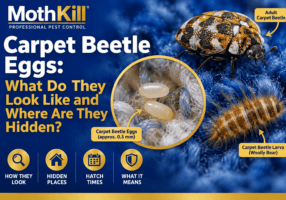
Carpet beetle larvae are generally small, brownish and noticeably hairy or bristly.
The exact appearance varies between species, but common features include:
- a small elongated or carrot-shaped body;
- brown, golden or banded colouring;
- visible hairs or bristles;
- a segmented appearance; and
- longer hairs towards the rear on some species.
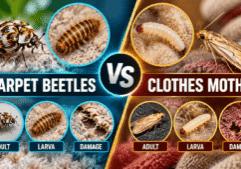
Carpet Beetle Larvae vs Clothes Moth Larvae
This is one of the most common identification problems in homes with damaged carpets or clothing.
Both pests can attack some of the same natural materials, but the larvae look quite different.
Carpet Beetle Larvae
- Usually brownish
- Hairy or bristly
- Often elongated or carrot-shaped
- May have longer hairs towards the rear
- Often leave hairy shed skins
Clothes Moth Larvae
- Generally pale or cream coloured
- Darker head
- More caterpillar-like appearance
- Some species produce silk
- Some produce portable cases
If you are finding textile damage but cannot identify the pest, look for larvae, shed skins, adult insects and other evidence rather than relying on the damage alone.
How Big Are Carpet Beetle Larvae?
Carpet beetle larvae are small. Their size varies according to species and stage of development, but they are usually only a few millimetres long.
Because of their size and preference for dark, undisturbed areas, they are easy to overlook.
You may notice an empty shed skin before you find a living larva.
Where Do Carpet Beetle Larvae Hide?
Carpet beetle larvae prefer places where suitable food is available and they can remain relatively undisturbed.
Carpets & Furniture
- Beneath beds
- Under wardrobes
- Below sofas
- Carpet edges
- Skirting areas
- Upholstered furniture
Storage & Hidden Areas
- Wardrobes and cupboards
- Stored wool clothing
- Blankets and rugs
- Lofts
- Pet bedding
- Old nesting material
Larvae may also be associated with accumulations of hair, lint and dead insects.
Why Am I Finding Carpet Beetle Larvae on Walls?
Finding a larva crawling up a wall does not necessarily mean it is feeding there.
Larvae can move away from their original feeding site as they develop and search for protected places.
If you repeatedly find larvae on walls, window areas or floors, inspect nearby furniture, carpet edges, wardrobes and other concealed locations.
The visible larva may simply be evidence of a hidden source elsewhere.
What Do Carpet Beetle Larvae Eat?
Carpet beetle larvae can feed on a surprisingly wide range of animal-derived materials and organic debris.
Textiles & Materials
- Wool
- Cashmere
- Fur
- Feathers
- Some natural-fibre furnishings
- Taxidermy and other animal-derived materials
Other Food Sources
- Animal hair
- Dead insects
- Suitable fibres in lint
- Old nesting material
- Other suitable organic debris
They are not limited to carpets despite their common name.
An infestation can therefore persist in a property even when there is no obvious damage to the main carpeted areas.
Do Carpet Beetle Larvae Eat Synthetic Carpet?
Purely synthetic fibres are not normally the food source associated with carpet beetle larvae in the same way as animal-derived natural fibres.
However, synthetic carpets can contain accumulated hair, dead insects, food debris or natural materials that provide suitable food.
Mixed-fibre carpets may also contain wool or other vulnerable materials.
So finding larvae around a synthetic carpet does not automatically rule out carpet beetles.
What Damage Do Carpet Beetle Larvae Cause?
Damage varies according to the material and extent of the infestation.
You may notice:
- irregular thinning or bald areas in wool carpets;
- holes in clothing;
- damage to rugs;
- damaged woollen blankets;
- feeding damage to upholstered natural fibres; or
- damage to stored textiles.
Areas beneath furniture are particularly important to inspect because they can remain dark and undisturbed for months or years.
Are Carpet Beetle Larvae Harmful to People?
Carpet beetle larvae do not feed on people and they do not bite in the way that bed bugs do.
However, their hairs can irritate the skin of some people.
This can occasionally cause carpet beetle activity to be mistaken for a biting-insect problem.
Skin marks alone are not a reliable way to identify the pest. Several insects and non-pest conditions can produce similar-looking irritation.
Why Do I Keep Finding Shed Carpet Beetle Skins?
Carpet beetle larvae moult as they grow.
The empty skins can remain behind long after the larva has moved elsewhere.
Finding one old shed skin does not necessarily prove that there is a large active infestation.
However, repeatedly finding skins in several locations, particularly alongside living larvae or fresh textile damage, deserves further investigation.
Where Do Carpet Beetles Come From?
Adult carpet beetles naturally occur outdoors and may enter homes through windows, doors and other openings.
They can also be associated with flowers and plant material.
Once inside, eggs may be laid where newly hatched larvae will have access to suitable food.
Infestations can also be associated with old bird nests, animal material, stored textiles and second-hand furnishings.
Can Bird Nests Cause Carpet Beetles?
Yes. Old nesting material can provide feathers, hair, dead insects and other organic matter suitable for carpet beetle larvae.
This makes lofts, roof spaces and old bird nesting sites worth investigating when beetles repeatedly appear upstairs or around windows.
Why Do Carpet Beetles Keep Coming Back?
Recurring carpet beetles usually indicate that larvae, eggs or a suitable breeding source remain somewhere in or around the property.
Cleaning one visible area may reduce activity without dealing with a source beneath furniture, inside a loft, among stored belongings or elsewhere.
Seasonal adult activity can also make a problem appear to disappear and then become noticeable again.
We cover the common hidden causes in our guide to why carpet beetles keep coming back .
What Should You Do If You Find Carpet Beetle Larvae?
Start by trying to establish how widespread the problem is.
Inspect:
- beneath furniture;
- carpet edges;
- wardrobes;
- woollen clothing;
- stored blankets and rugs;
- upholstered furniture;
- pet sleeping areas; and
- accessible loft areas where appropriate.
Look for living larvae, shed skins, adult beetles and textile damage.
Vacuum Thoroughly
Thorough vacuuming is an important first step.
Move accessible furniture and concentrate on places that ordinary cleaning often misses.
Pay particular attention to carpet edges, skirting boards, beneath beds and wardrobes, upholstery and areas where hair or lint accumulates.
Dispose of the vacuum contents carefully after cleaning.
Check Clothing and Stored Textiles
Inspect vulnerable natural-fibre items individually.
Suitable clothing may be washed, dry-cleaned or otherwise treated according to its care instructions.
Clean items should then be stored appropriately to reduce the chance of further infestation.
Can DIY Treatment Get Rid of Carpet Beetle Larvae?
Small, localised problems may sometimes be controlled through thorough cleaning, removal of the breeding source and appropriate treatment of affected belongings.
DIY treatment becomes much more difficult when larvae are appearing in several rooms, the source cannot be found or activity continues despite repeated cleaning.
Does Heat Treatment Kill Carpet Beetle Larvae?
Carpet beetle larvae, eggs and other life stages are vulnerable to sufficiently high temperatures.
Professional heat treatment can therefore be useful for established infestations, particularly where activity is widespread through suitable treatment areas.
However, professional treatment is not simply a matter of making the air in a room hot.
Heat distribution, airflow, preparation, exposure time and temperature monitoring all matter because effective thermal conditions need to reach the areas where insects may be concealed.
Some belongings and materials also require protection or removal before elevated-temperature treatment.
Learn more about MothKill's professional carpet beetle heat treatment .
When Should You Call a Professional?
Professional advice is worth considering when:
- larvae are appearing in several rooms;
- carpet or clothing damage is continuing;
- you cannot identify the source;
- the infestation keeps returning;
- valuable textiles are at risk; or
- repeated DIY control has not resolved the problem.
The appropriate treatment depends on where the infestation is located and how widespread it has become.
How Can You Prevent Carpet Beetle Larvae?
You cannot guarantee that an adult carpet beetle will never enter your home, but you can make the property less suitable for larvae.
Cleaning
- Vacuum beneath furniture regularly.
- Remove accumulated pet hair and lint.
- Keep wardrobes and storage areas clean.
- Remove accumulations of dead insects.
Textiles & Monitoring
- Store vulnerable textiles appropriately.
- Check second-hand rugs and furniture.
- Investigate old nesting material where relevant.
- Respond promptly to larvae or fresh textile damage.
Frequently Asked Questions About Carpet Beetle Larvae
What does a carpet beetle larva look like?
Carpet beetle larvae are generally small, brownish, elongated and covered with visible hairs or bristles. Their precise appearance depends on the species and stage of development.
Are carpet beetle larvae the stage that damages carpets?
Yes. The larvae are the feeding stage responsible for damage to vulnerable textiles and animal-derived natural materials.
Do carpet beetle larvae bite?
No. They do not feed on people. However, their hairs can irritate the skin of some individuals.
Why am I finding carpet beetle larvae but no adult beetles?
Larvae can remain hidden and develop for a considerable period. Adult beetles may only be noticeable at particular times, so the absence of visible adults does not rule out an infestation.
Can carpet beetle larvae live under furniture?
Yes. Areas beneath heavy furniture are particularly suitable because they are often dark, quiet and rarely vacuumed.
Can vacuuming get rid of carpet beetle larvae?
Thorough vacuuming can remove accessible larvae, some eggs, shed skins and potential food material and is an important part of control. However, established infestations may involve inaccessible areas that vacuuming cannot reach.
Does heat treatment kill carpet beetle larvae?
Yes, when sufficiently high temperatures reach the insects for an appropriate exposure period. Professional heat treatment therefore relies on controlled heating, airflow and temperature monitoring rather than a single air-temperature reading.
Carpet Beetle Larvae: Final Thoughts
Finding carpet beetle larvae is useful evidence because it tells you much more than simply seeing an adult beetle on a windowsill.
The larvae are the stage responsible for textile damage, and their presence means you should investigate nearby food sources and hiding places.
Start with identification, inspection and thorough cleaning. Look beneath furniture, around carpet edges, in wardrobes and anywhere natural fibres or organic debris accumulate.
If larvae continue appearing, damage is spreading or the infestation involves several areas of the property, professional treatment may be appropriate.
Finding Carpet Beetle Larvae Around Your Home?
If larvae are established in carpets, furniture or several rooms, MothKill can help assess the extent of the problem and provide professional treatment, including monitored heat treatment where appropriate.