
Bed Bug Treatment for Student Accommodation and HMOs UK
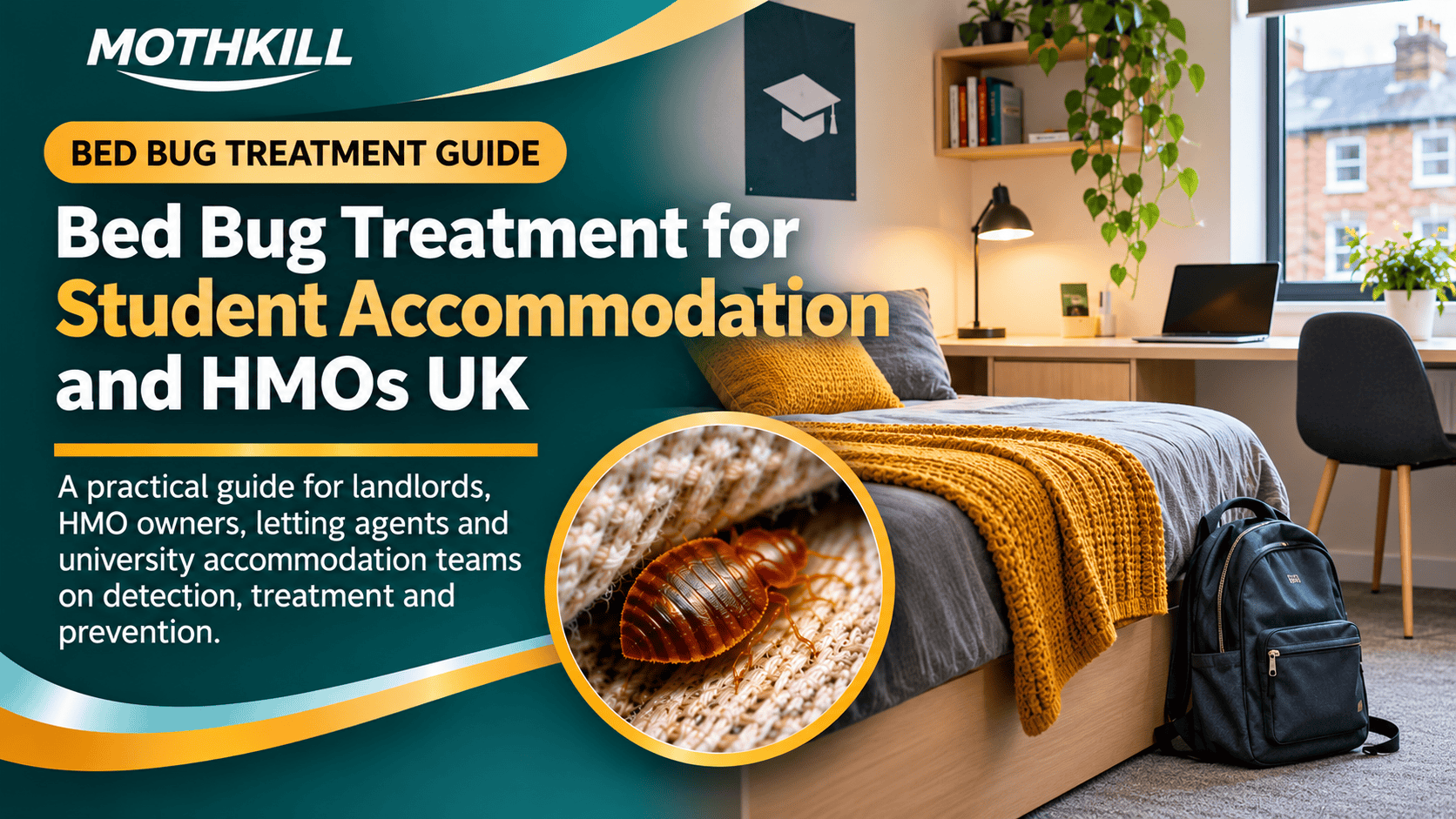
Bed Bug Treatment for Student Accommodation and HMOs UK
A practical guide for student landlords, HMO owners, university accommodation teams and letting agents managing bed bug infestations in shared housing.
Discovering bed bugs in student accommodation or a house in multiple occupation (HMO) can quickly become a complicated problem.
Unlike a single-family home, shared accommodation may contain several independently occupied bedrooms, communal living areas and residents with different schedules.
One tenant may report bed bugs while other occupants have noticed nothing unusual.
Some residents may have attempted their own treatment, moved furniture between rooms or changed sleeping arrangements before informing the landlord.
These circumstances can make it difficult to establish the full extent of an infestation.
For landlords and accommodation managers, successful bed bug control requires more than treating the room where insects were first discovered.
It requires careful inspection, communication with residents, suitable preparation and a treatment plan based on the building and evidence of infestation.
Why Are Student Houses and HMOs Vulnerable to Bed Bugs?
Student accommodation often experiences frequent changes of occupants, particularly at the beginning and end of academic terms.
Residents may arrive with luggage, furniture and belongings from different properties or countries.
Second-hand furniture is also common in student housing.
Bed bugs can be transported with infested belongings and may establish themselves in suitable harbourages close to sleeping areas.
Once introduced, they may remain unnoticed for some time.
In shared properties, residents may also move between bedrooms and communal areas, potentially transporting insects in personal belongings.
However, bed bugs are not caused by poor hygiene, and their presence does not automatically indicate that tenants or landlords have failed to maintain the property.
Our guide to how bed bugs spread between properties explains the common routes of introduction.
Eight Steps Landlords Should Take When Bed Bugs Are Reported
Record the Complaint
Document the room number, date, reported signs and any photographs or insect specimens provided by the tenant.
Arrange Identification
Ask a competent pest control professional to establish whether bed bugs are present rather than relying on bites alone.
Assess Other Bedrooms
Consider inspection of adjoining rooms and other relevant areas based on the layout and evidence of infestation.
Inform Relevant Occupants
Explain the situation calmly, provide preparation instructions and encourage residents to report suspected activity.
Prevent Unnecessary Movement
Advise tenants not to transfer potentially infested mattresses, furniture or belongings into unaffected rooms.
Arrange Appropriate Treatment
Select a professional treatment strategy based on the infestation, property construction and access arrangements.
Coordinate Preparation
Ensure all relevant residents receive clear instructions and understand their responsibilities before treatment.
Maintain Records
Keep inspection reports, treatment details, preparation instructions and any follow-up recommendations.
How Can You Confirm Bed Bugs in Student Accommodation?
A tenant reporting itchy bites does not necessarily mean bed bugs are present.
Skin reactions vary considerably, and other insects or medical conditions can cause similar symptoms.
Confirmation should be based on physical evidence where possible.
Common Signs of Bed Bugs
- Live bed bugs around mattress seams and bed frames.
- Dark faecal spotting near sleeping areas.
- Shed skins in concealed harbourages.
- Small pale eggs attached to protected surfaces.
- Activity around headboards and bedside furniture.
- Evidence in upholstered chairs or sofas.
Tenants should be encouraged to photograph suspected insects or preserve a specimen for identification where practical.
Our article covering the signs of bed bugs provides further guidance.
If One Student Bedroom Has Bed Bugs, Must Every Room Be Treated?
Not automatically.
However, shared accommodation requires careful consideration because bedrooms may be connected through walls, service openings, corridors and communal areas.
Bed bugs may also be transported through movement of belongings between rooms.
The fact that other tenants have not reported bites does not establish that their bedrooms are free from bed bugs.
Some people show little or no visible reaction to bites.
Professional inspection should therefore consider the layout of the property and any evidence suggesting wider activity.
Where multiple rooms are infested, a coordinated treatment programme may be necessary.
Read Bed Bugs in One Bedroom: Do You Need to Treat the Whole House? for further information.
Can Bed Bugs Spread Between Bedrooms in an HMO?
Yes. Bed bugs can disperse between connected spaces and may be transported with belongings.
Potential routes include gaps around pipes, structural openings and the movement of infested furniture.
In HMOs, shared corridors, communal furniture and frequent movement between rooms may create additional opportunities for transport.
However, the presence of bed bugs in one bedroom does not automatically mean every connected room is infested.
Inspection findings should guide the treatment plan.
Important: Do Not Move Infested Furniture Between Rooms
Moving an infested mattress, divan base, sofa or chair through shared accommodation can transport bed bugs into previously unaffected areas.
Unnecessary movement of clothing, bedding and personal belongings may create similar risks.
Tenants should follow the pest control provider's containment instructions rather than moving belongings independently.
Do not dispose of or relocate potentially infested furniture without an appropriate plan.
Read our article about how moving furniture can spread bed bugs.
Who Is Responsible for Bed Bug Treatment in an HMO?
Responsibility for pest control in rented accommodation depends on the circumstances, tenancy arrangements and relevant legal obligations.
Landlords have responsibilities concerning property condition and certain hazards, while tenants also have obligations relating to how they use and care for accommodation.
However, there is no universal rule that automatically makes every bed bug infestation the financial responsibility of either the landlord or tenant.
Factors may include whether the infestation existed before occupation, the source of the problem, contractual terms and whether building conditions contribute to the infestation.
HMO licensing conditions and local authority requirements may also be relevant.
Landlords should avoid making assumptions about responsibility before the circumstances have been properly investigated.
Where a dispute arises, appropriate housing or legal advice may be needed.
What If a Tenant Refuses Access for Bed Bug Treatment?
Access difficulties can complicate treatment in shared accommodation.
A professional provider may need to inspect several rooms to establish the extent of an infestation.
Where a tenant refuses access, landlords should explain why inspection is necessary and seek to arrange a suitable appointment.
Landlords must follow applicable tenancy and legal requirements concerning notice, consent and entry.
They should not assume that a suspected infestation automatically permits entry without the occupier's agreement or appropriate legal authority.
Good communication and clear written preparation instructions can help resolve practical difficulties.
Professional Heat Treatment for Student Accommodation
Professional heat treatment can be effective against bed bugs in suitable student accommodation and HMO properties.
The process involves raising temperatures under controlled conditions so that bed bugs and their eggs receive lethal thermal exposure.
However, the temperature of the surrounding room air is not necessarily the same as the temperature inside furniture or concealed harbourages.
Mattresses, divan bases, wardrobes and upholstered furniture can contain areas that warm more slowly than exposed surfaces.
Effective treatment requires appropriate preparation, airflow, temperature monitoring and sufficient exposure at relevant hiding places.
In shared accommodation, treatment planning must also consider adjoining rooms, access restrictions and potentially infested belongings.
Learn more about how professional bed bug heat treatment works.
Why Student Bedroom Furniture Requires Special Attention
Student bedrooms often contain a combination of beds, wardrobes, desks, storage drawers and personal belongings.
Bed bugs may hide in furniture joints, fabric coverings and other protected spaces.
Divan beds can be particularly challenging because their internal structure may contain concealed harbourages.
Our guide to bed bugs in divan beds explains these hiding places.
Shared living rooms may also contain upholstered sofas and chairs that require inspection where there is evidence of activity.
Read our article about bed bugs inside sofas and recliner chairs.
Can Chemical Treatments Be Used in Student HMOs?
Authorised insecticides may form part of a professional bed bug control programme.
However, their effectiveness depends on the product, application method, insecticide resistance and whether the treatment reaches relevant harbourages.
In shared accommodation, residents must understand any preparation, re-entry and ventilation requirements.
Products must only be used according to their authorisations and label instructions.
Repeated DIY spraying by different tenants may create unnecessary exposure risks without resolving concealed infestations.
A coordinated professional approach is preferable to unplanned applications across several rooms.
Read our comparison of bed bug heat treatment versus chemical treatment.
Comparing Treatment Options for Student Housing
| Method | Potential advantage | Important consideration |
|---|---|---|
| Professional heat treatment | Can control bed bugs and eggs in suitable rooms and furniture when lethal exposure is achieved. | Requires preparation, access, monitoring and assessment of heat-sensitive belongings. |
| Professional insecticide treatment | Can target appropriate harbourages using authorised products. | May require repeat visits and careful management of resistance and re-entry requirements. |
| Steam treatment | Can kill insects and eggs where sufficient heat reaches them. | Limited penetration and potential moisture or material damage. |
| Vacuuming | Removes accessible insects and debris. | Does not reliably eliminate concealed insects or attached eggs. |
| Inspection and monitoring | Helps establish the extent of activity and assess treatment progress. | Monitoring alone does not eliminate an infestation. |
How Should Students Prepare Their Rooms for Heat Treatment?
Preparation is particularly important in student accommodation because bedrooms may contain large quantities of clothing, luggage, books and personal belongings.
However, moving everything into another room is not an appropriate solution.
Potentially infested items should be managed according to the treatment provider's instructions.
Student Bedroom Preparation Checklist
- Follow the written instructions: Every affected resident should receive the same treatment-specific preparation guidance.
- Identify heat-sensitive items: Report electronics, batteries, aerosols, medicines, plastics and delicate belongings.
- Prepare beds: Follow instructions concerning mattresses, divan bases, headboards and storage compartments.
- Manage clothing: Follow suitable laundering, drying and containment procedures.
- Do not move infested belongings: Avoid transferring potentially infested items into unaffected rooms.
- Provide furniture access: Ensure relevant furniture and harbourages can be inspected or treated.
- Communicate access arrangements: Confirm when bedrooms must be vacant and how keys will be managed lawfully.
- Report previous DIY treatments: Tell the provider about sprays, powders or other products already applied.
Our bed bug heat treatment preparation checklist provides further guidance.
What Happens If One Student Does Not Prepare Their Room?
Inadequate preparation can seriously affect the effectiveness of a bed bug treatment programme.
Excessive clutter may restrict access to harbourages and interfere with the circulation of heated air.
Belongings packed tightly into bags, boxes or cupboards may not receive adequate treatment.
Where several bedrooms require treatment, failure to prepare one room may compromise the overall management strategy.
The treatment provider should explain what preparation is essential and whether the work can proceed safely and effectively.
Landlords and accommodation managers should coordinate preparation early rather than waiting until the treatment team arrives.
Can Students Remain in the Property During Treatment?
Rooms undergoing professional heat treatment must be unoccupied during the procedure.
Whether other areas of an HMO can remain occupied depends on the treatment method, property layout and safety arrangements.
Equipment, power supplies, heating systems and access restrictions must be considered.
Residents should receive clear information about when they must leave and when they may return.
Where insecticides are used, all relevant re-entry restrictions must be followed.
Accommodation managers should agree these arrangements with the treatment provider before confirming appointments.
How Long Does HMO Bed Bug Heat Treatment Take?
Treatment duration depends on the number of rooms, building construction, furniture, infestation and heating equipment.
Reaching a target room-air temperature is only part of the process.
Concealed harbourages must also receive effective thermal exposure.
Furniture density, airflow and preparation can influence heating times.
Additional time may be required for equipment setup, cooling and safety checks.
For larger shared properties, the treatment provider may recommend a coordinated programme covering several rooms or areas.
Our guide to bed bug heat treatment duration explains the main factors.
Can Heat Treatment Damage Student Belongings?
Some materials and belongings may be sensitive to elevated temperatures.
Potentially vulnerable items include electronics, batteries, laminated furniture, plastics, adhesives and certain decorative finishes.
Student bedrooms may also contain musical instruments, gaming equipment and other valuable possessions.
Residents should identify sensitive items before treatment and follow the provider's instructions for their safe management.
Potentially infested items removed from the treatment area may require separate assessment or treatment.
Read Will Bed Bug Heat Treatment Damage My House? for further information.
How Can Landlords Reduce Repeat Bed Bug Infestations?
No landlord or accommodation provider can guarantee that bed bugs will never be introduced.
However, clear reporting procedures and prompt investigation can help prevent a small problem from becoming more extensive.
Tenant Information
Provide residents with guidance on recognising bed bugs and reporting suspected activity promptly.
Furniture Management
Inspect second-hand furniture and avoid moving potentially infested items between properties.
Changeover Inspections
Consider appropriate inspections between tenancies, particularly where previous infestations have occurred.
Accurate Records
Keep details of previous sightings, inspections, treatments and recommendations for follow-up.
What If Bed Bugs Return After Treatment?
Further sightings should be investigated rather than immediately assuming the treatment method has failed.
Possible explanations include surviving insects in concealed harbourages, activity in untreated rooms or new introductions.
In HMOs, movement between rooms and the handling of personal belongings can complicate investigations.
The timing, location and evidence of continued activity should be reviewed.
Read Bed Bug Heat Treatment Failed: What Should You Do Next? for further guidance.
How Much Does Bed Bug Treatment Cost for an HMO?
The cost depends on the number of affected rooms, infestation severity, treatment method and access requirements.
A single bedroom may require a different approach from an infestation affecting several bedrooms and communal areas.
Furniture density, preparation, parking and follow-up arrangements may also influence the quotation.
Landlords should request a clear treatment proposal explaining which areas are included, what preparation is required and whether further visits are anticipated.
Our UK bed bug heat treatment cost guide provides general pricing information.
Frequently Asked Questions
Can bed bugs spread between student bedrooms?
Yes. Bed bugs can disperse through connected spaces or be transported with belongings and furniture.
Does every room in an HMO need bed bug treatment?
Not automatically. Inspection findings, building layout and the extent of the infestation should determine the appropriate treatment area.
Are landlords responsible for bed bug treatment?
Responsibility depends on the circumstances, tenancy arrangements and relevant legal obligations. It should not be assumed without considering the facts.
Can students stay in their rooms during heat treatment?
No. Rooms undergoing professional heat treatment must be unoccupied. Other areas may also require access restrictions.
Can bed bugs hide inside student divan beds?
Yes. Divan bases may contain concealed joints, fabric coverings and internal structures that provide suitable harbourages.
Will washing bedding eliminate an HMO infestation?
No. Appropriate laundering may treat suitable fabrics, but bed bugs may remain in furniture and other concealed areas.
Can professional heat treatment kill bed bug eggs?
Yes, provided the eggs receive sufficiently lethal thermal exposure for the required duration.
What if one tenant refuses to prepare their room?
Inadequate preparation may affect treatment effectiveness. Landlords should coordinate with residents and follow lawful access procedures.
Can bed bugs return when new students move in?
Yes. New introductions are possible through luggage, furniture and belongings, even after an earlier infestation has been successfully treated.
Should an HMO landlord arrange professional inspection?
Professional inspection is advisable where bed bugs are suspected, especially when several bedrooms or connected areas may be affected.
Final Advice for Student Landlords and HMO Managers
Bed bug infestations in shared accommodation require a coordinated response.
Identifying the insects, assessing potentially affected rooms and communicating with residents are essential first steps.
Professional heat treatment may be suitable for some properties, but correct preparation, access and effective temperature penetration are important.
Landlords should avoid relying on isolated DIY treatments or moving potentially infested furniture between rooms.
Clear instructions, accurate records and appropriate follow-up monitoring can help reduce the risk of recurring problems.
The key to effective bed bug management in an HMO is treating the infestation as a property-wide management issue, even when the confirmed activity is initially limited to one bedroom.
Need Professional Bed Bug Treatment for Student Accommodation?
MothKill provides professional bed bug heat treatment for suitable properties, including shared accommodation and HMOs. If you manage student housing, rental properties or an HMO, contact us to discuss the infestation, number of affected rooms and appropriate treatment options.
Request an HMO Treatment Quote Explore Professional Heat Treatment