Bed Bug Treatment for Holiday Lets and Airbnb Properties UK
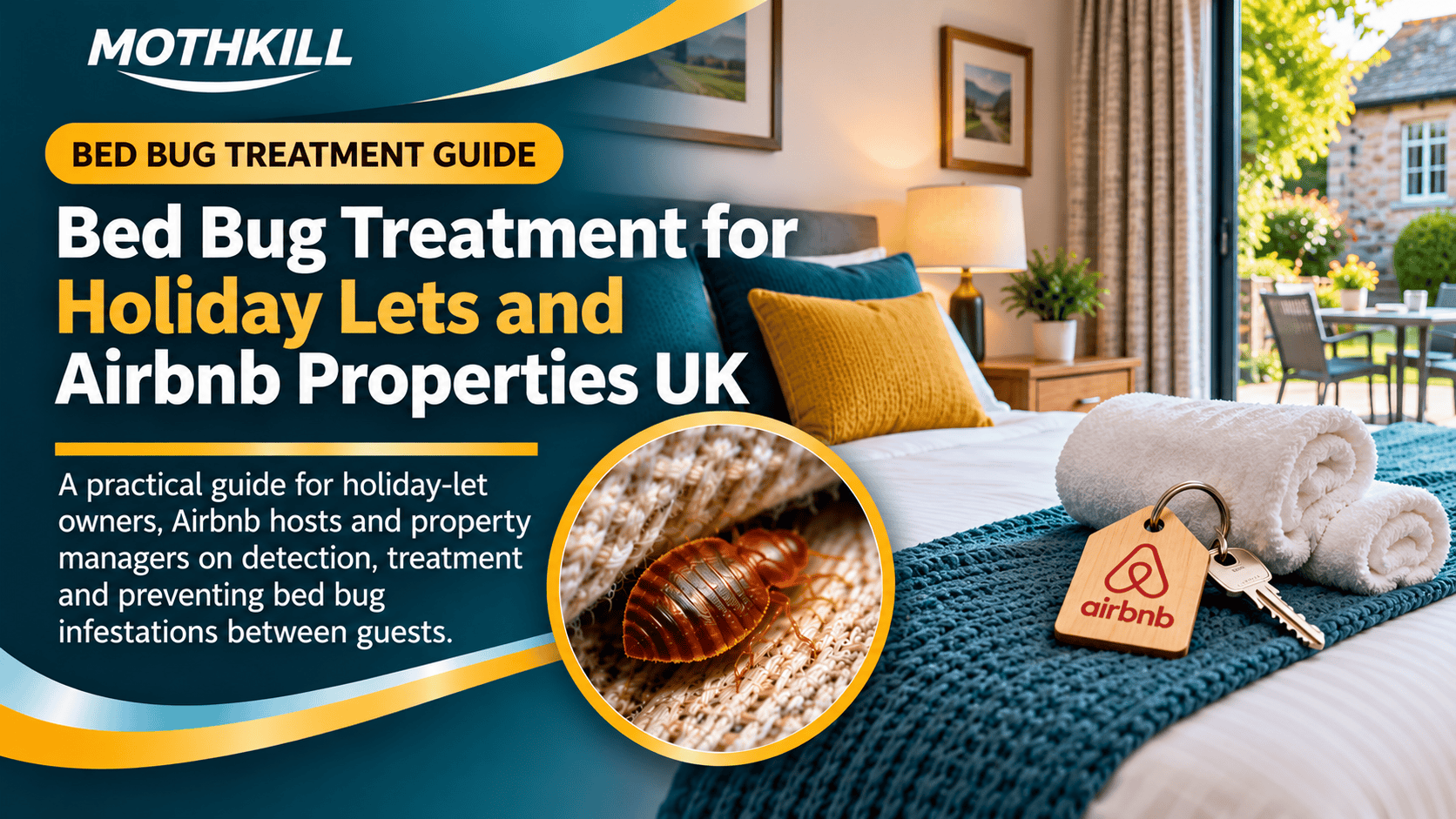
Bed Bug Treatment for Holiday Lets and Airbnb Properties UK
A practical guide for holiday cottage owners, Airbnb hosts and short-term rental managers dealing with bed bugs, guest complaints and professional treatment between bookings.
Discovering bed bugs in a holiday let or Airbnb property can create an immediate problem for the owner.
A guest may report bites, discover an insect on the mattress or notice suspicious marks around the bed.
With another booking approaching, there may be pressure to investigate the complaint, arrange treatment and return the property to service as quickly as possible.
However, rushing the process or relying on unsuitable DIY treatments can make the situation more difficult.
Bed bugs can remain concealed inside bed frames, furniture and other protected harbourages, even when a room appears clean.
For holiday accommodation providers, effective bed bug management involves confirming the infestation, protecting guests, preventing unnecessary spread and choosing a suitable professional treatment.
Why Do Holiday Lets and Airbnb Properties Get Bed Bugs?
Holiday accommodation experiences frequent changes of guests, often with luggage and belongings arriving from other properties.
Bed bugs can be transported in luggage, clothing and personal possessions without the traveller realising.
Once introduced, they may find suitable harbourages around beds and upholstered furniture.
These insects are not attracted by dirt or poor housekeeping.
Even carefully maintained luxury holiday cottages and professionally cleaned apartments can experience an introduction.
Regular cleaning is valuable, but it cannot guarantee that bed bugs will never enter a property.
For advice aimed at travellers, read our guide to checking accommodation for bed bugs.
Eight Immediate Steps for Holiday-Let Owners
Record the Guest Complaint
Document the date, booking, reported signs and any photographs or insect specimens supplied by the guest.
Arrange Identification
Ask a competent pest control professional to establish whether bed bugs are present rather than relying on bite reports alone.
Assess Upcoming Bookings
Review whether the property can safely accommodate incoming guests while the suspected infestation is investigated.
Inspect Sleeping Areas
Check mattresses, bed frames, headboards, divan bases and other likely harbourages.
Control Movement of Items
Avoid transferring potentially infested furniture, bedding and belongings into unaffected properties.
Arrange Suitable Treatment
Choose a professional approach based on the infestation, building layout, furniture and access requirements.
Follow Preparation Instructions
Ensure cleaners, maintenance staff and property managers understand the treatment provider's requirements.
Document the Outcome
Keep inspection findings, treatment reports and recommendations for monitoring and reopening.
How Can You Tell Whether a Holiday Let Has Bed Bugs?
A guest reporting itchy bites does not necessarily confirm a bed bug infestation.
Skin reactions vary, and other insects or conditions can produce similar symptoms.
Physical evidence is therefore important.
Common Signs Worth Investigating
- Live bed bugs around mattress seams and bed frames.
- Dark faecal spotting near sleeping areas.
- Shed skins in furniture joints or concealed gaps.
- Small pale eggs attached to protected surfaces.
- Activity around headboards and bedside furniture.
- Evidence in upholstered chairs and sofas.
Where practical, preserve a suspected insect for professional identification.
Our article on the signs of bed bugs explains what to look for.
Should You Cancel the Next Airbnb Booking?
Where an active bed bug infestation is confirmed, accepting another guest before appropriate treatment and safety checks is generally inadvisable.
The decision should account for the extent of the infestation, the treatment programme and the provider's recommendations.
Owners should avoid assuming that a quick spray or a thorough clean has eliminated the problem.
If a booking cannot proceed, the host should follow the relevant booking platform's policies and communicate accurately with affected guests.
Refund, cancellation and rebooking arrangements depend on the circumstances, platform terms and applicable consumer law.
It is better to address a confirmed infestation properly than to risk repeated guest complaints.
Can Bed Bugs Spread Throughout a Holiday Cottage?
Yes. Bed bugs may disperse from an established harbourage to other areas of a property.
They can also be transported with furniture, clothing and other belongings.
However, finding bed bugs in one bedroom does not automatically mean every room is infested.
Professional inspection should consider the building layout, the location of sightings and the possibility of activity in other sleeping or seating areas.
Where a holiday cottage has several bedrooms, the treatment provider may recommend inspecting all relevant rooms before deciding the treatment scope.
Read Bed Bugs in One Bedroom: Do You Need to Treat the Whole House? for related advice.
Where Do Bed Bugs Hide in Holiday Accommodation?
Holiday lets frequently contain upholstered headboards, divan beds, storage furniture and comfortable seating.
These furnishings can provide numerous concealed harbourages.
Beds and Mattresses
Mattress seams, bed-frame joints, headboards and divan structures are common areas for inspection.
Bedside Furniture
Drawer joints, furniture fixings and protected gaps close to beds may harbour insects.
Sofas and Armchairs
Upholstered furniture may contain seams, timber frames and concealed internal spaces.
Structural Gaps
Skirting boards, wall junctions and other protected openings may provide additional hiding places.
Our guides to bed bugs in divan beds and bed bugs in sofas and recliner chairs explain why these items deserve particular attention.
Professional Heat Treatment for Holiday Lets and Airbnb Properties
Professional heat treatment can be an effective method of controlling bed bugs in suitable holiday accommodation.
The process involves raising temperatures under controlled conditions so that bed bugs and their eggs receive lethal thermal exposure.
However, heating the surrounding room air is not sufficient evidence that every concealed harbourage has reached an effective temperature.
Bed bugs may be protected within divan bases, furniture joints, thick upholstery and other enclosed spaces.
These areas can take longer to warm than exposed surfaces.
Successful treatment therefore depends on preparation, airflow, appropriate temperature monitoring and sufficient exposure in relevant harbourages.
For larger holiday cottages, the treatment provider must also consider whether insects may be present in more than one room.
Learn more about how professional bed bug heat treatment works.
Can a Holiday Let Be Heat Treated Between Bookings?
Potentially, yes, but the available time must be sufficient for the entire process.
This includes inspection, preparation, equipment setup, heating, effective exposure, cooling and any necessary safety checks.
The required time depends on the size and construction of the property, furniture and infestation.
Owners should not assume that treatment can always be completed during a normal same-day guest changeover.
A professional provider should assess the property and explain the expected schedule.
Our article on bed bug heat treatment duration provides further information.
What Preparation Is Needed Before Heat Treatment?
Preparation is essential because holiday accommodation may contain numerous furnishings and decorative items.
Owners should obtain clear written instructions from the treatment provider.
Holiday-Let Preparation Checklist
- Arrange full access: Ensure the treatment team can reach relevant rooms and furniture.
- Identify sensitive items: Report electronics, batteries, aerosols, medicines, artwork and other potentially heat-sensitive materials.
- Prepare beds: Follow instructions concerning mattresses, divans, headboards and storage compartments.
- Manage bedding: Follow the agreed laundering and containment procedure.
- Assess upholstered furniture: Identify sofas, armchairs and other potentially infested seating.
- Avoid moving infested items: Do not transfer suspect furniture to another holiday property.
- Coordinate cleaners: Explain any restrictions on cleaning, vacuuming and movement of belongings.
- Plan guest access: Keep the property unoccupied during treatment and until it is safe to reopen.
For further guidance, see our bed bug heat treatment preparation checklist.
Can Heat Treatment Damage Holiday-Let Furniture?
Some furnishings and materials may be sensitive to elevated temperatures.
Potentially vulnerable items include laminated furniture, adhesives, plastics, electronic equipment and certain decorative finishes.
Holiday properties may also contain artwork, specialist appliances and valuable furnishings that require particular precautions.
Owners should identify these items before treatment.
Potentially infested belongings removed from the treatment area may require separate assessment or treatment to prevent reintroduction.
Read Will Bed Bug Heat Treatment Damage My House? for further information.
Should Airbnb Hosts Use Bed Bug Sprays?
DIY sprays may appear attractive when another booking is approaching.
However, spraying visible surfaces does not necessarily reach insects hidden within furniture or structural gaps.
Some bed bug populations also show resistance to certain insecticides.
Using unsuitable products or applying them incorrectly can create additional risks for guests and cleaning staff.
Any pesticide must be authorised for its intended use and applied according to its label.
Professional insecticide treatment may be appropriate in some circumstances, but it should form part of a properly planned control programme.
Our guide to heat treatment versus chemical treatment explains the differences.
Comparing Treatment Options for Holiday Rentals
| Method | Potential benefit | Important consideration |
|---|---|---|
| Professional heat treatment | Can control bed bugs and eggs in suitable rooms and furniture where lethal exposure is achieved. | Requires preparation, monitoring, safety assessment and sufficient treatment time. |
| Professional insecticides | Can target appropriate harbourages using authorised products. | May require follow-up treatment and compliance with re-entry restrictions. |
| Steam treatment | Can kill insects and eggs where sufficient heat reaches them. | Limited penetration and possible moisture or material damage. |
| Vacuuming | Can remove accessible insects and debris. | Does not reliably eliminate concealed insects or attached eggs. |
| Monitoring and inspection | Helps detect activity and assess treatment progress. | Monitoring alone does not eliminate an established infestation. |
How Should Hosts Handle Bedding and Laundry?
Potentially infested bedding should be managed carefully to avoid spreading insects.
Where practical, affected items should be contained before being transported to laundry facilities.
Appropriate laundering and drying procedures can help control bed bugs in washable fabrics.
However, the process must be suitable for the materials and equipment being used.
Clean linen should be protected from recontamination.
Where a cleaning company services several holiday properties, staff should be informed of the suspected infestation and follow suitable containment procedures.
Important: Avoid Transferring Bed Bugs Between Holiday Properties
Holiday-let operators sometimes use the same cleaning teams, linen suppliers and maintenance contractors across several properties.
Potentially infested furniture, bedding or equipment should not be moved between locations without appropriate precautions.
Moving suspect items into another holiday cottage can create a new infestation rather than solve the original problem.
Read our guide explaining how moving furniture can spread bed bugs.
When Can Guests Return After Bed Bug Treatment?
A holiday property should only return to guest use after relevant treatment and safety requirements have been satisfied.
Following heat treatment, the property must cool sufficiently and the treatment equipment must be safely removed.
Any necessary inspections or checks should also be completed.
Where insecticides have been applied, product-specific re-entry and ventilation requirements must be followed.
The pest control provider should explain whether follow-up inspection or monitoring is recommended.
Owners should not interpret the immediate absence of visible insects as an absolute guarantee that no future activity is possible.
What Should You Tell Guests About Bed Bugs?
Guest communication should be prompt, factual and respectful.
If a guest reports a suspected infestation, acknowledge the concern and explain that it will be investigated.
Avoid dismissing the complaint or claiming that bites alone prove the property is infested.
Where bed bugs are confirmed, explain the steps being taken and address booking arrangements through the relevant platform or contractual process.
It is also sensible to retain relevant correspondence, inspection findings and treatment documentation.
Refunds, alternative accommodation and compensation should be considered according to the facts, applicable law and booking terms.
How Can Holiday-Let Owners Prevent Future Infestations?
No holiday accommodation provider can guarantee that bed bugs will never be introduced.
However, regular inspections and clear reporting procedures can help identify problems earlier.
Train Cleaning Teams
Ensure cleaners know the common signs of bed bugs and how to report suspicious evidence.
Inspect Beds During Changeovers
Include appropriate visual checks of accessible mattress seams, bed frames and headboards.
Manage Furniture Carefully
Inspect second-hand furnishings and avoid moving potentially infested items between properties.
Keep Treatment Records
Document previous sightings, inspections, professional treatment and any monitoring recommendations.
What If Bed Bugs Return After Treatment?
Further sightings should be investigated promptly.
Possible explanations include surviving insects in concealed harbourages, untreated areas or a new introduction.
The timing and location of sightings can help determine the next steps.
Holiday-let owners should avoid immediately assuming that the same source caused every subsequent report.
A professional follow-up assessment may be necessary.
Read Bed Bug Heat Treatment Failed: What Should You Do Next? for further guidance.
How Much Does Bed Bug Treatment Cost for a Holiday Let?
The cost depends on the size of the property, infestation severity, treatment method and preparation requirements.
A compact holiday apartment may require a different approach from a large cottage containing several bedrooms and upholstered living areas.
Access, parking, furniture density and any follow-up visits can also influence the quotation.
Owners should request a clear proposal explaining which rooms are included, what preparation is required and any additional treatment arrangements.
Our UK bed bug heat treatment cost guide provides general pricing information.
Frequently Asked Questions
Can an Airbnb property get bed bugs even if it is professionally cleaned?
Yes. Bed bugs can be introduced through luggage and belongings. Their presence does not necessarily indicate poor cleaning standards.
Should I accept another booking if bed bugs have been found?
Where an active infestation is confirmed, the property should generally be removed from guest use until suitable treatment and safety requirements have been completed.
Can bed bugs spread between holiday-let bedrooms?
Yes. They may disperse through connected spaces or be transported with furniture and belongings.
Will changing the mattress solve the problem?
Not necessarily. Bed bugs may remain in bed frames, headboards, furniture and other concealed harbourages.
Can professional heat treatment kill bed bug eggs?
Yes, provided the eggs receive sufficiently lethal thermal exposure for the required duration.
Can heat treatment be completed during a normal guest changeover?
It depends on the property and treatment requirements. Owners should not assume that same-day turnaround is always possible.
Can cleaners spread bed bugs between holiday properties?
Potentially, if infested items or equipment are transported without suitable precautions. Appropriate containment procedures help reduce the risk.
Does the whole holiday cottage need treatment?
Not automatically. Inspection findings, property layout and the extent of the infestation should determine the appropriate treatment area.
Can bed bugs return after successful treatment?
Yes. New introductions remain possible, and further activity may occur where concealed harbourages or connected areas were not adequately treated.
Should holiday-let owners use professional pest control?
Professional inspection and treatment are advisable where an infestation is suspected or confirmed, particularly when guest bookings and multiple sleeping areas are involved.
Final Advice for Holiday-Let and Airbnb Owners
Bed bugs in holiday accommodation require a prompt but carefully managed response.
The first priority is confirming whether an infestation exists and determining its extent.
Owners should avoid moving potentially infested furniture or relying on unplanned DIY treatments.
Professional heat treatment may be an effective option for suitable properties, provided preparation, temperature monitoring and concealed harbourages are properly addressed.
Clear guest communication, treatment documentation and appropriate monitoring can help accommodation providers manage the problem responsibly.
The aim is to eliminate the infestation effectively and return the property to guest use safely, rather than rushing to meet the next booking at the expense of proper treatment.
Need Professional Bed Bug Treatment for a Holiday Let?
MothKill provides professional bed bug heat treatment for suitable properties, including holiday cottages, short-term rentals and serviced accommodation. Contact us to discuss your property, infestation and treatment requirements.
Request a Holiday-Let Treatment Quote How Our Heat Treatment Works