Carpet Beetles After Pest Control Treatment: Why Are They Still Appearing?
Carpet Beetles After Treatment: Why Are They Still Appearing?
Still finding adult carpet beetles, larvae or shed skins after pest control treatment? Discover what may be happening, how to recognise continuing activity and when further treatment may be needed.
Finding carpet beetles after paying for professional pest control can be frustrating.
Perhaps your home was treated several days ago, yet you are still discovering small beetles on windowsills, hairy larvae around skirting boards or what appear to be new insects underneath furniture.
You may be wondering whether the treatment has failed, whether eggs have survived or whether the infestation is returning.
The answer depends on what you are finding, when the treatment took place and which treatment method was used.
Importantly, finding an adult carpet beetle does not necessarily mean that larvae are still actively damaging carpets or clothing.
Equally, finding fresh larvae or continuing damage may indicate that a breeding source remains active.
Why Are Carpet Beetles Still Appearing After Pest Control Treatment?
Several different situations can explain continued sightings.
Hidden Larvae Survived
Carpet beetle larvae may remain in protected areas that were not reached by the original treatment.
Eggs Were Not Exposed
Some insecticide treatments have limited activity against eggs, particularly where they are concealed.
A Breeding Source Was Missed
Stored textiles, animal hair, natural-fibre materials or other suitable food sources may continue supporting development.
Adult Beetles Entered From Outside
Adult carpet beetles may enter buildings from outdoors, especially during warmer periods.
Old Shed Skins Remain
Cast larval skins can persist in undisturbed areas even after the insects responsible have disappeared.
The Treatment Was Incomplete
Insufficient coverage, unsuitable products or failure to address the source can allow continued infestation.
Are Adult Carpet Beetles After Treatment a Bad Sign?
Not necessarily.
Adult carpet beetles behave differently from their larvae.
Many adult carpet beetles feed on pollen and nectar outdoors and may be attracted to light when inside buildings.
It is common for adults to be noticed near windows and windowsills.
However, an adult beetle found near a window does not automatically prove that an active larval infestation is present inside the property.
The situation becomes more concerning when adults are repeatedly accompanied by live larvae, new shed skins or fresh damage to susceptible materials.
Read our guide to how many carpet beetles indicate an infestation.
What About Carpet Beetle Larvae After Treatment?
Live carpet beetle larvae deserve closer attention because they are the stage responsible for most textile damage.
Depending on the species, larvae may feed on wool, feathers, fur, animal hair, dead insects and other animal-derived materials.
They can remain hidden for extended periods in relatively undisturbed locations.
Finding a single larva shortly after treatment does not automatically establish that the entire programme has failed.
However, repeated live larvae, particularly in several locations, may indicate that surviving insects or untreated breeding sources remain.
It is useful to record where larvae are found and whether they appear active.
Are Shed Carpet Beetle Skins a Sign of an Active Infestation?
Not always.
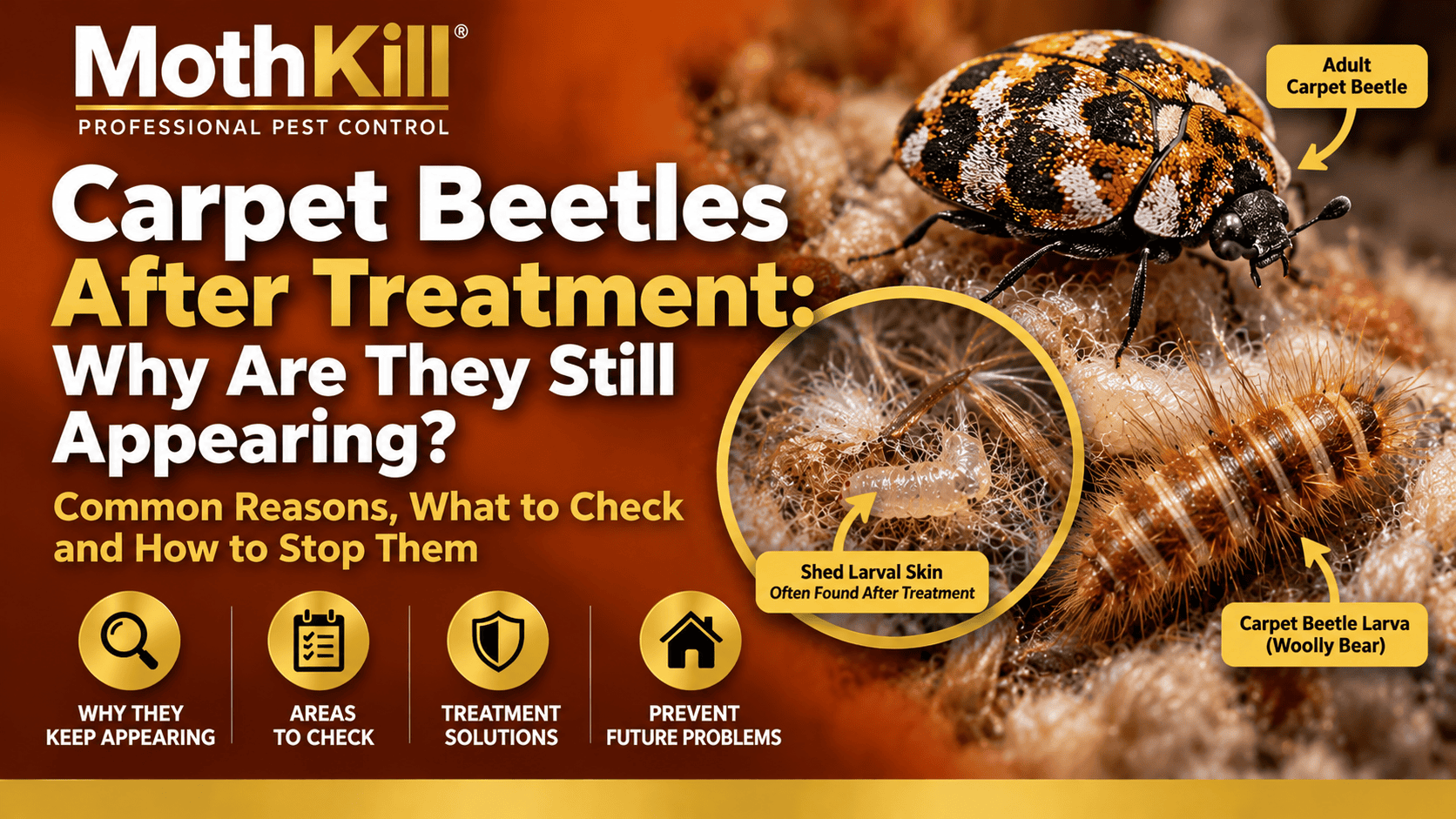
Carpet beetle larvae shed their outer skins as they grow.
These cast skins can accumulate in protected areas and may remain long after the larvae have moved elsewhere or died.
They are often found beneath furniture, along carpet edges and in other locations that receive little disturbance.
Therefore, finding an old cast skin does not necessarily mean that a live larva is still present.
However, fresh accumulations alongside live larvae may indicate ongoing development.
Useful Identification Tip
A shed larval skin is an empty outer covering, while a live larva has a complete body and may move when disturbed.
Photograph any suspected larvae or skins before disposing of them. This can help a pest controller assess the situation.
Where Do Carpet Beetle Larvae Hide After Treatment?
One of the biggest challenges with carpet beetle control is locating the materials supporting larval development.
Larvae may be present in locations that are not obvious during routine cleaning.
- Under sofas, beds and heavy furniture.
- Along carpet edges and skirting boards.
- Inside wardrobes and storage cupboards.
- Among stored wool clothing and blankets.
- Under rugs and natural-fibre carpets.
- Inside upholstered furniture containing suitable materials.
- Among pet hair and accumulated lint.
- In lofts containing bird nests or other animal-derived debris.
- Near dead insects and other organic material.
- Within concealed areas where suitable food sources have accumulated.
Not every location will contain carpet beetles, and an infestation should not be assumed without evidence.
However, these areas may warrant inspection when activity continues after treatment.
Can Carpet Beetle Eggs Survive Insecticide Treatment?
Yes, depending on the product, application and exposure.
Carpet beetle eggs may be laid in protected locations close to suitable larval food.
Some insecticide products are more effective against exposed larvae and adults than concealed eggs.
This is one reason certain professional programmes may involve follow-up treatment or monitoring.
It is important to follow the original pest controller's aftercare instructions rather than applying additional products without guidance.
For identification advice, see what carpet beetle eggs look like and where they are hidden.
Why Treating Only the Carpet May Not Work
Despite their name, carpet beetles do not necessarily develop only in carpets.
Larvae can feed on a range of animal-derived materials.
For example, a property may have larvae associated with stored wool clothing, natural-fibre upholstery, accumulated pet hair or an old bird nest in a roof space.
If the original treatment focuses only on visible carpet areas, other breeding sources may remain untreated.
This can lead to continuing adult beetle or larval sightings.
Effective control requires identification of the actual infestation sources rather than relying solely on the pest's common name.
Can Carpet Beetles Return After Heat Treatment?
Yes, although professionally managed heat treatment can kill carpet beetle life stages when suitable lethal conditions reach them.
The effectiveness of heat treatment depends on temperature, exposure time and whether heat reaches the locations where insects are concealed.
Dense furniture, protected materials and inaccessible areas may heat differently from the surrounding room air.
Professional temperature monitoring is therefore important.
Heat treatment also does not leave a lasting insecticidal residue.
New beetles can enter from outdoors, and untreated sources can support further activity.
For established infestations, a specialist assessment can help determine whether heat treatment is appropriate.
What If Carpet Beetles Return After Spraying?
If you are still finding carpet beetles after insecticide treatment, first check what the original treatment was designed to achieve.
Some insecticide programmes may rely on residual activity or include repeat visits.
Continuing sightings may result from untreated locations, surviving eggs, new adults entering the building or a breeding source that was not identified.
Before arranging another treatment, ask the original company:
- Which rooms and areas were treated?
- Which insecticide was used?
- Was the treatment expected to require more than one visit?
- What post-treatment activity was considered normal?
- Were any breeding sources identified?
- What follow-up arrangements or warranty conditions apply?
Do not apply additional insecticides over treated areas without checking the original instructions and product compatibility.
How Long Should Carpet Beetles Continue Appearing After Treatment?
There is no universal timeframe that applies to every treatment.
The answer depends on the insecticide or treatment method, the infestation and whether all breeding sources were addressed.
With residual insecticide programmes, activity may decline over time as exposed insects contact treated surfaces.
With professional heat treatment, the objective is to kill exposed life stages during the treatment itself.
However, isolated adult sightings after either treatment may reflect new arrivals rather than survival of the original infestation.
Repeated live larvae or continuing fresh damage are stronger reasons to investigate further.
How to Check Whether Carpet Beetle Treatment Has Worked
A useful assessment involves more than counting adult beetles.
Check for Live Larvae
Inspect previously affected locations and record any active larvae.
Look for Fresh Damage
Monitor susceptible wool, fur, feathers and other natural-fibre materials for new damage.
Identify Old Skins
Distinguish persistent cast skins from evidence of newly developing larvae.
Record Adult Sightings
Note dates, numbers and locations, particularly repeated sightings indoors.
Inspect Hidden Sources
Check suitable materials and concealed areas where larvae may be developing.
Review the Treatment Report
Compare continuing activity with the areas and methods covered by the original treatment.
Should You Repeat Carpet Beetle Treatment?
Not automatically.
If the problem is simply old cast skins or occasional adults entering from outside, another whole-property treatment may not be justified.
However, repeated live larvae and evidence of ongoing damage may indicate a need for further investigation.
Before repeating treatment, it is important to understand why the original programme did not fully resolve the activity.
Repeating the same approach without identifying the source may result in unnecessary expense.
Do Not Keep Spraying Without Identifying the Source
Repeated insecticide applications are not a substitute for proper inspection and identification.
Unnecessary spraying can increase chemical exposure and may fail to address larvae developing in concealed materials.
Always use authorised products according to their labels and follow professional aftercare instructions.
Finding the breeding source is often more important than applying another treatment.
When Is Professional Heat Treatment Worth Considering?
Professional heat treatment may be appropriate where carpet beetle activity is widespread, persistent or associated with several rooms and susceptible materials.
It can provide a non-residual treatment approach that targets exposed life stages through controlled temperature and exposure.
However, heat treatment is not necessarily suitable for every property or every infestation.
Inaccessible breeding sources, heat-sensitive belongings and the possibility of beetles entering from outside all need consideration.
At MothKill, we assess the nature of the infestation and the property before recommending a suitable treatment approach.
How to Reduce the Risk of Carpet Beetles Returning
Long-term prevention focuses on removing suitable larval food sources and reducing opportunities for insects to develop unnoticed.
- Vacuum regularly beneath furniture and around carpet edges.
- Remove accumulations of pet hair, lint and dead insects.
- Inspect and clean susceptible stored textiles.
- Store clean wool clothing and other vulnerable items appropriately.
- Investigate bird nests or animal debris where safely accessible and legally permissible.
- Check natural-fibre rugs and upholstered furniture.
- Monitor areas where larvae were previously found.
- Seek professional advice if live larvae or fresh damage continue.
Frequently Asked Questions
Is it normal to see carpet beetles after pest control treatment?
Occasional sightings can occur, depending on the treatment method and whether adults are entering from outdoors. However, repeated live larvae and fresh damage may indicate continuing infestation.
Does finding a carpet beetle larva mean treatment failed?
Not necessarily. A single larva needs to be considered in context. Repeated active larvae or continuing damage are more concerning.
Can carpet beetle eggs survive spraying?
Yes. Some insecticides have limited effectiveness against concealed eggs, and follow-up treatment may be necessary depending on the programme.
Are shed carpet beetle skins alive?
No. Shed skins are empty outer coverings left behind as larvae grow. They may remain after an infestation has been controlled.
Can carpet beetles come back after heat treatment?
Yes. Reintroduction, untreated breeding sources or inadequately heated areas can result in further activity. Professional monitoring and treatment planning help reduce these risks.
Why are carpet beetles appearing on my windowsill?
Adult carpet beetles are often attracted to light and may gather near windows. Some may have developed indoors, while others may have entered from outside.
Should I pay for another treatment?
Before paying again, establish whether there is evidence of active infestation and review what the previous treatment included. A further inspection may be more useful than immediately repeating the same application.
The Most Important Thing to Remember
Finding carpet beetles after pest control treatment does not automatically mean the original treatment failed.
Adult beetles may enter from outdoors, and old larval skins can remain in a property long after the insects responsible have disappeared.
However, repeated live larvae and fresh damage suggest that further investigation may be necessary.
The key is to distinguish occasional sightings from an active breeding source before deciding whether another treatment is required.
Still Finding Carpet Beetles After Treatment?
If you are continuing to find live carpet beetle larvae or fresh damage after previous pest control, MothKill can help you assess whether specialist professional treatment may be appropriate for your property.
Request a Treatment Quote Visit MothKill