
Does Heat Treatment Kill Carpet Beetle Eggs and Larvae?
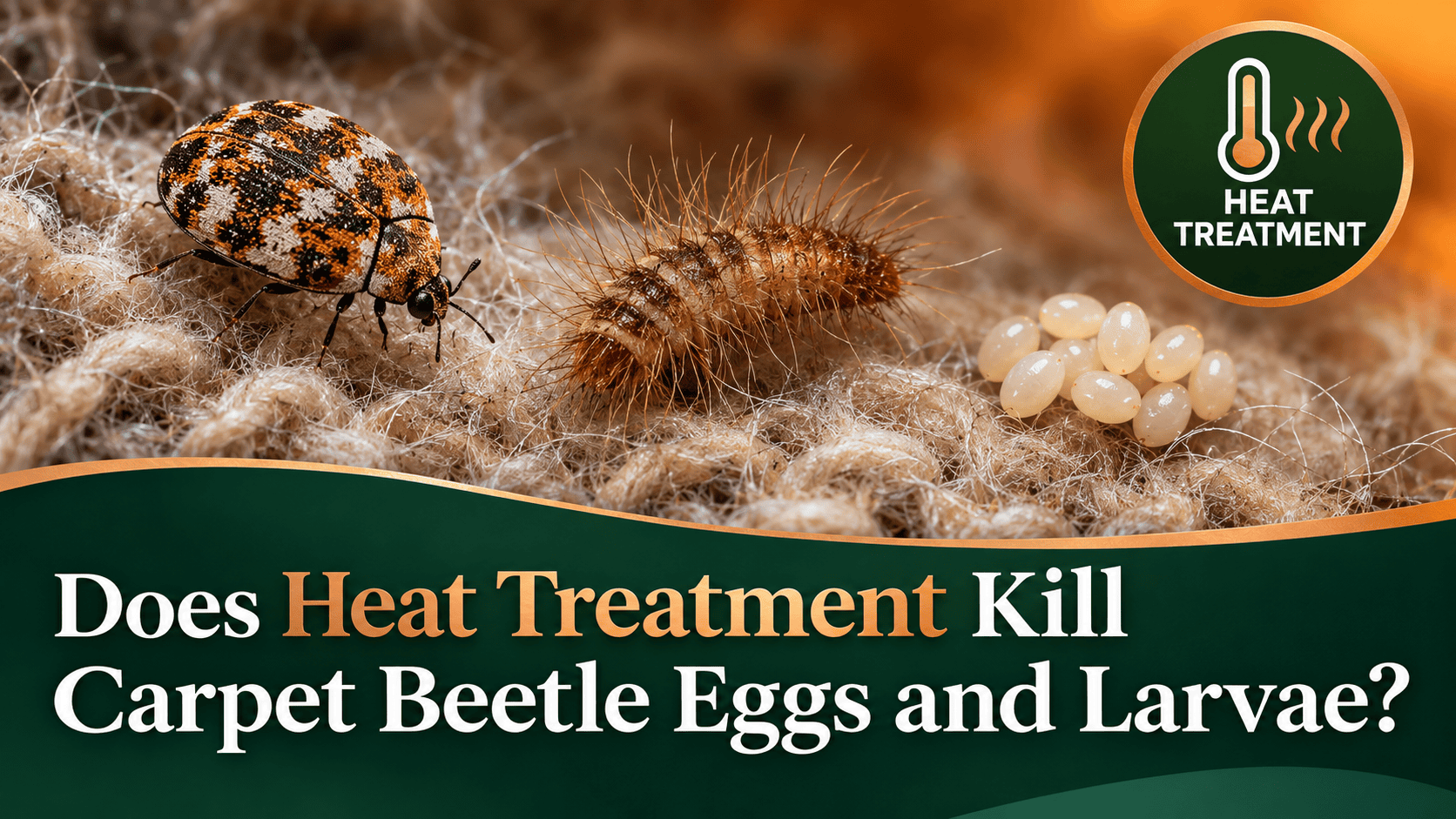
Does Heat Treatment Kill Carpet Beetle Eggs and Larvae?
Carpet beetle larvae can remain hidden in carpets, furniture, wardrobes and other undisturbed areas. But can professional heat treatment kill the eggs, larvae and adult beetles in one treatment? Here is what homeowners need to understand.
Sufficient heat exposure can kill carpet beetle eggs, larvae, pupae and adults. Professional heat treatment aims to raise temperatures throughout infested areas to lethal levels and maintain them long enough to control the infestation.
However, success depends on the temperature actually reaching the insects, including those concealed inside materials and difficult-to-access spaces. Simply warming a room is not enough.
Why Carpet Beetle Eggs and Larvae Are Difficult to Eliminate
Carpet beetles can be surprisingly persistent household pests. Although adult beetles are frequently noticed on windowsills, the larvae are responsible for most damage to natural fibres.
Larvae may feed on wool, feathers, fur, hair and other animal-derived materials. They often remain hidden beneath furniture, around carpet edges, in stored textiles and in undisturbed accumulations of organic debris.
Eggs are considerably smaller and may be deposited close to suitable larval food sources. This makes them particularly difficult to locate during ordinary household cleaning.
Our detailed guide to carpet beetle eggs explains where eggs may be laid and why they are so easily overlooked.
Can Heat Kill Every Stage of the Carpet Beetle Life Cycle?
Heat can be effective against all developmental stages when the required temperature and exposure time are achieved at the insects' actual locations.
1. Carpet Beetle Eggs
Eggs can be killed by sufficient heat exposure. However, eggs concealed within textiles or protected locations must themselves reach lethal temperatures.
2. Carpet Beetle Larvae
Larvae are vulnerable to lethal heat, including those hidden around carpet edges and furniture. Their concealed locations make careful heat distribution especially important.
3. Carpet Beetle Pupae
Pupae can also be killed through sufficient thermal exposure. Their protected resting locations must not be overlooked.
4. Adult Carpet Beetles
Adults exposed to lethal temperatures can be killed, although mobile adults may move away from heated areas if the treatment is not properly contained.
For more information about the most damaging stage, read our article on carpet beetle larvae.
What Temperature Kills Carpet Beetle Eggs and Larvae?
There is no single temperature that guarantees every carpet beetle egg or larva will die immediately. Thermal mortality depends on the insect's developmental stage, the temperature reached and the duration of exposure.
Professional structural heat treatments commonly work towards temperatures around 50–60°C in treated areas, but the precise lethal exposure requirements for carpet beetles should not be assumed to be identical to those of bed bugs.
A temperature reading from the centre of a room does not prove that a larva beneath a carpet, inside a packed wardrobe or within furniture has reached the same temperature.
How Professional Carpet Beetle Heat Treatment Works
Professional heat treatment involves much more than placing heaters inside a property. The process requires preparation, controlled heating, air circulation and temperature monitoring.
Initial Inspection
The first task is to investigate where carpet beetles are breeding and feeding. This may include carpet edges, wardrobes, furniture, loft spaces, stored fabrics and accumulations of animal hair or other organic material.
Preparing the Property
Suitable preparation allows heated air to circulate around potentially infested belongings and surfaces. Excessively packed storage areas and untreated items can interfere with effective heat penetration.
Controlled Heating
Specialist equipment raises the temperature within the treatment area. Air movement helps distribute heat and reduce colder pockets.
Temperature Monitoring
Temperature sensors help identify whether selected locations are reaching treatment targets. Additional attention may be required around insulated materials, densely packed contents and difficult-to-heat spaces.
Maintaining Effective Exposure
Heat must be maintained for an appropriate duration after the relevant locations reach the required temperatures. Treatment times vary with property size, construction, contents and the infestation.
Learn More About the Treatment Process
For a more detailed explanation, read our Carpet Beetle Heat Treatment Explained guide, which discusses the practical considerations involved in professional thermal pest control.
Can Carpet Beetles Survive Professional Heat Treatment?
Yes, survival is possible if insects occupy areas that do not receive sufficient thermal exposure. This does not mean heat is ineffective; it means that coverage, preparation and monitoring are essential.
Potential problems include:
- Infested belongings stored in tightly packed boxes.
- Larvae concealed in poorly heated cavities.
- Untreated loft spaces containing nests or organic debris.
- Furniture that prevents effective heat circulation.
- Infested items removed before treatment and returned afterwards.
- New adult beetles entering from outside after treatment.
Finding carpet beetles after a treatment does not automatically establish that the original treatment failed. It is important to identify whether the insects represent survivors, an overlooked breeding source or a new introduction.
See our guide to carpet beetles appearing after treatment for further information.
Is Heat Treatment Better Than Insecticide for Carpet Beetles?
Both methods have a role in professional carpet beetle control, but they work differently.
Heat treatment can kill susceptible insects across their life stages when lethal temperatures reach their hiding places. It does not leave a residual insecticide deposit after cooling.
Insecticide treatments may provide targeted control in suitable locations, subject to the product label and professional assessment. However, eggs or insects protected from direct exposure may remain a challenge.
The most appropriate method depends on the extent of infestation, the source of the problem, the building and its contents. In some situations, an integrated approach combining source removal, cleaning, targeted treatment and monitoring may be more suitable.
Learn about the available options in our professional carpet beetle treatment guide.
Do You Still Need to Vacuum After Heat Treatment?
Yes. Even when heat successfully kills carpet beetles, their shed skins, dead insects and accumulated debris may remain inside the property.
Vacuuming and appropriate cleaning help remove these materials, along with hair, lint and other potential larval food sources.
Pay particular attention to carpet edges, underneath furniture, wardrobes, skirting boards and other undisturbed areas.
Always follow the treatment provider's instructions about when and where to clean, particularly if residual insecticides have also been applied.
When Should You Consider Professional Heat Treatment?
Professional treatment may be worth considering when carpet beetles are widespread, larvae continue appearing in multiple rooms or repeated cleaning has failed to resolve the underlying problem.
Before selecting heat treatment, it is important to establish whether the infestation is genuinely widespread or whether a smaller, accessible breeding source can be removed and treated more simply.
If you are unsure how serious the problem is, read How Many Carpet Beetles Is an Infestation? and our guide to the signs of carpet beetles in a house.
Frequently Asked Questions
Does heat treatment kill carpet beetle eggs?
Yes. Carpet beetle eggs can be killed by sufficient heat exposure, provided the eggs themselves reach the necessary temperature for an adequate duration.
Will heat treatment kill carpet beetle larvae under carpets?
It can, but only if lethal heat penetrates the larvae's hiding locations. Thick materials, insulated areas and inaccessible spaces may require additional attention.
Can carpet beetles return after heat treatment?
Yes. Carpet beetles can reappear following incomplete treatment, overlooked breeding sources or new introductions. Heat treatment does not provide lasting protection against insects entering the property later.
Can I use a household heater to kill carpet beetle eggs?
Household heaters are not a reliable substitute for professionally controlled thermal treatment. Attempting to overheat a room can create serious fire, electrical and property-damage risks without ensuring lethal temperatures reach concealed insects.
Does heat treatment remove carpet beetle damage?
No. Heat may kill insects, but existing damage to carpets, clothing and furnishings remains. Damaged materials may require cleaning, repair or replacement.
Need Professional Carpet Beetle Treatment?
MothKill provides professional pest control services, including specialist heat treatment where appropriate.
If carpet beetle larvae keep appearing, or you suspect a widespread infestation, contact us to discuss the property, the affected areas and suitable treatment options.
Request a Carpet Beetle Treatment Quote