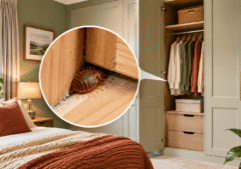
Bed Bug Heat Treatment for Flats and Apartments

Bed Bug Heat Treatment for Flats and Apartments
Can a flat be professionally heat treated for bed bugs? Discover how treatment works, what affects the price, why access matters and what tenants, landlords and flat owners should know.
Bed bugs are a particularly difficult problem in flats and apartment buildings.
Unlike a detached house, a flat may share walls, floors, ceilings, service ducts and communal areas with neighbouring properties.
Access can also be more complicated, especially in upper-floor apartments, converted buildings and large residential blocks.
These factors sometimes leave residents wondering whether professional heat treatment is even possible.
The answer is that many flats can be successfully heat treated for bed bugs, but the treatment needs to be planned around the property.
At MothKill, we specialise in professional bed bug heat treatment and understand that flats present challenges that are not always encountered in ordinary houses.
Can Bed Bug Heat Treatment Be Carried Out in a Flat?
Yes. A flat does not automatically need chemical treatment simply because it is part of a larger building.
Professional heat treatment may be suitable for:
- Ground-floor flats.
- First-floor and upper-floor apartments.
- Converted houses divided into flats.
- Purpose-built residential blocks.
- Studio flats.
- Maisonettes.
- Privately rented apartments.
- Landlord-managed properties and HMOs.
However, suitability depends on the specific building.
Some flats have straightforward access and can be treated using a relatively simple equipment arrangement.
Others may require additional planning because of stairs, restricted parking, limited ventilation arrangements or the distance between the treatment area and the equipment.
Why Are Bed Bugs Particularly Difficult in Apartment Buildings?
Bed bugs do not recognise property boundaries.
Although they are frequently introduced through luggage, furniture and personal belongings, they can also move between neighbouring units under certain circumstances.
Potential movement routes include cracks, gaps around pipework, service penetrations and other connected spaces.
This does not mean that every bed bug infestation in a flat has originated from a neighbour.
However, it does mean that adjoining properties sometimes need to be considered during an investigation.
For example, a resident may arrange successful treatment within their own apartment, only to experience further activity if bed bugs continue entering from another untreated unit.
In multi-occupancy buildings, communication with landlords, managing agents and neighbouring residents may therefore be important.
How Does Bed Bug Heat Treatment Work in a Flat?
Professional bed bug heat treatment uses specialist heating equipment to raise temperatures in the treatment area to levels capable of killing bed bugs.
Bed bugs can hide in mattresses, bed frames, furniture joints, skirting boards, cracks and other concealed locations.
The treatment must therefore address more than the air temperature in the centre of a room.
Effective heat treatment requires sufficient heat exposure in the areas where insects are hiding.
At MothKill, treatment planning involves equipment positioning, air circulation and temperature monitoring.
The objective is to achieve suitable lethal conditions throughout the relevant treatment areas while managing risks to the building and its contents.
Read our detailed guide to how bed bug heat treatment works.
What Makes Heat Treatment in Flats More Complicated?
Equipment Access
Professional heating equipment may be large and heavy. Staircases, lifts, narrow corridors and restricted entrances can affect installation.
Parking Restrictions
Some apartment buildings have limited loading access, underground parking or restrictions on where specialist vehicles can be positioned.
Building Layout
Converted flats, unusual room arrangements and concealed voids can affect heat distribution and treatment planning.
Neighbouring Properties
Shared structural elements and service routes may need consideration if there is evidence of bed bugs moving between flats.
Heat-Sensitive Materials
Some furniture, electronics, plastics, adhesives and decorative materials may require protection, removal or special precautions.
Building Permissions
Managing agents or freeholders may need to approve equipment access, use of communal spaces or other practical arrangements.
How Much Does Bed Bug Heat Treatment Cost for a Flat?
There is no universal price for bed bug heat treatment in flats.
A small studio apartment may require less heating capacity than a large three-bedroom flat.
However, floor level, access restrictions, equipment requirements and infestation extent can also affect the quotation.
For example, a two-bedroom flat on the fifth floor with restricted parking may present different logistical challenges from a two-bedroom ground-floor apartment.
Other factors include:
- Number and size of rooms.
- Total floor area and ceiling height.
- Whether the entire flat requires treatment.
- Equipment access and installation requirements.
- Parking and loading arrangements.
- Travel and any additional logistical costs.
- Infestation severity and treatment complexity.
For an explanation of UK pricing, read our 2026 bed bug heat treatment cost guide.
How Long Does Bed Bug Heat Treatment Take in a Flat?
Professional heat treatment is not simply a matter of switching on heaters for an hour.
Time is needed to install equipment, raise temperatures, circulate heat and maintain suitable conditions within the treatment area.
The exact duration depends on the property and how quickly the relevant materials and harbourages reach effective temperatures.
Some locations heat more slowly than others, particularly dense furniture, concealed areas and heavily insulated materials.
Temperature monitoring helps the operator assess the progress of the treatment.
For more information, see our guide to how long bed bug heat treatment takes.
Do You Need to Treat the Entire Flat?
Not every situation is identical, but restricting treatment to one room can create problems if bed bugs are already present elsewhere.
Bed bugs may move between bedrooms, living areas and other suitable harbourages.
They can also be transported around the property in furniture, clothing and personal belongings.
For this reason, the distribution of the infestation should be assessed before deciding on the treatment scope.
In many established infestations, a whole-flat approach may be more appropriate than treating only the bed where insects were first discovered.
However, the treatment plan should be based on evidence rather than automatically assuming every neighbouring flat is infested.
Can Bed Bugs Move Into Another Flat During Heat Treatment?
Bed bugs may move in response to environmental disturbance, and poorly planned treatment can create opportunities for dispersal.
However, it would be misleading to claim that professional heat treatment automatically drives bed bugs into neighbouring apartments.
Movement depends on the building, the infestation and the treatment conditions.
Where there is concern about shared voids or neighbouring infestations, these issues should be considered during treatment planning.
Read our guide to how bed bugs spread between properties.
What Preparation Is Needed Before Heat Treatment?
Preparation is particularly important in flats because space may be limited and belongings are often stored close together.
The treatment company should provide clear instructions before the appointment.
Typical preparation considerations include:
- Providing access to all areas included in the treatment.
- Reducing excessive clutter where instructed.
- Preparing beds, wardrobes and furniture as directed.
- Identifying heat-sensitive possessions.
- Discussing electronics and delicate materials.
- Making arrangements for people and pets to be absent during treatment.
- Ensuring suitable access for equipment installation.
- Following instructions for any items that must be removed or separately treated.
Do not move potentially infested belongings into untreated communal areas or neighbouring properties without an appropriate containment plan.
Doing so may spread the infestation.
For detailed guidance, read our bed bug heat treatment preparation checklist.
Can You Stay in Your Flat During Heat Treatment?
No. Occupants and pets should not remain inside the active heat treatment area.
Professional treatment involves elevated temperatures that are unsuitable for normal occupation.
Residents should make arrangements to be elsewhere for the period specified by the treatment provider.
Re-entry should only take place when the operator confirms that the treatment has finished and the property is safe to enter.
Will Heat Treatment Damage Furniture or the Flat?
Professional heat treatment must take account of materials that may be sensitive to elevated temperatures.
Potential concerns include certain plastics, adhesives, laminated furniture, electronics, decorative finishes and other heat-sensitive items.
The risk depends on the materials, their condition and the temperatures involved.
Good preparation and professional management help reduce risks, but no responsible company should claim that heat treatment carries absolutely no possibility of damage.
Read our guide to whether bed bug heat treatment can damage a property.
Important: Tell the Treatment Company About Your Building
If you live in a flat, provide accurate information about the floor level, lift access, stairs, parking, building restrictions and any known infestations in neighbouring units.
These details can affect whether heat treatment is suitable and how equipment needs to be installed.
Good treatment planning starts before the equipment arrives.
Bed Bug Treatment in Rented Flats: Who Is Responsible?
Responsibility for pest control in rented accommodation depends on the tenancy arrangements, the circumstances of the infestation and applicable housing law.
In some situations, the landlord may be responsible, particularly where the infestation is connected to property defects or wider building conditions.
In others, responsibility may depend on how the infestation was introduced and the relevant tenancy obligations.
Residents should report suspected bed bugs promptly and keep records of communications.
In buildings with multiple affected flats, coordination between the landlord, managing agent and occupants may be important.
For related guidance, see how to deal with bed bugs between tenancies.
What If Bed Bugs Are Coming From a Neighbouring Flat?
Where there is credible evidence of bed bugs moving between apartments, treating only one property may not resolve the wider problem.
Potential movement routes and adjacent units may need investigation.
However, a neighbouring resident should not be blamed without evidence.
Bed bugs can be introduced independently into individual flats through travel, visitors, furniture and personal belongings.
Professional inspection and coordinated management are preferable to assumptions about the source.
Is Heat Treatment Better Than Spraying in Flats?
Both heat treatment and insecticide-based programmes can have a role in professional bed bug management.
Heat treatment can kill bed bug life stages when suitable lethal conditions reach them, while properly selected insecticides may provide residual activity in appropriate locations.
However, heat treatment has no lasting insecticidal residue, and chemical treatments may require multiple visits or face resistance-related challenges.
The most suitable approach depends on the property, infestation and treatment objectives.
Read our comparison of bed bug heat treatment versus chemical treatment.
What Happens After Heat Treatment in a Flat?
After treatment, the property needs to cool sufficiently before normal occupation resumes.
The treatment provider should explain any follow-up precautions and monitoring requirements.
Residents should remain alert for signs of continued activity, particularly where there is a concern about adjoining untreated properties.
Finding a dead or dying bed bug shortly after treatment does not automatically indicate that the treatment was unsuccessful.
However, repeated live sightings and other evidence of continued infestation should be reported.
For more information, read how to tell whether bed bugs are gone after treatment.
Frequently Asked Questions
Can a fifth-floor flat be heat treated for bed bugs?
Potentially, yes. Suitability depends on equipment access, building layout, parking, lift availability and other practical considerations. A specialist company should assess these details before confirming treatment.
Does the whole apartment need heat treatment?
It depends on the infestation. In established cases, treating the entire flat may be more appropriate than restricting treatment to one room, but the decision should follow an assessment.
Can heat treatment affect neighbouring flats?
Shared building structures and service routes should be considered during planning. Professional treatment should account for building safety, equipment arrangements and any evidence of bed bug activity in adjacent units.
Will heat treatment kill bed bug eggs?
Yes, when eggs are exposed to sufficiently lethal temperatures for the necessary duration. Effective treatment depends on heat reaching the locations where eggs are concealed.
Can I sleep in my flat the same night?
Often, residents can return after treatment and cooling are completed, but this depends on the provider's instructions, the treatment method and the condition of the property. Re-entry must be approved by the operator.
Do I need permission from my landlord?
If you are a tenant, you should notify your landlord or managing agent before arranging significant treatment. Building access and equipment arrangements may also require permission.
Can bed bugs return after a flat has been heat treated?
Yes. Reintroduction, untreated harbourages or movement from another infested unit can lead to further activity. Monitoring and investigation are important if signs continue.
The Most Important Thing to Remember
Professional bed bug heat treatment can be suitable for many flats and apartments, including upper-floor properties.
However, success depends on much more than simply achieving a high room temperature.
Access, equipment positioning, heat circulation, temperature monitoring, preparation and the possibility of neighbouring infestations all deserve consideration.
A carefully planned treatment offers a better prospect of controlling the infestation while managing risks to the property.
Need Bed Bug Heat Treatment for a Flat?
MothKill provides specialist bed bug heat treatment for flats, apartments and houses. Tell us the size of your property, which floor you are on and what signs of bed bugs you have discovered, and we can assess whether professional heat treatment is suitable.
Request a Treatment Quote View Heat Treatment Costs